
Quick Summary
A lump behind the knee should be checked before treatment. For a confirmed Baker’s cyst, rehabilitation can address the knee problem contributing to swelling. Our physiotherapists in New Malden can assess your symptoms and help you choose appropriate next steps for your goals. We agree practical goals and review your progress.
Understanding Baker’s Cyst (Popliteal Cyst)
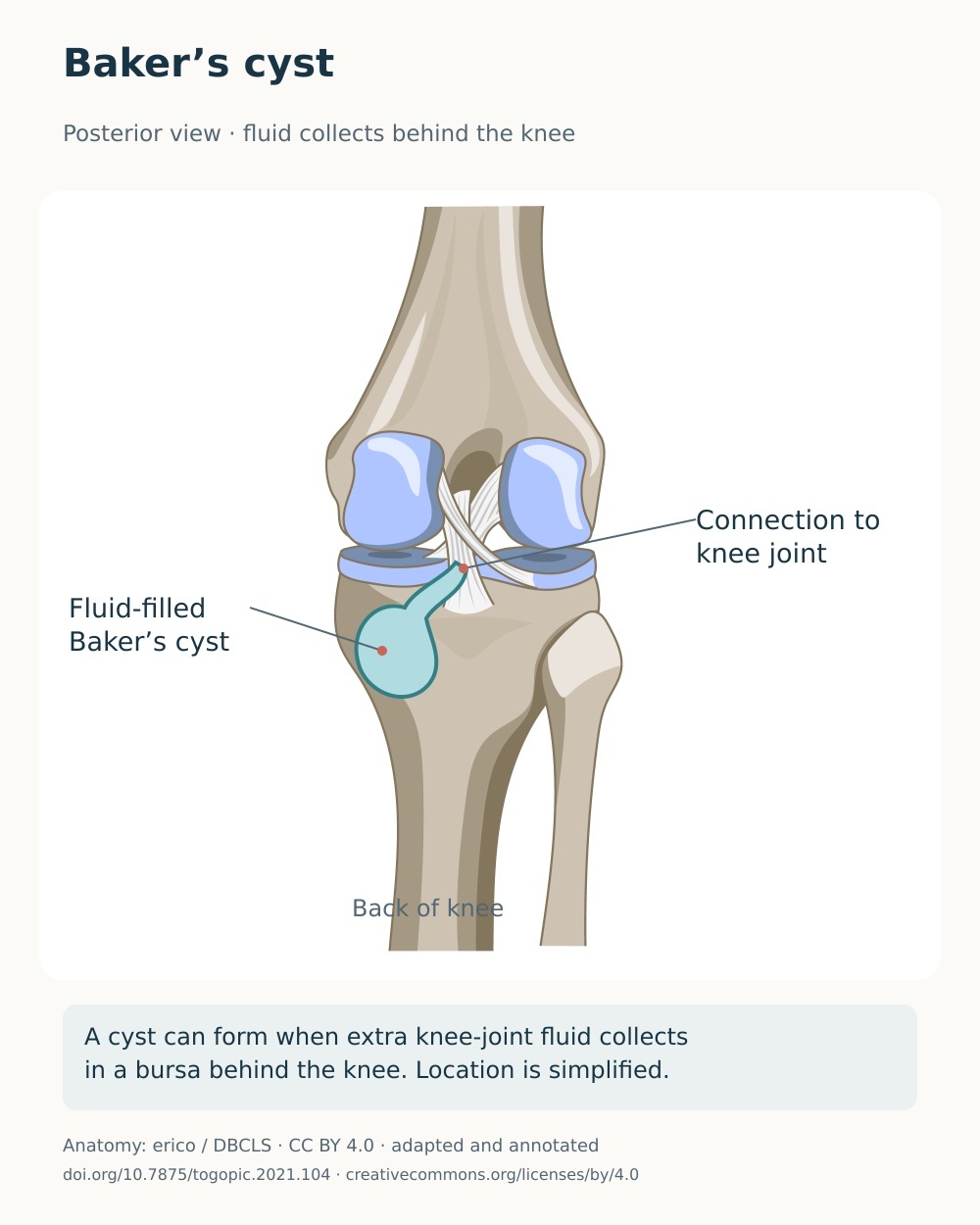
A Baker’s cyst is a pocket of joint fluid at the back of the knee. In adults it often accompanies another knee problem, such as osteoarthritis or a meniscus injury. Its size and discomfort can vary. Physiotherapy focuses on knee function and the underlying problem; it does not drain or remove the cyst.
Assessment at J&J Therapy
We ask whether the diagnosis has been confirmed and check walking, knee movement and activity tolerance. Sudden calf symptoms are screened before any treatment. If the lump is unexplained, growing or atypical, medical investigation comes first.
Image: erico / DBCLS, Togo picture gallery · CC BY 4.0. Adapted and annotated.
Do You Experience These Symptoms?
- Fullness or a lump behind the knee.
- Tightness when bending or fully straightening the leg.
- Aching after walking, sometimes with swelling around the knee.
An assessment helps guide your next step, based on your symptoms, health and goals.
Treatment and rehabilitation options
Hands-On Manual Therapy
After appropriate checks, gentle treatment to a stiff knee or surrounding muscles may make movement more comfortable. We avoid firm pressure over the cyst. Massage is not a way to empty it or rule out a clot. We explain the purpose and check your comfort and response throughout treatment.
Is Shockwave Suitable?
Shockwave is not a routine treatment for a Baker’s cyst. Treatment decisions should address its cause and any need for GP or specialist management. Your physiotherapist can explain the more suitable options and how their effect will be reviewed during your ongoing rehabilitation.
Targeted Exercise Programme
A manageable programme of knee movement, leg strengthening and paced walking can support daily activity. We adjust it if swelling increases, and help you recognise when persistent symptoms need a review of the underlying diagnosis. Your home plan is adapted as your function and confidence improve.
When to Seek Urgent Medical Help
While most symptoms are not serious, urgent medical attention is required if you experience any of the following:
- Seek urgent GP or NHS 111 advice for sudden calf pain, swelling, warmth or skin colour change.
- Call 999 for sudden breathlessness, chest pain or collapse, whether or not the leg is swollen.
- Arrange a GP review for any new or unexplained lump behind the knee.
Your questions answered
Can I massage the lump away?
No. Direct pressure is not an established treatment and can aggravate discomfort. A clinician should check an unexplained lump before hands-on care.
What if my calf suddenly swells?
A ruptured cyst and a blood clot can look similar. Seek urgent medical assessment rather than treating it as ordinary muscle tightness.
Which appointment should I book?
Start with a Physiotherapy Initial Assessment for new, persistent or recurring symptoms. We can assess the problem and agree a plan linked to your daily activities. If you have already had medical care or surgery, bring the relevant instructions.
Book a Physiotherapy Assessment or call our reception team on 07935 869938. Find J&J Therapy at CI Tower, Ground Floor, New Malden.
Related conditions
Knee Osteoarthritis · Meniscus Tear
Sources and further reading

This page is for general information only and does not replace professional medical advice.
Information updated 15 October 2026. General information only; this page cannot diagnose your symptoms. Treatment is agreed after assessment. For urgent or severe symptoms, use the medical services described above.