top of page
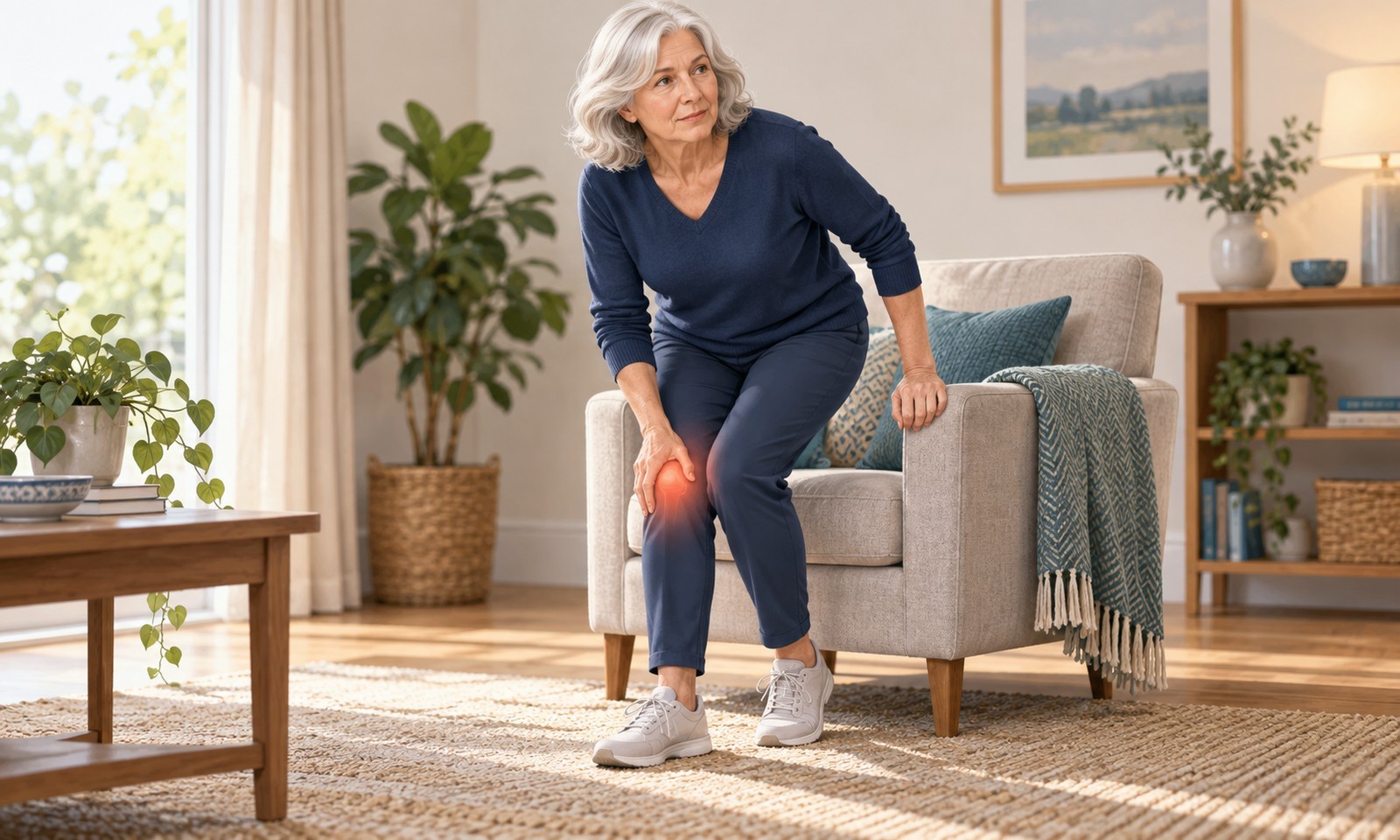
Physiotherapist assessing an older patient’s knee during an osteoarthritis consultation at a New Malden clinic

Knee Osteoarthritis

300+ Reviews 5.0

Open 7 Days

10+ Years' Experience

HCPC Physio On Team

Insurance Accepted

85% Return Rate

PHYSIOTHERAPY & THERAPEUTIC MASSAGE IN NEW MALDEN

Quick Summary

Knee osteoarthritis is a common wear-and-tear condition of the knee joint that causes stiffness, swelling and aching that typically worsens with activity and eases with rest. The best-evidenced treatments are therapeutic exercise and, where appropriate, weight management, and research shows most people can improve their pain and function without surgery. At J&J Therapy we begin with a detailed assessment, followed by manual therapy and a progressive exercise programme — most patients follow a course over 6–12 weeks.

What Is Knee Osteoarthritis?

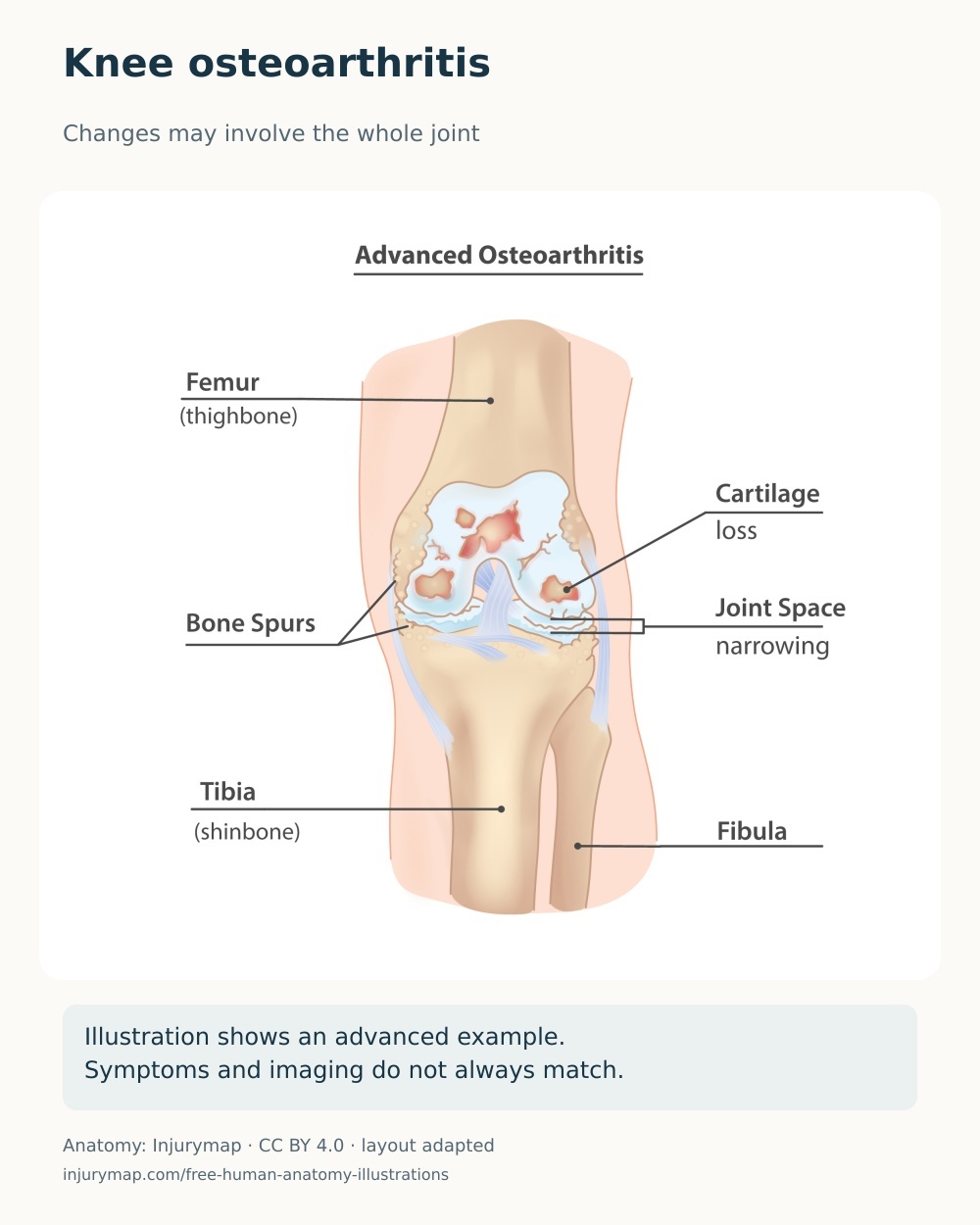
Diagram of a knee joint affected by osteoarthritis showing cartilage loss and bony spurs

Knee osteoarthritis is a long-term condition affecting the whole joint — not simply worn-out cartilage. It involves gradual loss of articular cartilage, changes in the underlying (subchondral) bone, the formation of bony spurs known as osteophytes, and episodes of inflammation in the joint lining. Together these changes can cause pain, stiffness, swelling and reduced movement.


The condition is very common in the UK. Research using national primary care records found the standardised prevalence of GP-diagnosed osteoarthritis to be 10.7%, with the knee the most commonly affected single joint (Swain et al., Osteoarthritis and Cartilage, 2020). Around one in four adults over 50 experiences knee pain, and knee replacement for end-stage osteoarthritis is one of the most frequently performed orthopaedic operations in the country.


How osteoarthritis is graded

On X-ray, severity is usually described using the Kellgren-Lawrence system, which grades the joint from 0 (normal) through to 4 (marked joint-space narrowing, large osteophytes and severe sclerosis). This grading describes the structural appearance of the joint — it does not describe how much pain you will feel.


Why your X-ray does not tell the whole story

One of the best-documented features of knee osteoarthritis is the mismatch between X-ray appearance and symptoms. Some people with advanced changes have relatively little pain, while others with mild changes struggle considerably. For this reason NICE advises that osteoarthritis can be diagnosed clinically, without imaging, in people aged 45 or over who have activity-related joint pain and either no morning stiffness or stiffness lasting no longer than 30 minutes (NICE NG226, 2022).


This matters for your treatment. Our physiotherapists plan your care around your symptoms, your movement and your goals rather than the grade on a scan — which is why meaningful improvement is possible even when structural changes remain.

Do You Experience These Symptoms?

✓  Knee pain that worsens with activity such as walking, stairs or prolonged standing, and typically eases with rest

✓  Morning stiffness, or stiffness after sitting, that usually settles within 30 minutes

✓  Swelling around the knee, sometimes with a build-up of fluid in the joint

✓  A grating, crackling or grinding sensation (crepitus) when you bend or straighten your knee

✓  Reduced range of movement, or a feeling of tightness when you try to fully bend or straighten

✓  Muscle weakness — particularly in the thigh — and a sense that the knee may give way

✓  Symptoms that fluctuate, with good days, bad days and intermittent flare-ups

These symptoms can be treated.
The sooner you begin, the better your chances of a smoother recovery.

What Causes Knee Osteoarthritis?

•  Age and cumulative joint loading

The risk of knee osteoarthritis rises with age as the joint accumulates decades of use and the cartilage becomes less able to repair itself.

Osteoarthritis is not an inevitable part of getting older, but time is one of the strongest risk factors.


•  Excess body weight

Carrying additional weight increases the mechanical load passing through the knee with every step and is also linked to inflammatory changes within the joint.

NICE highlights that any amount of weight loss can improve symptoms, with a 10% reduction likely to be more beneficial than 5% (NICE NG226, 2022).


•  Previous knee injury

A past meniscal tear, ligament rupture or fracture significantly increases the likelihood of developing osteoarthritis in that knee years later.

This is sometimes described as post-traumatic osteoarthritis and often affects people at a younger age than expected.


•  Muscle weakness and altered biomechanics

Weakness in the quadriceps and hip muscles changes how load is distributed through the knee during walking, squatting and stair climbing.

Joint alignment and repetitive occupational loading such as heavy lifting or prolonged kneeling can also contribute.


•  Genetics and sex

Osteoarthritis tends to run in families and is more common in women, particularly after the menopause.

These factors help explain why two people of the same age and activity level can have very different experiences of the condition.


Not sure which condition applies to you?

How We Treat Knee Osteoarthritis at J&J Therapy

Hands-On Manual Therapy

Hands-on joint mobilisation, mobilisation with movement and targeted soft-tissue work to help reduce pain and stiffness and improve how your knee moves. NICE recommends manual therapy alongside therapeutic exercise for knee osteoarthritis, and our physiotherapists use it to make your exercise programme more comfortable and more effective.

Shockwave Therapy*

Swiss Storz Medical MASTERPULS
may complement your manual therapy and exercise programme when your physiotherapist identifies specific indications during assessment. It is not a first-line or stand-alone treatment for knee osteoarthritis, and the current evidence is promising but limited.
Non-invasive, assessment-based.

Targeted Exercise Programme

A progressive, individually tailored programme combining quadriceps and hip strengthening, general aerobic fitness and neuromuscular control. Exercise is recommended by NICE as a core treatment for everyone with knee osteoarthritis, and structured programmes such as ESCAPE-pain and GLA:D show meaningful improvements in pain, walking and daily function. We set the right dose for you and progress it safely.

When to Seek Urgent Medical Help

While most symptoms are not serious, urgent medical attention is required if you experience any of the following:

  • A hot, red, acutely swollen knee with fever or feeling generally unwell (possible joint infection)

  • Inability to bear weight after an injury, or an obvious deformity of the knee

  • Sudden true locking of the knee, or the knee repeatedly giving way

  • Unexplained night pain, unintended weight loss, fevers or night sweats

FAQs About Knee Osteoarthritis

  • Is knee osteoarthritis inevitable, and does it always get worse?

No. Osteoarthritis becomes more common with age but it is not inevitable, and it does not follow a fixed downhill course. Many people have stable symptoms for years, with better and worse spells. Evidence shows that pain and function can improve considerably with exercise and self-management, even when the changes seen on an X-ray remain the same.


  • Will exercise make my knee worse or wear it out faster?

Current evidence is reassuring — moderate, appropriate exercise does not accelerate joint damage and is one of the most effective ways to reduce pain and improve function. A little extra ache when you first start is normal and usually settles within a few weeks. Our physiotherapists set the right type and dose of exercise for you and progress it gradually.


  • Do I need a knee replacement?

Most people do not. Surgery is generally considered for severe osteoarthritis where symptoms substantially affect quality of life and non-surgical management is no longer helping. Building strength and fitness is worthwhile whatever happens next — it may help you delay surgery, and it can support your recovery if you do go on to have an operation.


  • How many physiotherapy sessions will I need?

This depends on your goals and your starting point, but many people follow a course over roughly 6–12 weeks. Well-established structured programmes use around 12 supervised exercise sessions over 8 weeks as a guide. We review your progress regularly, adjust your plan, and aim to give you the confidence and tools to manage your knee yourself.


  • Can shockwave therapy help my knee osteoarthritis?

It may help some people, but it is not a first-line or stand-alone treatment for knee osteoarthritis. Some research suggests radial shockwave may reduce pain and improve function in the short term, though the studies vary in quality and the benefits are not certain. NICE recommends exercise and weight management as the core treatments. If your pain is not settling with those, our physiotherapists can assess whether shockwave may be a reasonable addition for you and will explain the evidence honestly.


Not sure this condition matches your symtoms?
Find your condition and explore related pain areas.

Logo_Navy.png

Ready to start your recovery?
Book your Initial Assessment today.

This page is for general information only and does not replace professional medical advice.

Reviewed by Lavya Arigalayan, MSc, HCPC Registered Physiotherapist.

Last reviewed

20 August 2026

bottom of page