
Quick Summary
Pain at the front of the pelvis when walking, turning in bed or standing on one leg is often called SPD. We help you understand this pregnancy-related pain and choose practical movement strategies, rehabilitation and the right appointment.
Understanding SPD (Symphysis Pubis Dysfunction)
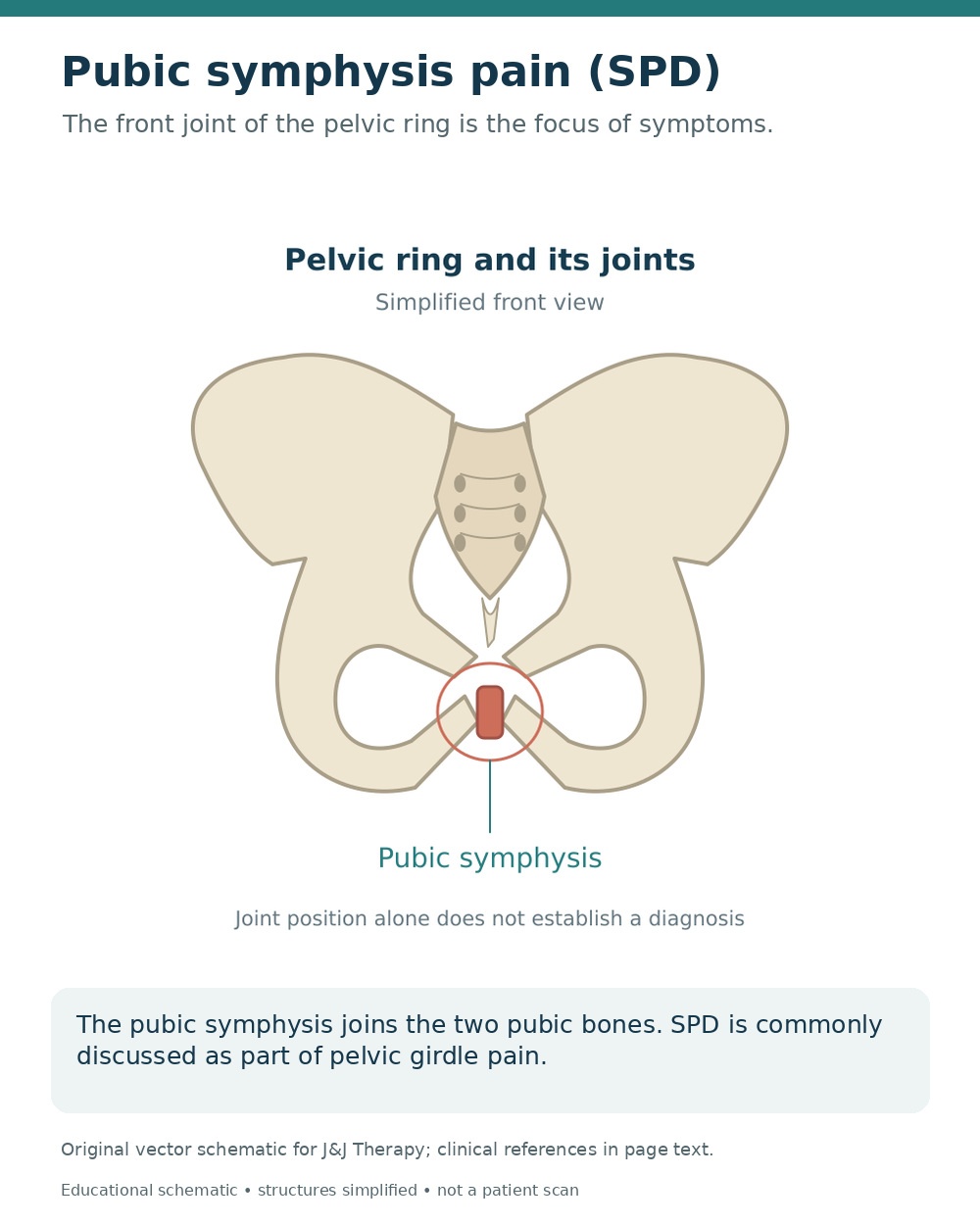
SPD is an older term now commonly included within pelvic girdle pain, or PGP. It is often used when symptoms are felt around the pubic joint at the front of the pelvis. It does not automatically mean the joint is separating abnormally or needs to be pushed back into place.
How we assess your symptoms
Lavya can assess movement, walking and the tasks that provoke symptoms, alongside your maternity history. We discuss manageable adaptations and whether maternity or specialist pelvic health review is needed. Our service does not include internal examinations.
Do You Experience These Symptoms?
- Pain around the pubic bone, groin or inner thighs.
- Discomfort climbing stairs, dressing on one leg or getting into a car.
- Pain with turning in bed or moving the legs apart.
An assessment helps guide your next step, based on your symptoms, health and goals.
What may contribute?
Pregnancy alters the load and demands on the pelvic region. Symptoms vary and should be assessed in context, including any previous pelvic pain or birth injury. Sudden severe pain after delivery or inability to walk requires medical assessment rather than an assumed SPD diagnosis.
A treatment plan built around you
Hands-On Manual Therapy
Gentle treatment may help surrounding muscle discomfort where appropriate. Soft Tissue Therapy with Brigitte can be considered within the care plan. Forceful pubic-joint manipulation or claims of permanently realigning the pelvis are not part of the approach.
Is Shockwave Suitable?
Shockwave is not recommended for SPD or pregnancy-related pelvic girdle pain. Suitable care begins with movement assessment, practical advice and tailored rehabilitation, with maternity or specialist referral when the symptom pattern requires it.
Targeted Exercise Programme
We adapt exercises and daily strategies to your symptoms, including stairs, bed movement and dressing. A support belt or other aid may be discussed if appropriate. The goal is useful movement and manageable activity rather than forcing painful ranges.
When to Seek Urgent Medical Help
While most symptoms are not serious, urgent medical attention is required if you experience any of the following:
- Contact your maternity team urgently for pelvic pain with bleeding, fluid loss, contractions, reduced baby movements, fever or feeling unwell. New severe pain or being unable to bear weight also needs prompt assessment.
- Seek emergency help for new saddle numbness, inability to pass urine, loss of bowel control or rapidly worsening leg weakness. Call 999 for sudden breathlessness or chest pain; a new painful swollen calf needs urgent assessment.
Your questions answered
Are SPD and PGP different conditions?
SPD is commonly used as an older name within PGP, particularly for front-of-pelvis pain. We keep this page focused on pubic symptoms and link to the wider pregnancy-related pelvic pain guide.
Can pregnancy massage treat SPD?
Massage may support muscular comfort, but it does not replace assessment or rehabilitation for pubic pain. Start with Women’s Health Physiotherapy for new or limiting symptoms, then consider massage separately if suitable.
Which appointment should I book?
Start with Women’s Health Physiotherapy with Lavya for a movement assessment and rehabilitation plan. We do not offer internal examinations. For pelvic floor, bladder or bowel concerns, contact us first to discuss the assessment you need and any onward referral. Pregnancy & Postnatal Massage may be a separate comfort-focused option after suitability checks. It is not a substitute for assessment or rehabilitation.
Visit J&J Therapy on the ground floor of CI Tower, New Malden. Book an assessment or call our reception team on 07935 869938 if you are unsure which service to choose.
Related conditions
Pelvic girdle pain in pregnancy · Diastasis recti
Sources and further reading

This page is for general information only and does not replace professional medical advice.
Information updated 15 October 2026. General information to support informed choices; it is not a diagnosis or a personalised treatment plan. Suitability and any need for referral are assessed individually. Seek urgent medical help for the warning signs listed above.