Quick Summary
Noticing abdominal doming or a gap after pregnancy? Diastasis recti is common and does not by itself mean your core is damaged. Our women’s health assessment focuses on symptoms, abdominal function and a gradual return to the activities you want to do.
Understanding Diastasis Recti
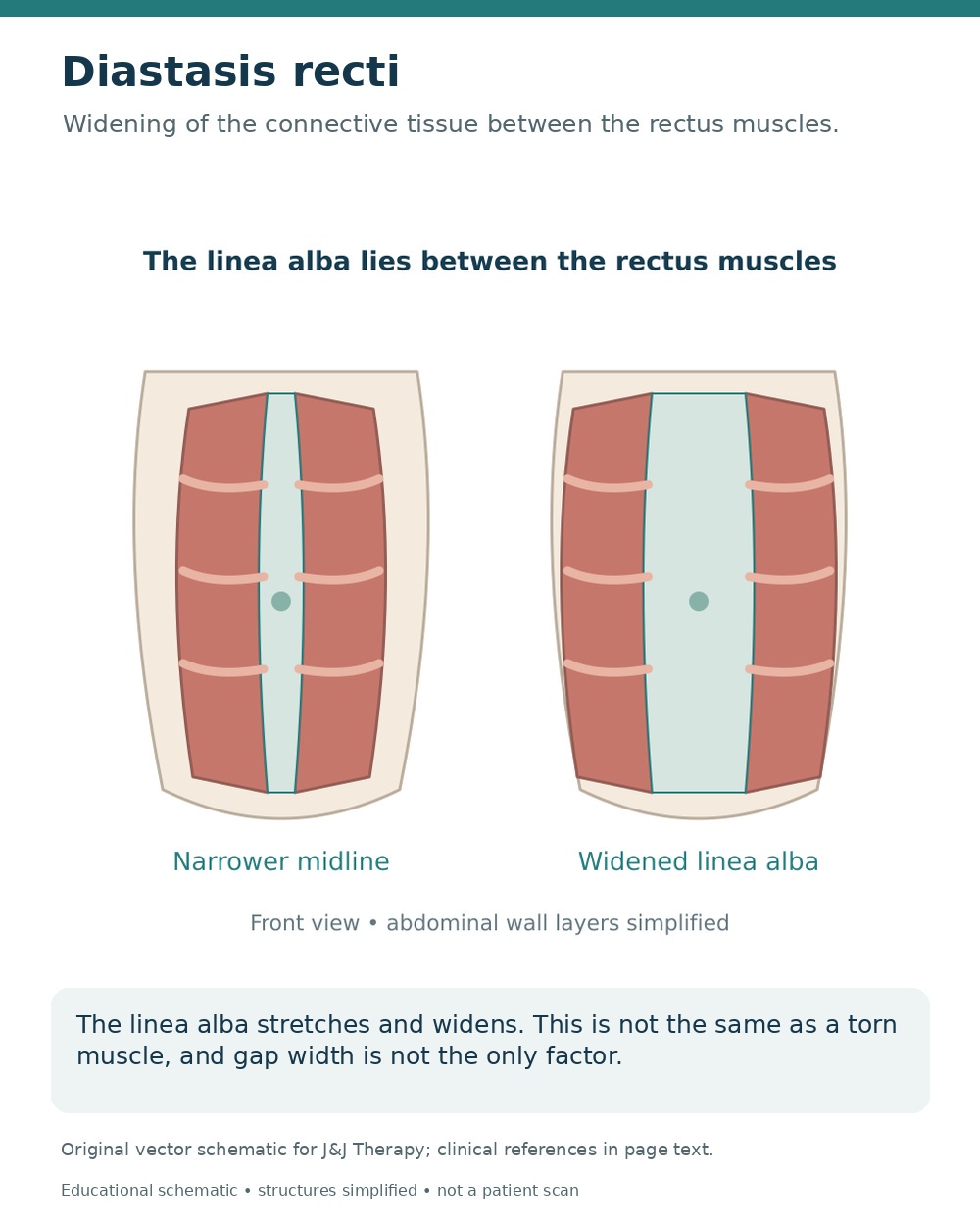
Diastasis recti is widening of the space between the two sides of the rectus abdominis muscles as the connective tissue between them stretches. It is common during pregnancy and may remain afterwards. Gap width alone does not capture strength, symptoms or readiness for exercise.
How we assess your symptoms
Lavya can assess your abdominal movement, breathing, strength and functional tasks within our women’s health service. We discuss birth and recovery, current symptoms and goals. We do not offer internal examinations; pelvic floor or bladder concerns should be discussed before booking so the right pathway is arranged.
Do You Experience These Symptoms?
- A visible midline ridge or doming during some movements.
- A sense of reduced abdominal support or confidence when lifting.
- Concern about the gap or difficulty returning to exercise; some people have no symptoms.
An assessment helps guide your next step, based on your symptoms, health and goals.
What may contribute?
Pregnancy changes the abdominal wall to accommodate the growing baby. Recovery varies with individual factors and daily demands. Diastasis is not automatically the cause of back pain or bladder symptoms, and a focal painful lump needs review for a possible hernia.
A treatment plan built around you
Hands-On Manual Therapy
Hands-on care may address separate muscle discomfort where appropriate, but massage does not close an abdominal separation. Any scar care is a distinct service and is considered only after full wound healing and suitability checks.
Is Shockwave Suitable?
Shockwave is not a treatment to close diastasis recti. The useful starting point is an assessment of abdominal function and recovery, followed by progressive rehabilitation and referral when a hernia or other concern is suspected.
Targeted Exercise Programme
Rehabilitation gradually develops abdominal control, strength and confidence for lifting, carrying and exercise. We adapt the starting level to comfort and function, progressing harder tasks rather than imposing a permanent ban on all abdominal exercise.
When to Seek Urgent Medical Help
While most symptoms are not serious, urgent medical attention is required if you experience any of the following:
- Go to A&E immediately for a painful or hard abdominal lump with severe pain, vomiting or inability to pass stool or wind. These can be signs of a hernia complication. Have other new abdominal lumps checked by a GP.
- After birth, worsening abdominal pain, fever, heavy bleeding or an inflamed or opening wound needs urgent maternity or medical advice. New bladder emptying difficulty, saddle numbness or marked leg weakness requires emergency assessment.
Your questions answered
Do I need to close the gap completely?
Not necessarily. We consider comfortable function and your goals alongside any gap. A smaller measurement is not the only meaningful sign of progress.
Can postnatal or Caesarean scar massage help?
It may be chosen for comfort or a suitable fully healed scar, but it does not repair diastasis. Agnieszka offers postnatal massage and appropriate healed Caesarean scar care separately from the rehabilitation assessment.
Which appointment should I book?
Start with Women’s Health Physiotherapy with Lavya for a movement assessment and rehabilitation plan. We do not offer internal examinations. For pelvic floor, bladder or bowel concerns, contact us first to discuss the assessment you need and any onward referral. Pregnancy & Postnatal Massage may be a separate comfort-focused option after suitability checks. It is not a substitute for assessment or rehabilitation.
Visit J&J Therapy on the ground floor of CI Tower, New Malden. Book an assessment or call our reception team on 07935 869938 if you are unsure which service to choose.
Related conditions
Pregnancy-related pelvic pain · Activity-related back pain
Sources and further reading

This page is for general information only and does not replace professional medical advice.
Information updated 15 October 2026. General information to support informed choices; it is not a diagnosis or a personalised treatment plan. Suitability and any need for referral are assessed individually. Seek urgent medical help for the warning signs listed above.