Quick Summary
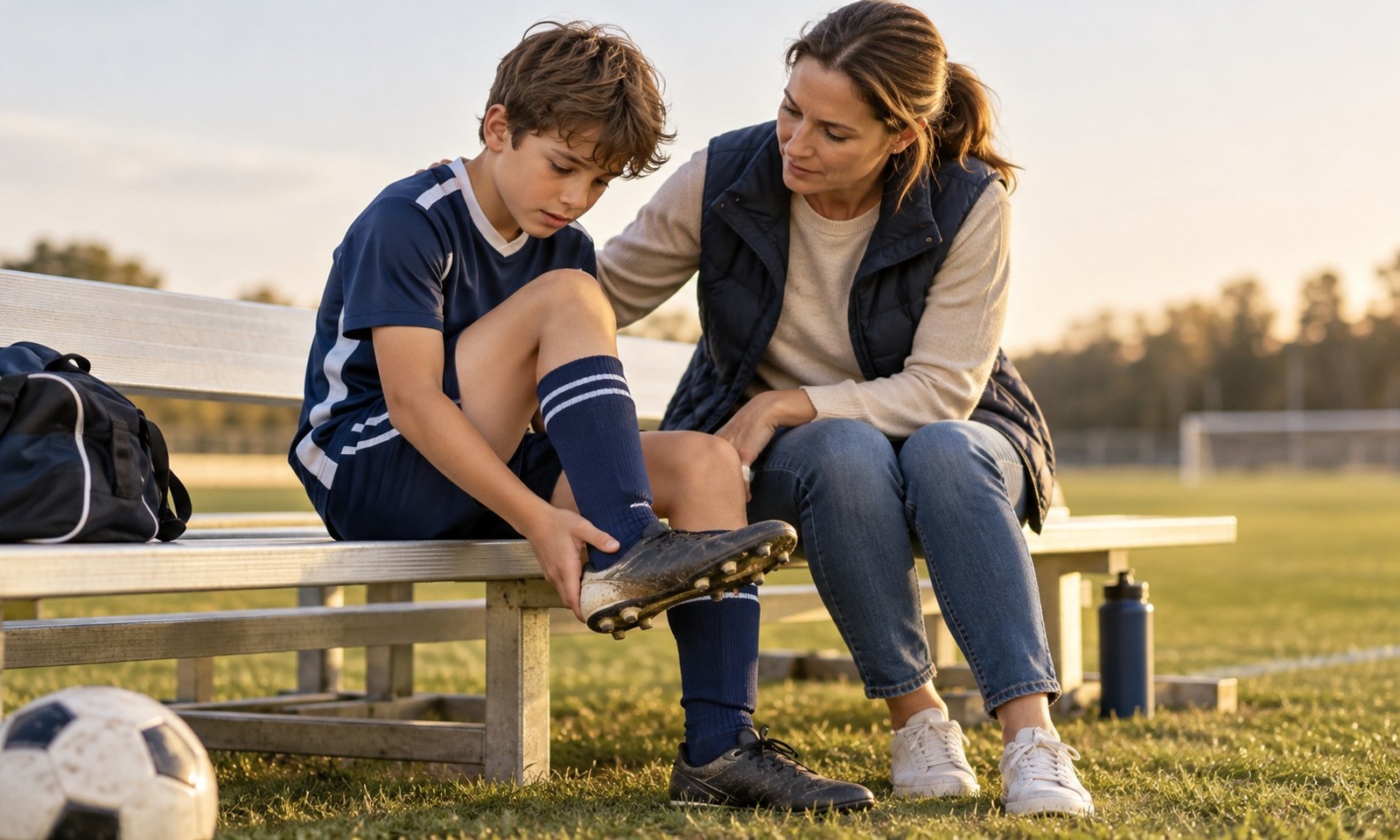
Heel pain in a growing child can interfere with sport and walking. Age-appropriate assessment and manageable activity changes can support a comfortable return to participation. Contact our New Malden reception team to confirm a suitable appointment for your child and discuss the appropriate next step.
Understanding Sever’s Disease
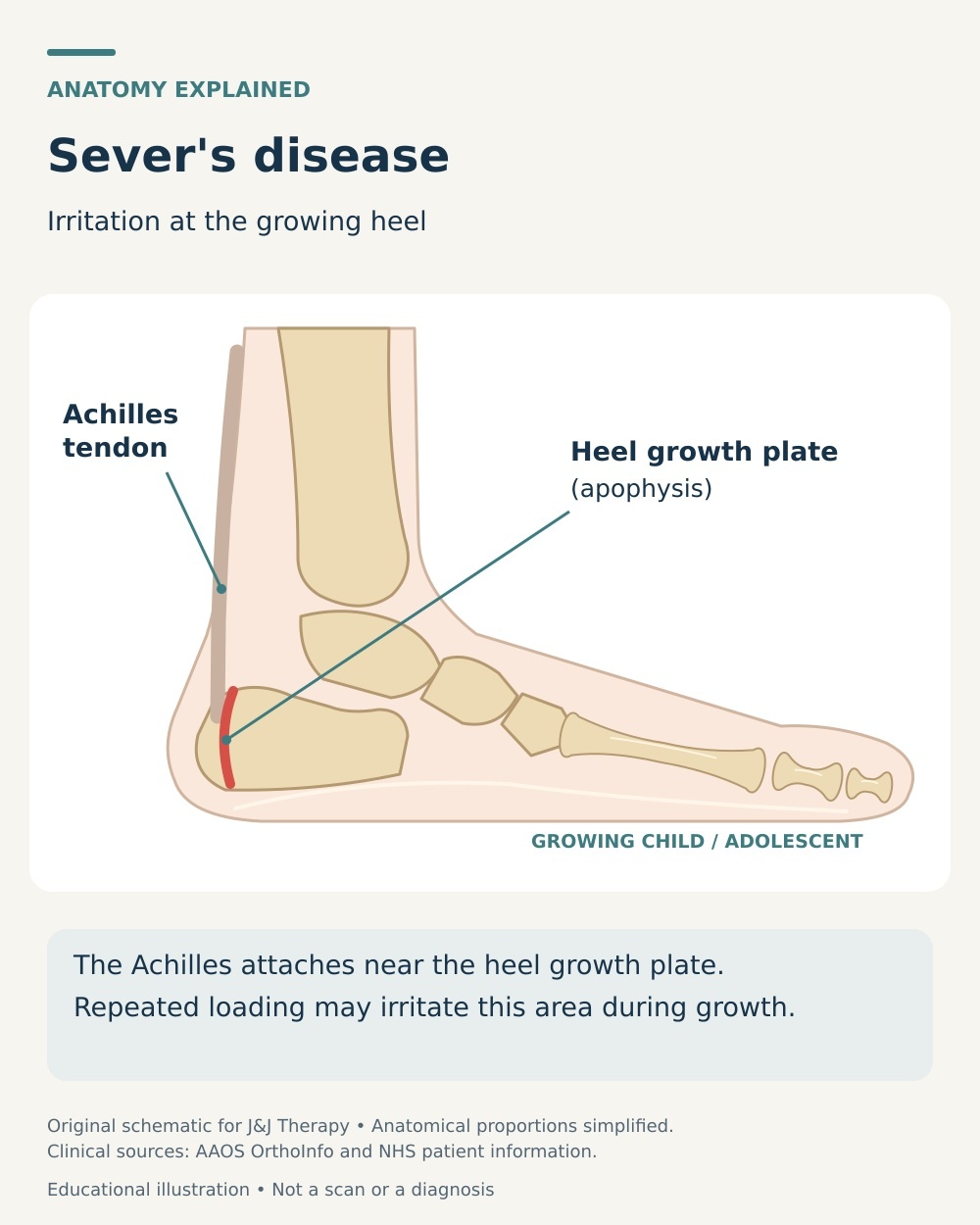
Sever’s disease, or calcaneal apophysitis, is irritation of a growth area at the back of the heel. It occurs in children and adolescents before that growth area closes. It is not an infection or the same condition as adult Achilles tendinopathy.
Assessment at J&J Therapy
Please contact reception before booking to confirm a suitable clinician for your child. Assessment considers age, growth, the site of tenderness and activity demands. We discuss goals with the young person and parent or carer, including school PE and club sport.
Do You Experience These Symptoms?
- Heel pain during or after running and jumping.
- Tenderness at the back or sides of the heel.
- A limp or altered walking pattern when symptoms are more painful.
An assessment helps guide your next step, based on your symptoms, health and goals.
Why symptoms may develop
Repeated loading during growth can irritate the heel attachment. Sport demands, recovery and calf flexibility may contribute. Symptoms can affect one or both heels and fluctuate, but persistent rest pain or systemic illness needs assessment for other causes.
Treatment and rehabilitation options
Hands-On Manual Therapy
Gentle treatment of surrounding muscles may be considered for comfort, but firm direct pressure over the painful growth area is avoided. Treatment does not aim to force a growing heel into an adult tendon rehabilitation protocol. We explain the purpose and check your comfort and response throughout treatment.
Is Shockwave Suitable?
Shockwave is not a routine treatment for Sever’s disease. Growing children need an individual assessment and an age-appropriate loading plan rather than standard adult heel-pain treatment. Your physiotherapist can explain the more suitable options and how their effect will be reviewed during your ongoing rehabilitation.
Targeted Exercise Programme
We adjust painful impact activity, consider comfortable supportive footwear or a heel support trial and introduce suitable mobility and strength work. Sport is progressed when walking and relevant tasks are comfortable, without persisting through a marked limp. Your home plan is adapted as your function and confidence improve.
When to Seek Urgent Medical Help
While most symptoms are not serious, urgent medical attention is required if you experience any of the following:
- Seek urgent medical advice if your child cannot bear weight, has fever or a hot swollen foot, or severe pain after injury.
- Persistent night pain, unexplained illness or pain that does not fit activity-related heel symptoms needs medical review.
- Reduce activity and arrange review if pain causes a persistent limp.
Your questions answered
Will my child grow out of it?
Symptoms usually settle once the growth area matures, but can recur during growth. A practical activity plan can help manage episodes while checking that the diagnosis remains appropriate.
Does every child need an X-ray?
Not necessarily when the history and examination are typical. Unusual symptoms, trauma or persistent severe pain may require medical assessment and investigation.
Which appointment should I book?
Call our reception team on 07935 869938 before booking for a child or teenager so we can confirm a suitable clinician and appointment. Tell us their age, symptoms and any medical advice already received. Urgent symptoms need medical assessment first.
Related conditions
Sources and further reading

This page is for general information only and does not replace professional medical advice.
Information updated 15 October 2026. General information only; this page cannot diagnose your symptoms. Treatment is agreed after assessment. For urgent or severe symptoms, use the medical services described above.