
Quick Summary
Back discomfort during desk work, driving or prolonged standing is often called postural pain. There is no single perfect position for everyone. We assess your symptoms and daily demands, then help you find practical changes and build tolerance for activity.
Understanding Postural Low Back Pain
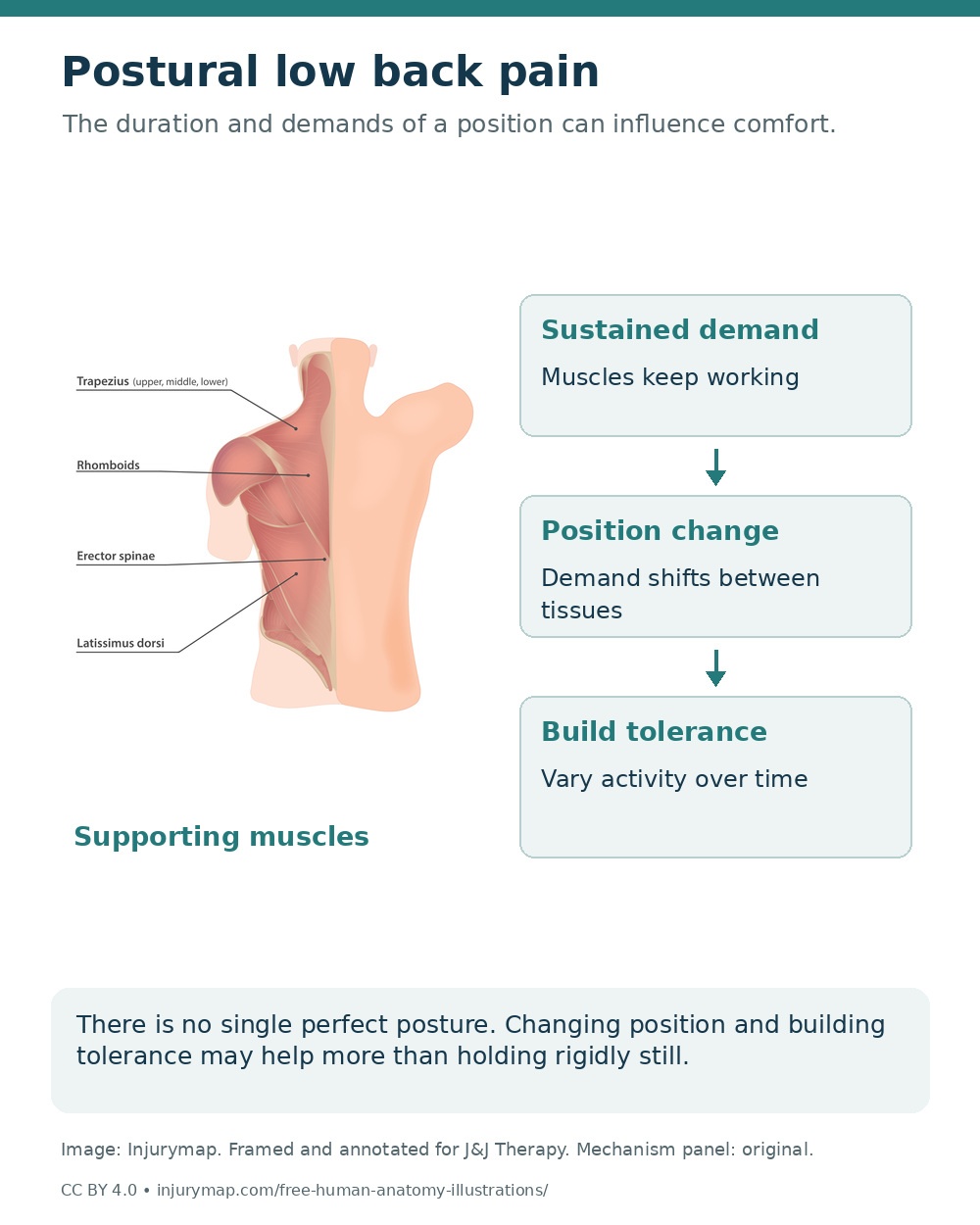
“Postural low back pain” describes symptoms linked to sustained positions rather than a precise diagnosis. A position that is comfortable briefly may become uncomfortable when held for a long time. Pain does not automatically mean your spine is crooked or permanently damaged.
How we assess your symptoms
We discuss your work setup, driving and other long-duration tasks. We assess movement and strength, and check whether any leg symptoms suggest another problem. A photo of your usual setup can help us suggest practical changes that fit your environment.
Do You Experience These Symptoms?
- An ache or stiffness after prolonged sitting, standing or driving.
- Relief with a change of position or a short movement break.
- Reduced tolerance for a working day, sometimes with muscle fatigue.
An assessment helps guide your next step, based on your symptoms, health and goals.
A treatment plan built around you
Hands-On Manual Therapy
Hands-on or soft tissue treatment may ease associated muscle discomfort. It is used to support comfortable movement, not to promise a permanent posture correction. Exercise and manageable changes during the day remain part of the plan.
Is Shockwave Suitable?
Shockwave is not routinely recommended for postural low back pain. Your assessment will guide appropriate rehabilitation, symptom management and whether medical or specialist review is needed. We will explain why each proposed treatment fits your symptoms before you decide whether to proceed.
Targeted Exercise Programme
We combine movement breaks and position variation with progressive strength and general activity. The plan can include practising longer work or driving periods gradually, with adjustments based on how your symptoms behave.
When to Seek Urgent Medical Help
While most symptoms are not serious, urgent medical attention is required if you experience any of the following:
- Go to A&E immediately for new numbness around your genitals or bottom, difficulty starting or controlling urine, loss of bowel control, or severe or worsening weakness in both legs. These can signal cauda equina compression. Call 999 if you need an ambulance.
- Seek urgent medical advice for rapidly worsening leg weakness, fever or feeling unwell with back pain, or significant pain after an injury. Contact your GP about unexplained weight loss, a cancer history or persistent night pain.
Your questions answered
Do I need to sit perfectly straight all day?
No single posture suits everyone all the time. Comfortable support and regular changes of position are often more practical than holding yourself rigidly upright.
Will a new chair fix my back pain?
A suitable chair may improve comfort, but equipment alone may not resolve symptoms. We consider the whole day, your activity and any other findings before recommending changes.
Which appointment should I book?
Choose a Physiotherapy Initial Assessment for new, persistent or uncertain symptoms. We will assess what is limiting you, explain the options and agree the next steps. If you already have a diagnosis, bring any relevant scan report or specialist advice. For assessed muscle tension, Soft Tissue Therapy with Brigitte may complement your exercise plan. New weakness or nerve symptoms should be assessed before massage.
Visit J&J Therapy on the ground floor of CI Tower, New Malden. Book an assessment or call our reception team on 07935 869938 if you are unsure which service to choose.
Related conditions
Non-specific low back pain · Back muscle spasm
Sources and further reading

This page is for general information only and does not replace professional medical advice.
Information updated 15 October 2026. General information to support informed choices; it is not a diagnosis or a personalised treatment plan. Suitability and any need for referral are assessed individually. Seek urgent medical help for the warning signs listed above.