
Quick Summary
Pain behind the outer ankle may come from the peroneal tendons. Assessment helps distinguish overload from a tear, tendon slipping or a lingering ankle sprain. Our physiotherapists in New Malden can assess your symptoms and help you choose appropriate next steps for your goals. We agree practical goals and review your progress.
Understanding Peroneal Tendinopathy
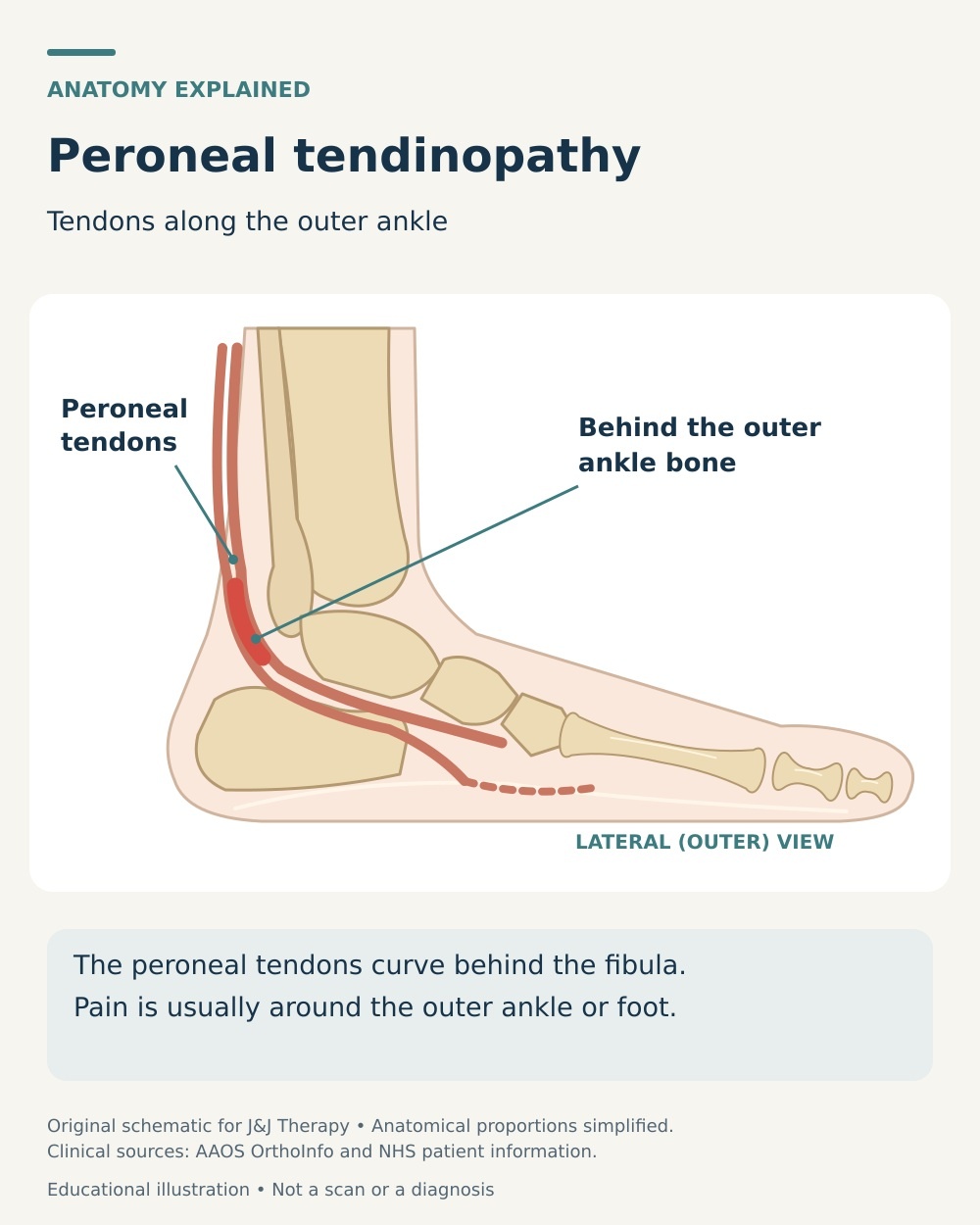
The peroneal tendons run behind the outside ankle bone and help control the foot. Tendinopathy describes load-related tendon pain, often developing gradually. A sudden injury, snapping tendon or marked weakness may indicate a different problem that needs further investigation.
Assessment at J&J Therapy
We assess the location of pain, ankle strength, balance and the history of sprains. Snapping behind the ankle, significant weakness or persistent swelling may warrant specialist review for a tendon tear or instability.
Do You Experience These Symptoms?
- Pain or tenderness behind the outer ankle and along the outside of the foot.
- Discomfort with uneven ground, running or pushing the foot outwards.
- Swelling or stiffness around the tendon after activity.
An assessment helps guide your next step, based on your symptoms, health and goals.
Why symptoms may develop
An increase in walking or running, repeated ankle rolling and recovery after a sprain may contribute. Foot mechanics and training demands can influence load, but they should be considered individually rather than treated as a universal alignment fault.
Treatment and rehabilitation options
Hands-On Manual Therapy
Gentle soft tissue treatment or appropriate joint mobilisation may help associated calf stiffness and comfortable movement. Direct pressure is adjusted for an irritable tendon. Hands-on care supports, rather than replaces, progressive loading. We explain the purpose and check your comfort and response throughout treatment.
Is Shockwave Suitable?
Shockwave is not a routine first-line treatment for peroneal tendon pain. Evidence for this specific condition is limited; the diagnosis and response to rehabilitation should be reviewed before considering additional treatments. Your physiotherapist can explain the more suitable options and how their effect will be reviewed during your ongoing rehabilitation.
Targeted Exercise Programme
Rehabilitation progressively loads the peroneal muscles and calf while building balance and foot control. We adjust uneven-ground activity and running, then reintroduce them as capacity improves. Footwear or support may be trialled if it helps your tasks. Your home plan is adapted as your function and confidence improve.
When to Seek Urgent Medical Help
While most symptoms are not serious, urgent medical attention is required if you experience any of the following:
- Seek urgent GP or NHS 111 advice for severe pain after injury, inability to bear weight, or a hot swollen joint with fever.
- Go to A&E for an obvious deformity or a foot that becomes cold, pale or numb.
- If you have diabetes and a new foot wound, redness or swelling, contact your GP or diabetic foot team the same day; use NHS 111 if unavailable. Persistent altered sensation also needs medical review.
Your questions answered
Is outer-ankle pain always a ligament sprain?
No. Peroneal tendons, the joint and bone can cause similar symptoms. Pain location, injury history and examination help distinguish them.
What does a snapping sensation mean?
A tendon may be moving abnormally behind the ankle bone, particularly after injury. Repeated snapping with pain or instability deserves assessment rather than deeper massage.
Which appointment should I book?
Start with a Physiotherapy Initial Assessment for new, persistent or recurring symptoms. We can assess the problem and agree a plan linked to your daily activities. If you have already had medical care or surgery, bring the relevant instructions.
Soft Tissue Therapy may be a supporting option for associated muscle discomfort once the condition has been assessed. It is not a substitute for diagnosis or the rehabilitation needed for the underlying problem.
Book a Physiotherapy Assessment or call our reception team on 07935 869938. Find J&J Therapy at CI Tower, Ground Floor, New Malden.
Related conditions
Ankle Sprain (Acute) · Chronic Ankle Instability
Sources and further reading

This page is for general information only and does not replace professional medical advice.
Information updated 15 October 2026. General information only; this page cannot diagnose your symptoms. Treatment is agreed after assessment. For urgent or severe symptoms, use the medical services described above.