
Quick Summary
A rolled ankle needs more than waiting for bruising to fade. After checking for a fracture or significant injury, rebuild movement, strength and balance step by step. Our physiotherapists in New Malden can assess your symptoms and help you choose appropriate next steps for your goals.
Understanding Ankle Sprain (Acute)
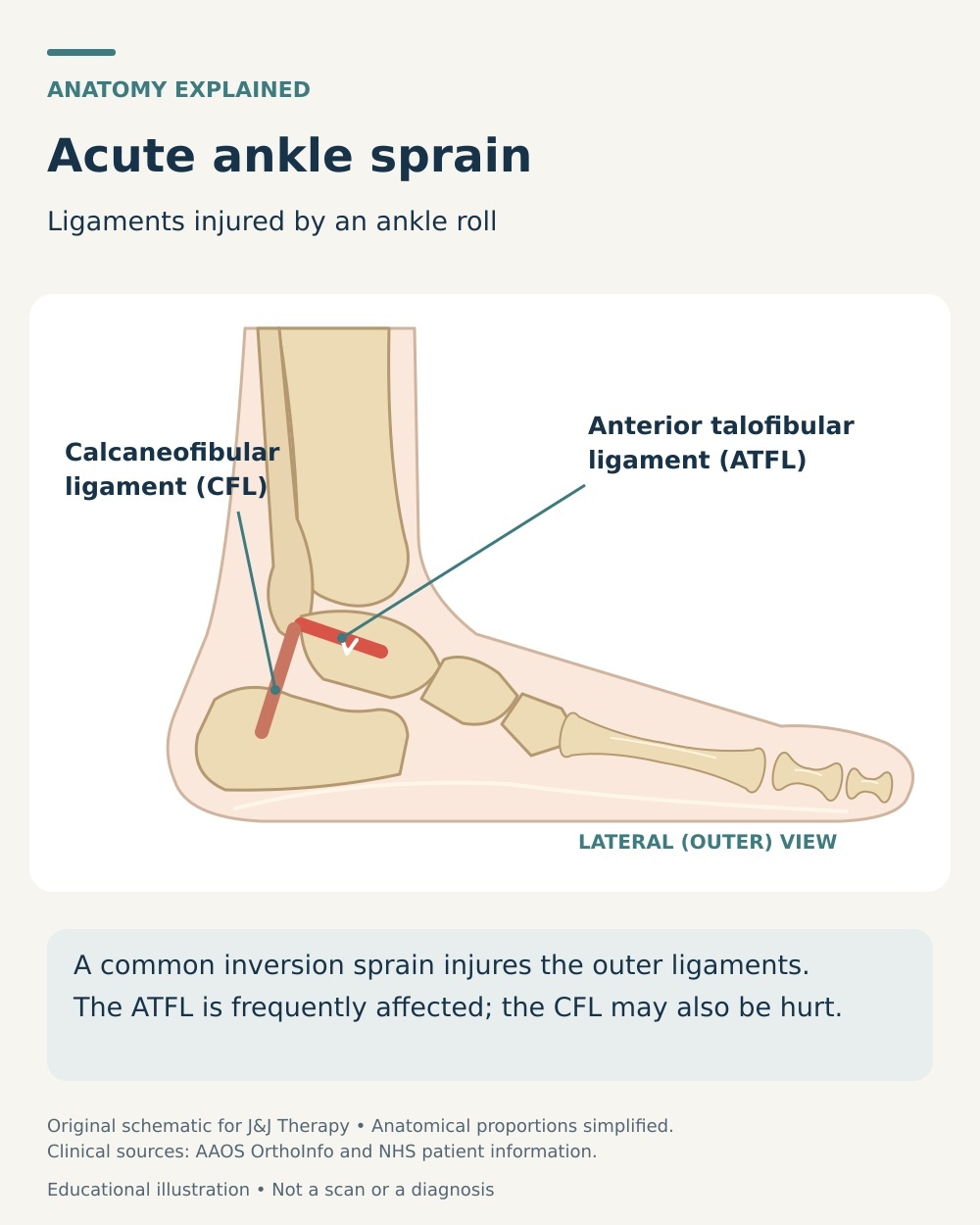
An ankle sprain is an injury to the ligaments supporting the joint. The outer ligaments are commonly affected when the foot rolls inwards, but other injury patterns occur. Some apparent sprains include a fracture, tendon injury or high-ankle sprain and need different management.
Assessment at J&J Therapy
We review your injury and ability to walk, checking for signs that need urgent assessment before treatment. Once safe, we assess movement, strength and balance and explain whether external support, protected loading or further referral is appropriate.
Do You Experience These Symptoms?
- Pain, swelling or bruising after rolling or twisting the ankle.
- Difficulty walking or putting weight through the foot.
- Stiffness and reduced confidence on uneven ground.
An assessment helps guide your next step, based on your symptoms, health and goals.
Why symptoms may develop
An awkward landing, unexpected step or sporting turn can overload the ligaments. Previous sprains can increase the chance of recurrence. The injury mechanism and location of bone tenderness help determine whether an X-ray or further investigation is required.
Treatment and rehabilitation options
Hands-On Manual Therapy
Early care protects the injury and avoids aggressive massage over acutely swollen tissues. Once appropriate, gentle pain-free mobilisation and soft tissue techniques can support movement alongside exercise, without forcing the healing ligaments. We explain the purpose and check your comfort and response throughout treatment.
Is Shockwave Suitable?
Shockwave is not a routine treatment for an acute ankle sprain. It should not replace fracture screening, appropriate protection or a structured rehabilitation programme. Your physiotherapist can explain the more suitable options and how their effect will be reviewed during your ongoing rehabilitation.
Targeted Exercise Programme
Loading and movement are introduced within the injury’s tolerance and any medical restrictions. Rehabilitation then develops calf and ankle strength, balance and confidence before running, hopping and turning. A brace or taping may help during selected activities but does not replace exercise.
When to Seek Urgent Medical Help
While most symptoms are not serious, urgent medical attention is required if you experience any of the following:
- Seek urgent GP or NHS 111 advice for severe pain after injury, inability to bear weight, or a hot swollen joint with fever.
- Go to A&E for an obvious deformity or a foot that becomes cold, pale or numb.
- If you have diabetes and a new foot wound, redness or swelling, contact your GP or diabetic foot team the same day; use NHS 111 if unavailable. Persistent altered sensation also needs medical review.
Your questions answered
Do I need an X-ray?
Not every sprain does, but inability to bear weight or specific bony tenderness can make one necessary. A clinician uses the history and examination to decide.
Can I return to sport when swelling settles?
Swelling is only one measure. Strength, balance, hopping and confidence also matter, and skipping rehabilitation can leave the ankle vulnerable to further sprains.
Which appointment should I book?
Start with a Physiotherapy Initial Assessment for new, persistent or recurring symptoms. We can assess the problem and agree a plan linked to your daily activities. If you have already had medical care or surgery, bring the relevant instructions.
Book a Physiotherapy Assessment or call our reception team on 07935 869938. Find J&J Therapy at CI Tower, Ground Floor, New Malden.
Related conditions
Chronic Ankle Instability · Peroneal Tendinopathy
Sources and further reading

This page is for general information only and does not replace professional medical advice.
Information updated 15 October 2026. General information only; this page cannot diagnose your symptoms. Treatment is agreed after assessment. For urgent or severe symptoms, use the medical services described above.