
Quick Summary
Persistent swelling or pain after a knee injury deserves a clear diagnosis. Rehabilitation is tailored to the cartilage involved and any surgical restrictions. Our physiotherapists in New Malden can assess your symptoms and help you choose appropriate next steps for your goals. We agree practical goals and review your progress.
Understanding Knee Cartilage Injury
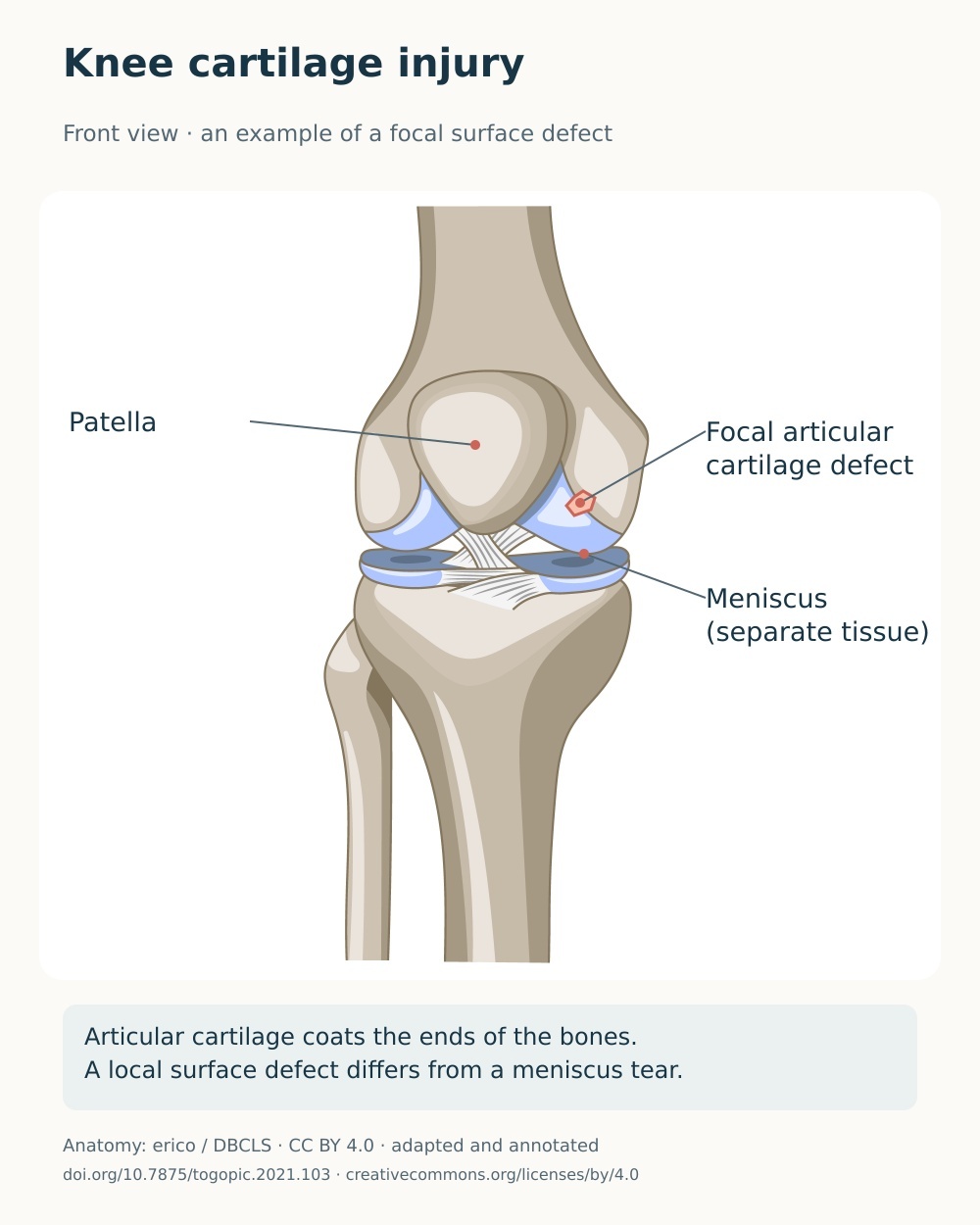
Articular cartilage is the smooth covering at the ends of the bones in the knee. A focal injury to this surface differs from a meniscus tear and from more widespread osteoarthritis. Symptoms depend on the site and associated injuries; some cartilage findings cause few symptoms.
Assessment at J&J Therapy
We review the diagnosis, imaging if available and any specialist advice. Assessment considers movement, swelling and the demands of your work or sport. Recurrent large swelling or true locking requires medical review; physiotherapy cannot determine every cartilage defect without investigation.
Image: erico / DBCLS, Togo picture gallery · CC BY 4.0. Adapted and annotated.
Do You Experience These Symptoms?
- Pain with weight-bearing, squatting or impact activity.
- Swelling that returns after exercise.
- Catching or a loss of movement, particularly if a loose fragment is present.
An assessment helps guide your next step, based on your symptoms, health and goals.
Why symptoms may develop
A twist, direct injury or kneecap dislocation can damage cartilage. Changes can also develop over time. Cartilage has a limited capacity to heal, but symptoms and function can still improve with appropriate management of load and strength.
Treatment and rehabilitation options
Hands-On Manual Therapy
Gentle mobilisation or soft tissue work may help associated stiffness and comfort. These techniques do not regrow articular cartilage. Following cartilage surgery, all treatment must respect healing and movement restrictions. We explain the purpose and check your comfort and response throughout treatment.
Is Shockwave Suitable?
Shockwave is not a routine treatment for a knee articular cartilage defect. It should not be described as a way to regenerate joint cartilage. Your physiotherapist can explain the more suitable options and how their effect will be reviewed during your ongoing rehabilitation.
Targeted Exercise Programme
Rehabilitation uses tolerable strengthening, low-impact fitness and progressive functional loading. After cartilage restoration or microfracture, the surgeon’s weight-bearing and movement protocol determines progression. We plan a return to activity around recovery milestones and symptom response. Your home plan is adapted as your function and confidence improve.
When to Seek Urgent Medical Help
While most symptoms are not serious, urgent medical attention is required if you experience any of the following:
- Seek urgent GP or NHS 111 advice if you cannot move the knee, bear weight, or straighten a knee that is locked.
- A hot swollen knee with fever or feeling unwell needs urgent medical assessment.
- Go to A&E for a deformed leg after injury or a foot that becomes cold, pale or numb.
Your questions answered
Is this the same as a meniscus tear?
No. Both are sometimes called cartilage damage, but articular cartilage covers the bone ends, while the menisci are separate load-distributing pads. Confirming which tissue is involved changes the plan.
Can exercise repair the cartilage?
Exercise aims to improve strength, function and symptom control. It cannot promise to restore the cartilage surface. A specialist may discuss other options for selected defects.
Which appointment should I book?
Start with a Physiotherapy Initial Assessment for new, persistent or recurring symptoms. We can assess the problem and agree a plan linked to your daily activities. If you have already had medical care or surgery, bring the relevant instructions.
Book a Physiotherapy Assessment or call our reception team on 07935 869938. Find J&J Therapy at CI Tower, Ground Floor, New Malden.
Related conditions
Meniscus Tear · Patella Dislocation / Subluxation
Sources and further reading

This page is for general information only and does not replace professional medical advice.
Information updated 15 October 2026. General information only; this page cannot diagnose your symptoms. Treatment is agreed after assessment. For urgent or severe symptoms, use the medical services described above.