Quick Summary
Flat feet are common and often need no treatment. If you have pain, weakness or a new change in your arch, assessment can clarify what support is useful. Our physiotherapists in New Malden can assess your symptoms and help you choose appropriate next steps for your goals.
Understanding Flat Feet / Fallen Arches
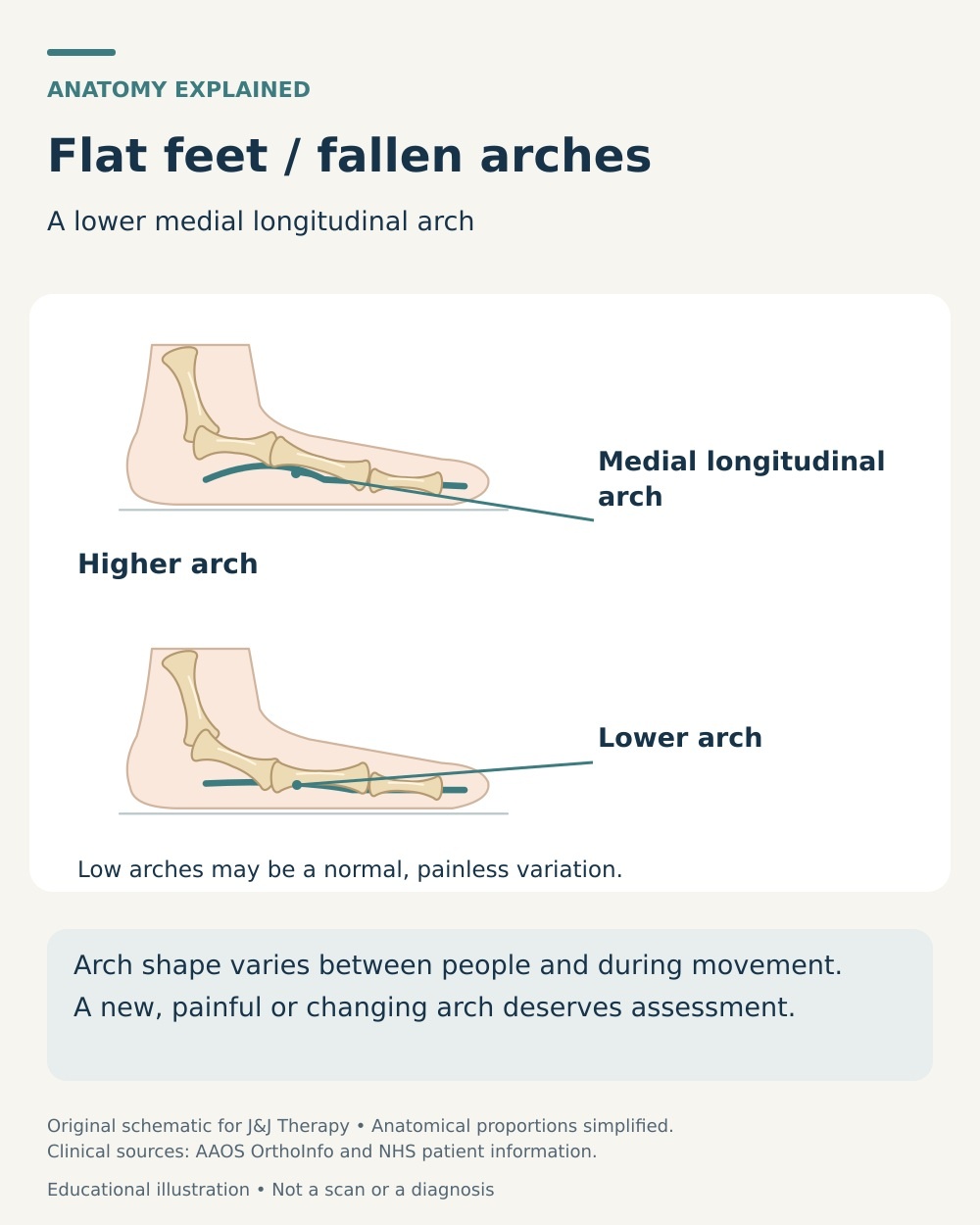
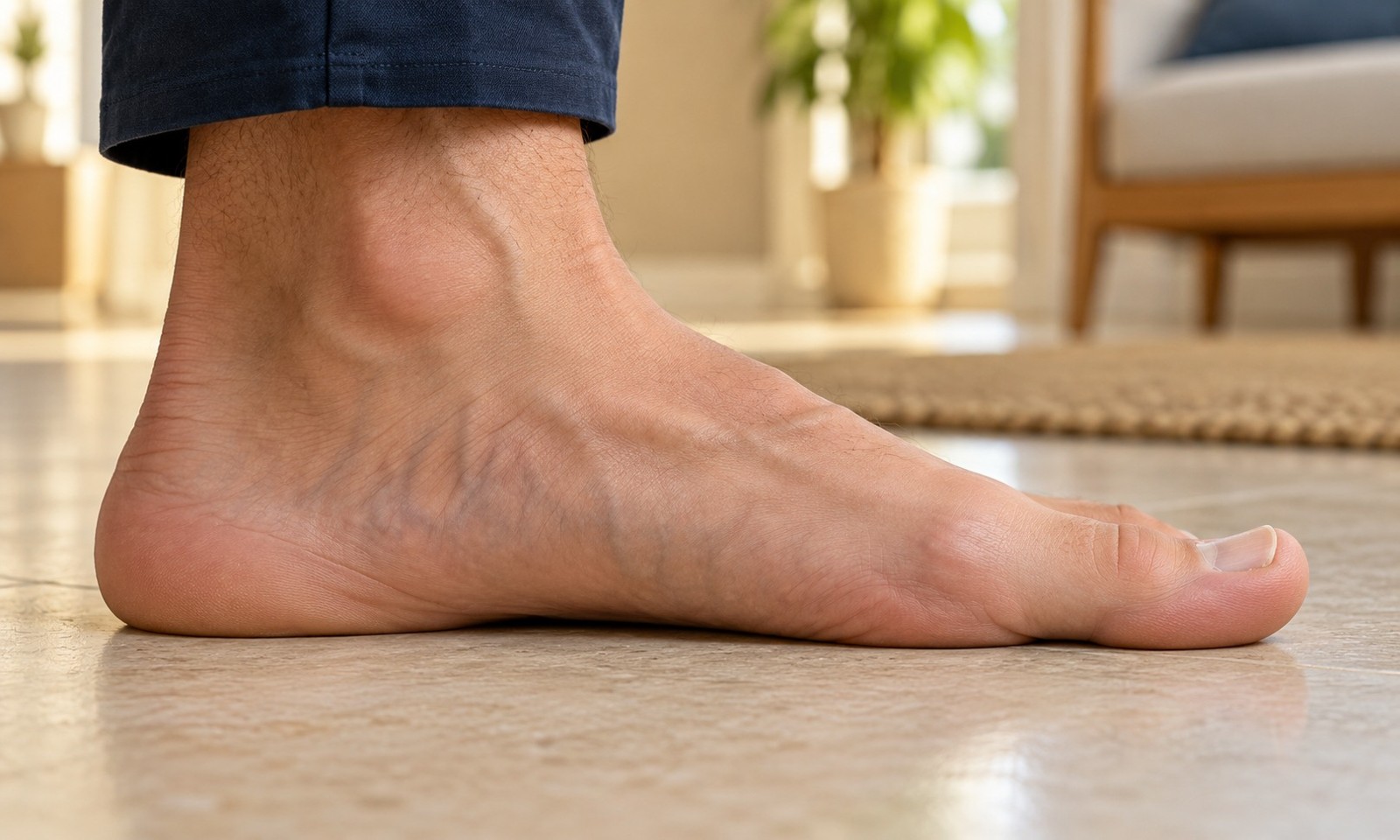
Flat feet means the inner arch sits low when standing. This can be a normal foot shape, particularly in children, and does not automatically cause pain or require correction. A new or increasingly flat foot in an adult is different and can involve tendon or joint problems.
Assessment at J&J Therapy
We ask whether your foot shape is longstanding or new and assess walking, strength and flexibility. A painful one-sided change or a progressively collapsing arch needs a targeted review, sometimes with podiatry or a foot and ankle specialist.
Do You Experience These Symptoms?
- A low arch that may cause no symptoms at all.
- Aching in the foot or ankle with activity when symptomatic.
- A recent change in one arch, weakness or difficulty with walking.
An assessment helps guide your next step, based on your symptoms, health and goals.
Treatment and rehabilitation options
Hands-On Manual Therapy
Gentle soft tissue or joint treatment may help associated discomfort when clinically appropriate. It does not permanently create an arch or correct the bones of the foot. Painless flat feet do not need a course of manual therapy. We explain the purpose and check your comfort and response throughout treatment.
Is Shockwave Suitable?
Shockwave is not a treatment for flat foot shape. A separate painful tendon or heel condition would need its own diagnosis and discussion of treatment options. Your physiotherapist can explain the more suitable options and how their effect will be reviewed during your ongoing rehabilitation.
Targeted Exercise Programme
For symptomatic feet, suitable exercise can improve foot and calf capacity, balance and walking tolerance. Comfortable footwear or an insole trial may help. We do not promise that exercise or orthotics will permanently change the shape of the arch. Your home plan is adapted as your function and confidence improve.
When to Seek Urgent Medical Help
While most symptoms are not serious, urgent medical attention is required if you experience any of the following:
- Seek urgent GP or NHS 111 advice for severe pain after injury, inability to bear weight, or a hot swollen joint with fever.
- Go to A&E for an obvious deformity or a foot that becomes cold, pale or numb.
- If you have diabetes and a new foot wound, redness or swelling, contact your GP or diabetic foot team the same day; use NHS 111 if unavailable. Persistent altered sensation also needs medical review.
Your questions answered
Does my child need insoles for flat feet?
Not simply because the arch looks low. Painless flexible flat feet are common in children. Pain, stiffness, weakness or difficulty keeping up deserves assessment and an age-appropriate plan.
Do flat feet cause all knee or back pain?
No. A low arch alone does not establish the cause of pain elsewhere. We assess the symptoms and movement that matter rather than assume a single explanation.
Which appointment should I book?
Start with a Physiotherapy Initial Assessment for new, persistent or recurring symptoms. We can assess the problem and agree a plan linked to your daily activities. If you have already had medical care or surgery, bring the relevant instructions.
Book a Physiotherapy Assessment or call our reception team on 07935 869938. Find J&J Therapy at CI Tower, Ground Floor, New Malden.
Related conditions
Posterior Tibial Tendon Dysfunction · Plantar Fasciitis
Sources and further reading

This page is for general information only and does not replace professional medical advice.
Information updated 15 October 2026. General information only; this page cannot diagnose your symptoms. Treatment is agreed after assessment. For urgent or severe symptoms, use the medical services described above.