
Quick Summary
Neck pain or stiffness after an accident? Our physiotherapists in New Malden can assess your symptoms and help you plan a gradual return to everyday activity. Care may include practical advice, tailored exercises and hands-on treatment where appropriate. New injury symptoms should be checked for signs that need medical attention before treatment starts.
What is Whiplash?
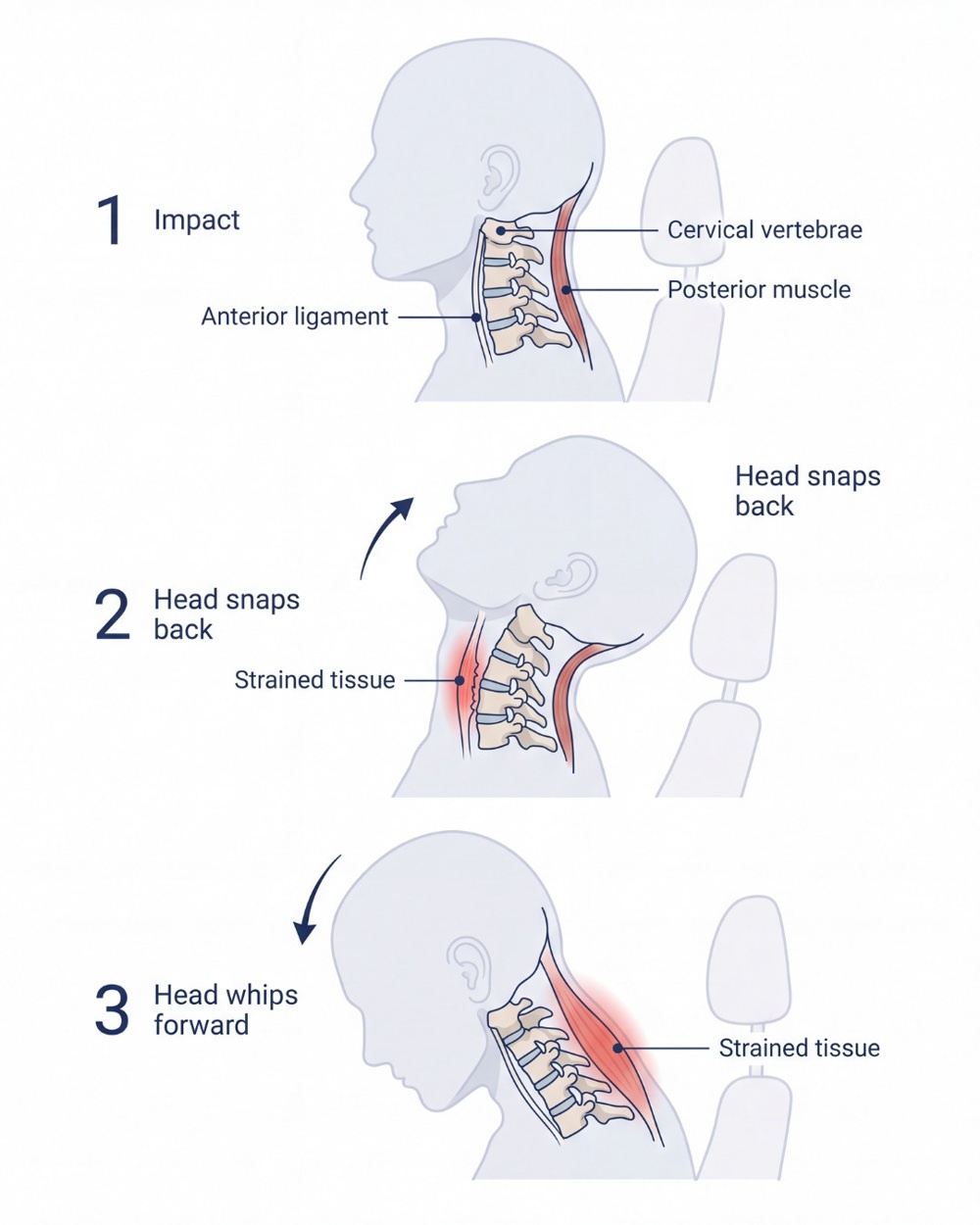
Whiplash describes a neck injury following a rapid movement of the head, often in a road collision, a fall or sport. Symptoms may start straight away or emerge later. The term does not tell us which tissue is painful or how quickly you will recover. We assess the whole picture, including sleep, headaches and confidence moving.
Your assessment at J&J Therapy looks at how symptoms affect your day, relevant health history, movement and strength. We explain the findings, agree priorities with you and advise when medical review or imaging would change your care.
Do You Experience These Symptoms?
- Neck ache and stiffness or difficulty turning the head.
- Headache and discomfort across the shoulders or upper back.
- Symptoms appearing hours after the incident; arm tingling or weakness needs assessment.
An assessment helps guide your next step, based on your symptoms, health and goals.
Why can it develop?
The sudden movement can irritate neck tissues and lead to protective muscle tension. Recovery varies between people. Ongoing pain, sleep disruption and distress after the incident deserve attention and an adjusted plan, rather than assumptions based only on the apparent severity of the collision.
Your treatment plan at J&J Therapy
Hands-On Manual Therapy
Gentle hands-on care may be considered alongside active rehabilitation if it gives a useful benefit. Evidence for manual treatment in acute whiplash is limited, so we monitor progress and avoid making it the whole programme.
Is Shockwave Suitable?
Shockwave is not routine whiplash treatment. It is not used to repair injured neck ligaments or replace the assessment and activity-based plan.
Targeted Exercise Programme
The plan centres on everyday activity, manageable neck movement and gradually increased strength or endurance. We help you pace work and travel and review progress against activities that matter to you.
When to Seek Urgent Medical Help
While most symptoms are not serious, urgent medical attention is required if you experience any of the following:
- After a neck injury, contact an urgent GP service or NHS 111 for severe uncontrolled pain, tingling, limb weakness, an electric-shock feeling down the neck or back, or difficulty walking or sitting upright.
- Call 999 after a serious accident or with sudden weakness, speech difficulty, collapse or a severe new headache.
- Do not drive if pain, restricted neck movement, dizziness or medication makes it unsafe.
Your questions answered
How long does whiplash last?
Many people improve over the first few months, while others need longer. We review your progress rather than promise a fixed number of visits; persistent or worsening symptoms may need GP or specialist input.
Do I need a collar or complete rest?
A collar and prolonged rest are not usually recommended for uncomplicated whiplash. Follow any specific medical instructions after your accident and build back everyday activity at a manageable level.
Which appointment should I book?
Choose a Physiotherapy Initial Assessment to understand this problem and plan your rehabilitation. Soft Tissue Therapy may be considered for associated muscle tension when appropriate; it does not replace assessment of an injury, tendon problem or joint restriction.
Book an appointment at J&J Therapy, ground floor, CI Tower, New Malden. Need help choosing? Call our reception team on 07935 869938.
Sources and further reading

This page is for general information only and does not replace professional medical advice.
Information updated 15 October 2026. General information only; this page does not diagnose your symptoms or replace an individual assessment. Treatment depends on your health, examination and preferences. Use the urgent-care advice above when needed.