
Quick Summary
A heavy, tight feeling across the tops of the shoulders is often described as upper trapezius pain. This muscle works during many everyday movements, but tenderness does not prove that it is damaged or permanently overactive. We focus on understanding your symptoms and helping you manage work, sleep and activity more comfortably.
What is Upper Trapezius Pain?
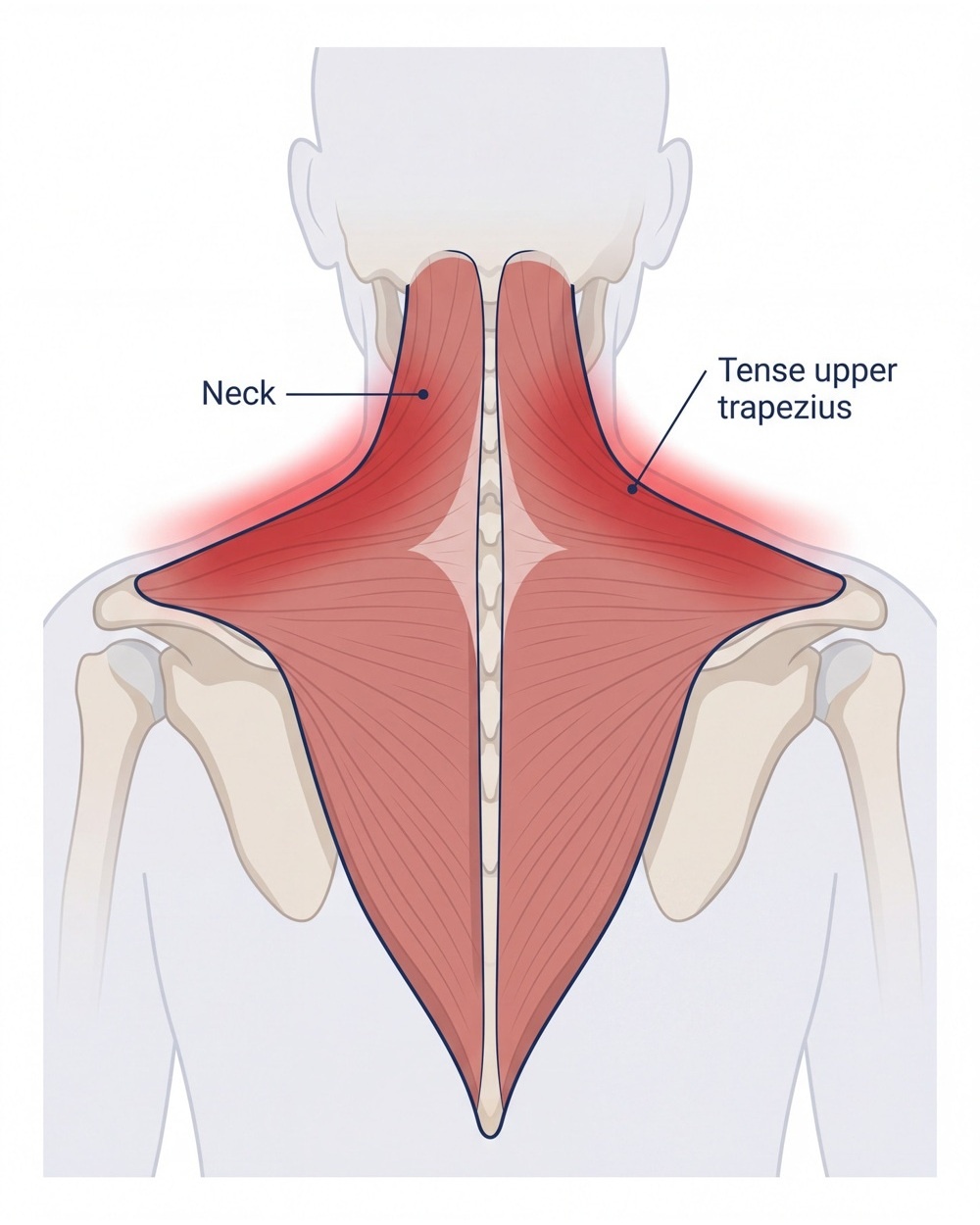
The upper trapezius helps move and support the shoulder girdle and neck. It may feel sore with muscular neck pain, headaches or shoulder problems. “Upper trapezius syndrome” is a descriptive label, not a precise explanation for every painful shoulder. We also check whether referred pain or nerve symptoms require a different pathway.
Your assessment at J&J Therapy looks at how symptoms affect your day, relevant health history, movement and strength. We explain the findings, agree priorities with you and advise when medical review or imaging would change your care.
Do You Experience These Symptoms?
- Aching or tenderness across the top of one or both shoulders.
- Muscle fatigue during desk work, carrying or overhead tasks.
- Associated neck discomfort; new arm tingling or weakness needs assessment.
An assessment helps guide your next step, based on your symptoms, health and goals.
Why can it develop?
An increase in workload or training, limited recovery, disrupted sleep and stress can accompany symptoms. Simply forcing the shoulders down all day is unlikely to solve the problem. We explore a balance of comfortable movement and gradual capacity building.
Your treatment plan at J&J Therapy
Hands-On Manual Therapy
Soft tissue care may be suitable for familiar muscular tightness and can support short-term comfort. Treatment pressure is agreed with you and combined with relevant advice rather than promises to permanently eliminate “knots”.
Is Shockwave Suitable?
Shockwave is not routinely recommended for a sore upper trapezius. We avoid importing tendon-healing claims into a muscle-tension problem.
Targeted Exercise Programme
A programme may strengthen the neck, shoulders and upper limbs and introduce manageable movement breaks. The aim is to improve tolerance for your usual tasks, not to keep this muscle switched off.
When to Seek Urgent Medical Help
While most symptoms are not serious, urgent medical attention is required if you experience any of the following:
- Seek urgent medical advice through NHS 111 or an urgent GP appointment for new or increasing arm weakness, numbness, unsteady walking or clumsy hands.
- Attend A&E for new bladder or bowel control problems with neck or limb symptoms, or rapidly worsening neurological symptoms. Call 999 for a sudden severe headache with weakness, speech or vision changes.
- Arrange medical assessment after a significant injury, or for fever, unexplained weight loss or steadily worsening pain.
Your questions answered
Should I avoid using the trapezius muscle?
No. It has an important role in normal movement. We help you use and strengthen the shoulder region at a tolerable level, rather than treat the muscle as harmful.
Can soft tissue therapy help?
It may help muscular discomfort and is an option for uncomplicated tightness. Physiotherapy is a better starting point when pain persists, movement is restricted or symptoms suggest a nerve or shoulder problem.
Which appointment should I book?
For familiar muscular tightness without a recent injury or nerve symptoms, Soft Tissue Therapy may be a suitable starting point. Choose a Physiotherapy Initial Assessment for persistent pain, recurring flare-ups, headaches or restricted movement. Your assessment guides any combination of hands-on care and exercise.
Book an appointment at J&J Therapy, ground floor, CI Tower, New Malden. Need help choosing? Call our reception team on 07935 869938.
Sources and further reading

This page is for general information only and does not replace professional medical advice.
Information updated 15 October 2026. General information only; this page does not diagnose your symptoms or replace an individual assessment. Treatment depends on your health, examination and preferences. Use the urgent-care advice above when needed.