
Quick Summary
Spondylolisthesis means one spinal bone has moved forward relative to the one below. Its importance depends on your symptoms and examination. We help you understand your diagnosis and plan suitable rehabilitation alongside any GP or spinal-specialist advice.
Understanding Spondylolisthesis
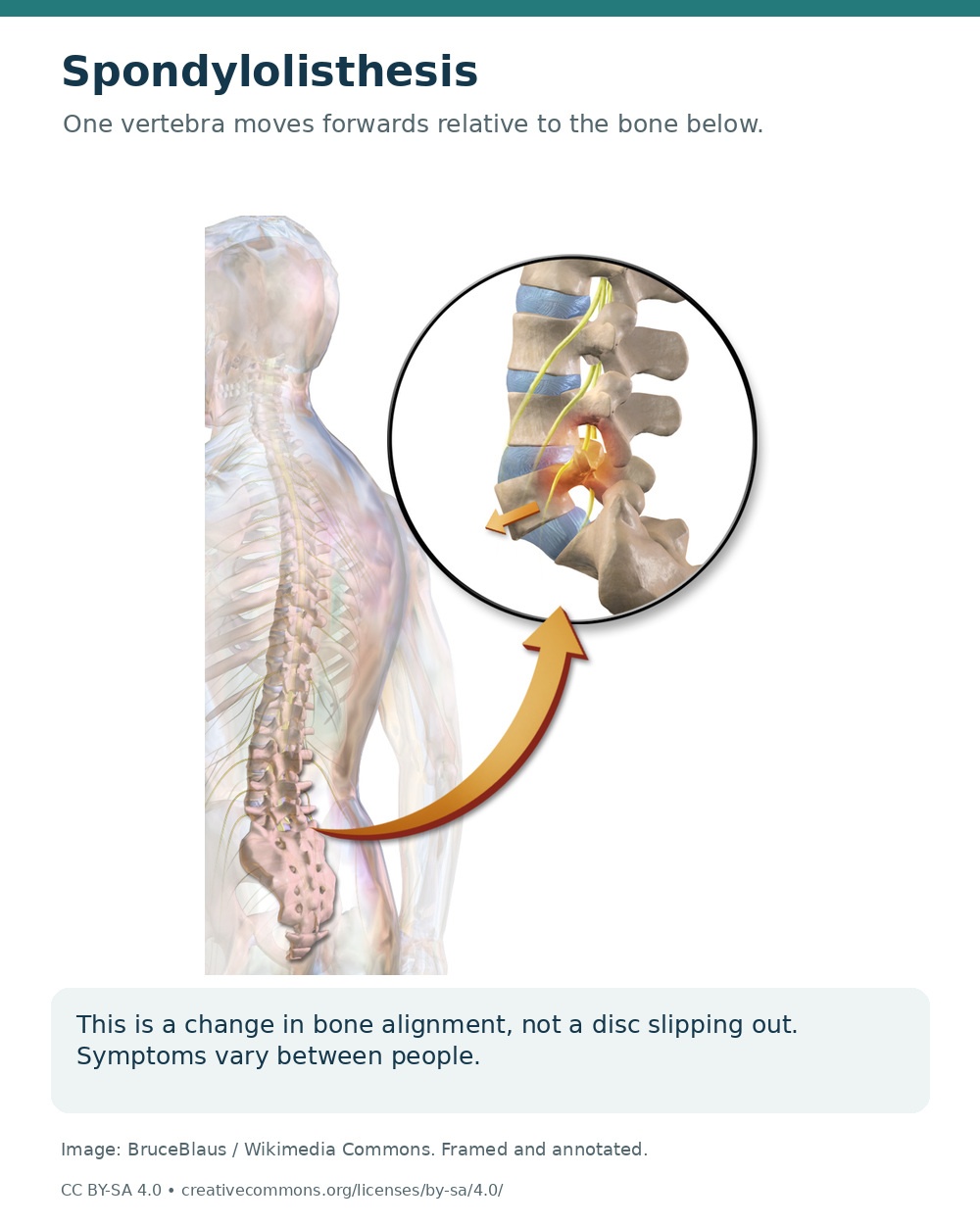
This condition commonly affects the lower back and may be associated with back pain, nerve symptoms or no symptoms at all. It differs from a slipped disc, which involves disc tissue. The degree of movement on an image does not by itself decide how much activity you can do.
How we assess your symptoms
We review the diagnosis and imaging if available, then assess movement, function and nerve signs where relevant. A suspected new condition or increasing weakness needs medical review. We agree goals without claiming manual treatment can move the vertebra back.
Image: BruceBlaus / Blausen Medical · CC BY-SA 4.0. Adapted; this image is also licensed CC BY-SA 4.0.
Do You Experience These Symptoms?
- Lower back discomfort with some activities or positions.
- Possible buttock or leg pain, tingling or weakness if nerves are involved.
- Reduced tolerance for standing, walking or sport in some people.
An assessment helps guide your next step, based on your symptoms, health and goals.
What may contribute?
Age-related joint changes or a stress injury in part of a vertebra can contribute. In younger athletes, pain with repeated loading or back extension merits assessment. Rehabilitation needs to fit the type of condition, symptoms and any specialist restrictions.
A treatment plan built around you
Hands-On Manual Therapy
Careful hands-on treatment may be considered for associated muscle discomfort when appropriate. We avoid forceful attempts to “realign” the spine and respect any restrictions from the treating spinal team.
Is Shockwave Suitable?
Shockwave is not routinely recommended for spondylolisthesis and cannot move a vertebra back into position. An assessment-led rehabilitation plan and appropriate medical or specialist review are the relevant pathways.
Targeted Exercise Programme
A tailored plan develops trunk and hip strength, general fitness and gradual return to relevant tasks. Movements are adjusted to symptoms and the diagnosis, with sports progression agreed carefully when a stress injury is involved.
When to Seek Urgent Medical Help
While most symptoms are not serious, urgent medical attention is required if you experience any of the following:
- Go to A&E immediately for new numbness around your genitals or bottom, difficulty starting or controlling urine, loss of bowel control, or severe or worsening weakness in both legs. These can signal cauda equina compression. Call 999 if you need an ambulance.
- Seek urgent medical advice for rapidly worsening leg weakness, fever or feeling unwell with back pain, or significant pain after an injury. Contact your GP about unexplained weight loss, a cancer history or persistent night pain.
Your questions answered
Can physiotherapy push the vertebra back?
No. Rehabilitation aims to improve symptoms, strength and function. Structural treatment decisions and imaging follow-up, when needed, are made with your medical or spinal team.
Will I need surgery?
Not necessarily. Many people are managed without surgery. Persistent disabling symptoms, nerve problems and response to other care guide whether a specialist discusses an operation.
Which appointment should I book?
Choose a Physiotherapy Initial Assessment for new, persistent or uncertain symptoms. We will assess what is limiting you, explain the options and agree the next steps. If you already have a diagnosis, bring any relevant scan report or specialist advice.
Visit J&J Therapy on the ground floor of CI Tower, New Malden. Book an assessment or call our reception team on 07935 869938 if you are unsure which service to choose.
Related conditions
Lumbar spinal stenosis · Slipped disc
Sources and further reading

This page is for general information only and does not replace professional medical advice.
Information updated 15 October 2026. General information to support informed choices; it is not a diagnosis or a personalised treatment plan. Suitability and any need for referral are assessed individually. Seek urgent medical help for the warning signs listed above.