
Quick Summary
Pain near one side of the lower back or buttock is sometimes called SI joint dysfunction. We assess the wider back and hip picture, consider other causes and help you find a practical combination of activity, exercise and appropriate hands-on care.
Understanding Sacroiliac Joint Pain
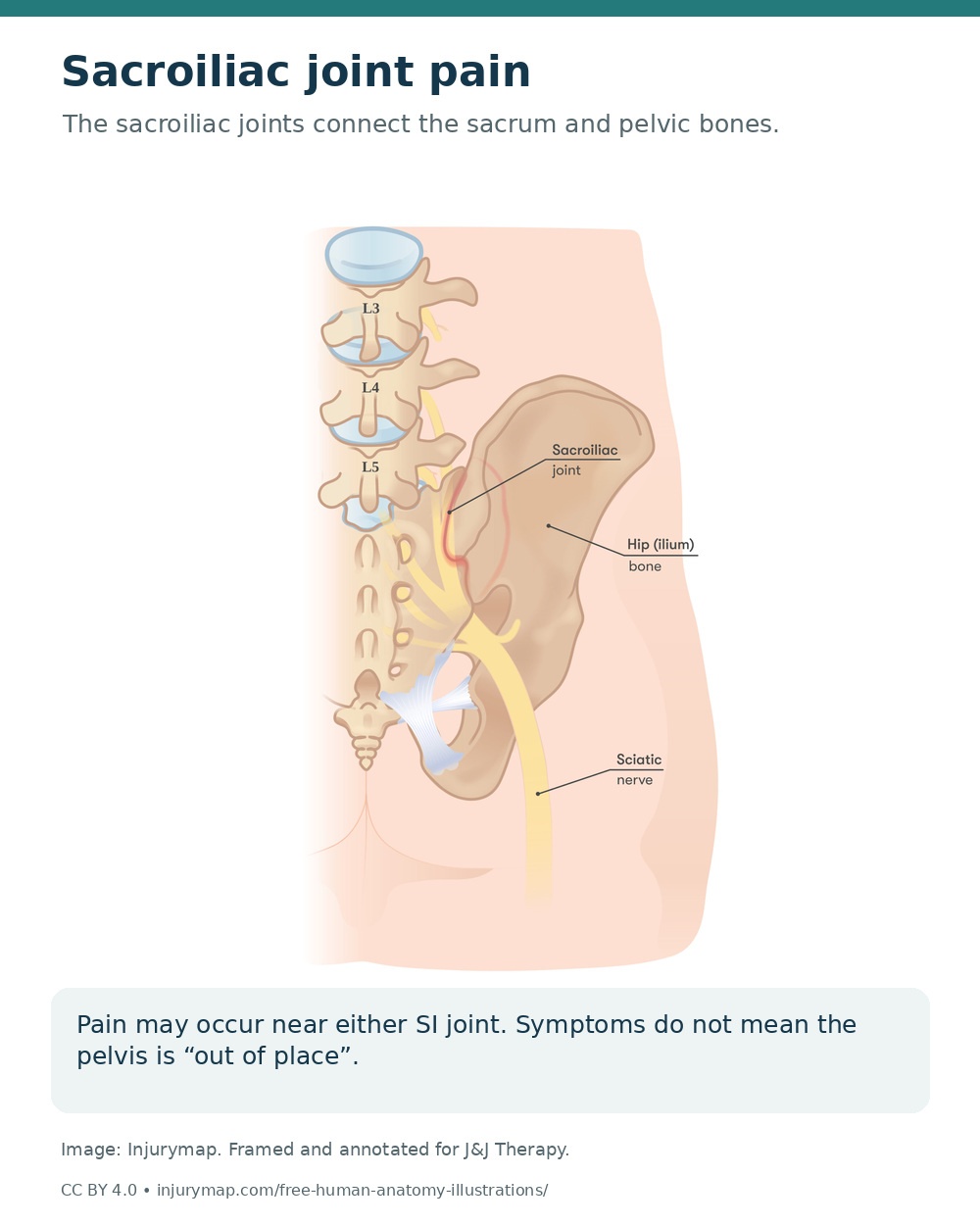
The sacroiliac joints connect the sacrum at the base of the spine to the pelvis. They are strong joints with relatively little movement. Pain in this area does not mean the pelvis is “out of place”, and a single posture or leg-length check cannot reliably identify the painful structure.
How we assess your symptoms
We review the pattern and perform a combination of back, hip and relevant pelvic tests. We assess movement and function rather than promising a diagnosis from alignment alone. Findings suggesting inflammatory disease, injury or another cause may prompt medical referral.
Do You Experience These Symptoms?
- Pain around one or both sides of the lower back or buttock.
- Discomfort with turning in bed, stairs or certain loaded tasks.
- Symptoms overlapping with lower back, hip or pregnancy-related pelvic pain.
An assessment helps guide your next step, based on your symptoms, health and goals.
What may contribute?
Pregnancy, a fall, changing load or joint conditions can contribute. Inflammatory disorders can also affect these joints. Persistent night pain, prolonged morning stiffness or symptoms alongside psoriasis, bowel inflammation or eye inflammation deserve discussion with a GP.
A treatment plan built around you
Hands-On Manual Therapy
Manual therapy may be used for short-term comfort alongside exercise and advice. We do not claim to repeatedly put the pelvis back in place. Treatment is judged by whether it helps useful movement and daily activity.
Is Shockwave Suitable?
Shockwave is not routinely recommended for sacroiliac joint pain. Your assessment will guide appropriate rehabilitation, symptom management and whether medical or specialist review is needed. We will explain why each proposed treatment fits your symptoms before you decide whether to proceed.
Targeted Exercise Programme
Hip and trunk strengthening, walking and task-specific practice can be progressed to tolerance. The plan is adapted for pregnancy when relevant. We help you vary aggravating tasks while maintaining confidence in movement.
When to Seek Urgent Medical Help
While most symptoms are not serious, urgent medical attention is required if you experience any of the following:
- Go to A&E immediately for new numbness around your genitals or bottom, difficulty starting or controlling urine, loss of bowel control, or severe or worsening weakness in both legs. These can signal cauda equina compression. Call 999 if you need an ambulance.
- Seek urgent medical advice for rapidly worsening leg weakness, fever or feeling unwell with back pain, or significant pain after an injury. Contact your GP about unexplained weight loss, a cancer history or persistent night pain.
Your questions answered
Is my pelvis misaligned?
Pain does not prove a joint is out of position. The assessment focuses on symptoms and function, and looks for other causes rather than relying on an alignment explanation.
Which service fits pregnancy-related symptoms?
Women’s Health Physiotherapy is the appropriate assessment route for pelvic pain during or after pregnancy. Pregnancy massage may be a separate comfort option if suitable; it is not a substitute for assessment.
Which appointment should I book?
Choose a Physiotherapy Initial Assessment for new, persistent or uncertain symptoms. We will assess what is limiting you, explain the options and agree the next steps. If you already have a diagnosis, bring any relevant scan report or specialist advice. For assessed muscle tension, Soft Tissue Therapy with Brigitte may complement your exercise plan. New weakness or nerve symptoms should be assessed before massage.
Visit J&J Therapy on the ground floor of CI Tower, New Malden. Book an assessment or call our reception team on 07935 869938 if you are unsure which service to choose.
Related conditions
Pregnancy-related pelvic girdle pain · Non-specific low back pain
Sources and further reading

This page is for general information only and does not replace professional medical advice.
Information updated 15 October 2026. General information to support informed choices; it is not a diagnosis or a personalised treatment plan. Suitability and any need for referral are assessed individually. Seek urgent medical help for the warning signs listed above.