
Quick Summary
Shoulder surgery needs a rehabilitation plan that protects healing tissues while rebuilding function. Rotator cuff repair, stabilisation and shoulder replacement have different restrictions. Our New Malden physiotherapists use your operation details and surgical instructions to help you progress safely towards daily tasks, work and recreation.
What is Post-Surgery Shoulder Rehabilitation?
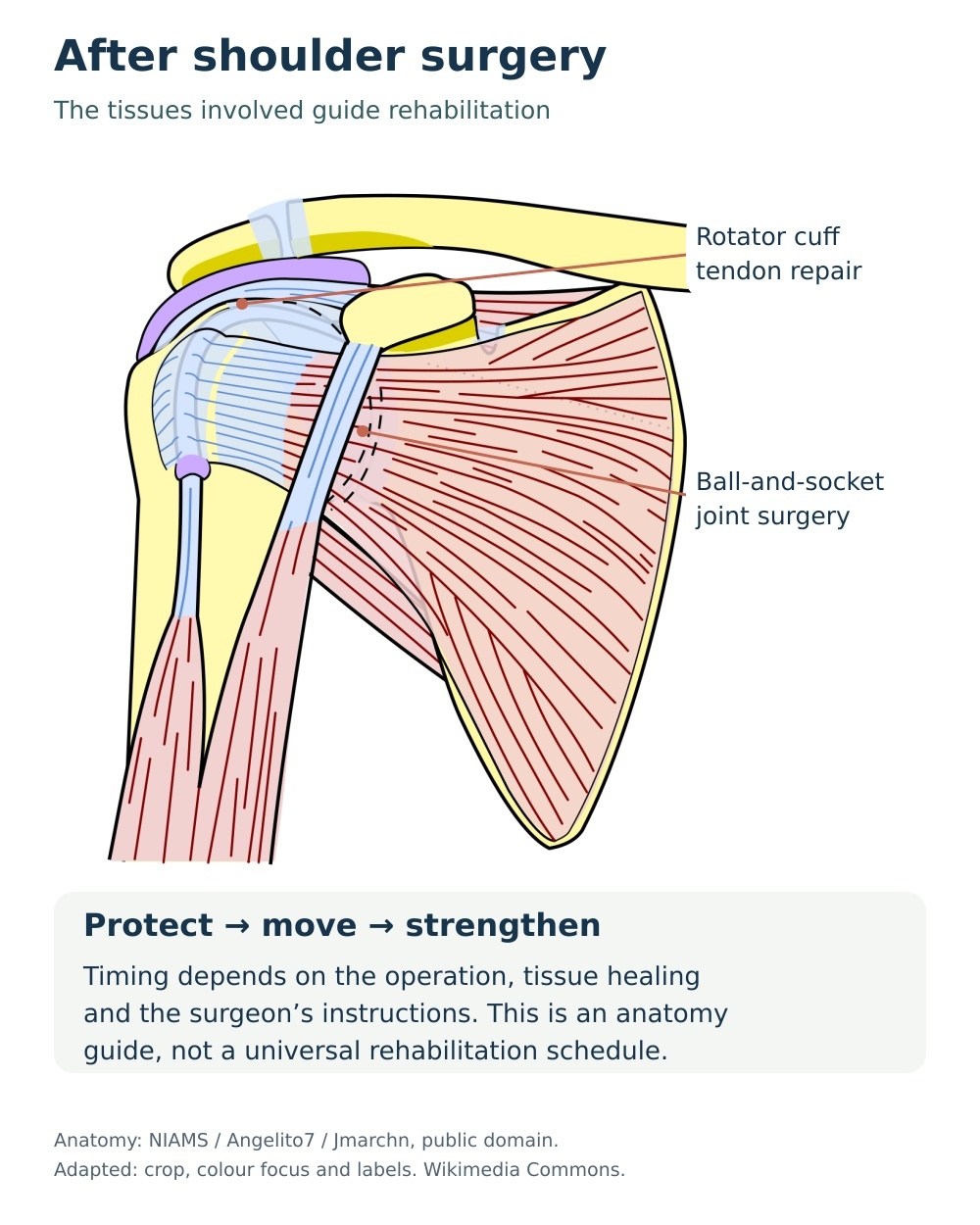
Postoperative rehabilitation is not one standard set of exercises. The operation, tissue quality, repair and complications influence when movement and loading can progress. Early protection may be important even if you feel relatively comfortable. Bring your discharge information and protocol so we can plan care around the actual procedure.
Your assessment at J&J Therapy looks at how symptoms affect your day, relevant health history, movement and strength. We explain the findings, agree priorities with you and advise when medical review or imaging would change your care.
Image: NIAMS / Angelito7 / Jmarchn · Public domain. Adapted.
Do You Experience These Symptoms?
- Expected postoperative discomfort, stiffness or weakness within the advised recovery course.
- Difficulty with dressing, sleeping or everyday arm use.
- Uncertainty about sling use, exercise progression or return to work.
An assessment helps guide your next step, based on your symptoms, health and goals.
Why can it develop?
The pace of recovery depends on the surgery, healing tissues and your wider health. More movement or stronger exercise is not always better early on. A sudden loss of function or unexpected worsening should be checked with the surgical team.
Your treatment plan at J&J Therapy
Hands-On Manual Therapy
Gentle hands-on care may support comfort and mobility when the procedure and stage allow it. We avoid stressing a repair. Scar treatment is only considered once the wound has healed and relevant precautions are clear.
Is Shockwave Suitable?
Shockwave is not a routine component of shoulder postoperative rehabilitation. It should not be applied to a healing repair simply to speed recovery; any separate indication requires appropriate clinical and surgical consideration.
Targeted Exercise Programme
Progression may move from protected movement to active control and later strengthening, according to your operation. We use functional milestones and the surgeon’s restrictions to plan work, driving and sport.
When to Seek Urgent Medical Help
While most symptoms are not serious, urgent medical attention is required if you experience any of the following:
- Contact your surgical team or urgent medical service for fever, spreading redness, wound discharge, increasing swelling or unexpected worsening pain.
- Go to A&E immediately for a newly cold, pale or blue hand. A sudden loss of movement or strength, or new persistent numbness, also needs urgent medical assessment.
- Call 999 for chest pain, sudden breathlessness or collapse. A painful swollen calf or arm needs urgent medical assessment.
Your questions answered
When should I start physiotherapy after surgery?
Follow your surgeon’s discharge instructions. Some procedures need early supervised movement; others require a period of protection. Contact us with your operation details so the first appointment can be timed appropriately.
Can I stop using the sling when the pain improves?
Do not change sling or movement restrictions just because pain is better. Healing tissues may still need protection. Confirm any changes with the surgical team or physiotherapist following the protocol.
Which appointment should I book?
Book a Physiotherapy Initial Assessment for postoperative rehabilitation and bring your operation report, discharge advice and surgeon’s protocol. Contact us before booking if restrictions are unclear. Any later soft tissue session should follow the agreed rehabilitation plan.
Book an appointment at J&J Therapy, ground floor, CI Tower, New Malden. Need help choosing? Call our reception team on 07935 869938.
Sources and further reading

This page is for general information only and does not replace professional medical advice.
Information updated 15 October 2026. General information only; this page does not diagnose your symptoms or replace an individual assessment. Treatment depends on your health, examination and preferences. Use the urgent-care advice above when needed.