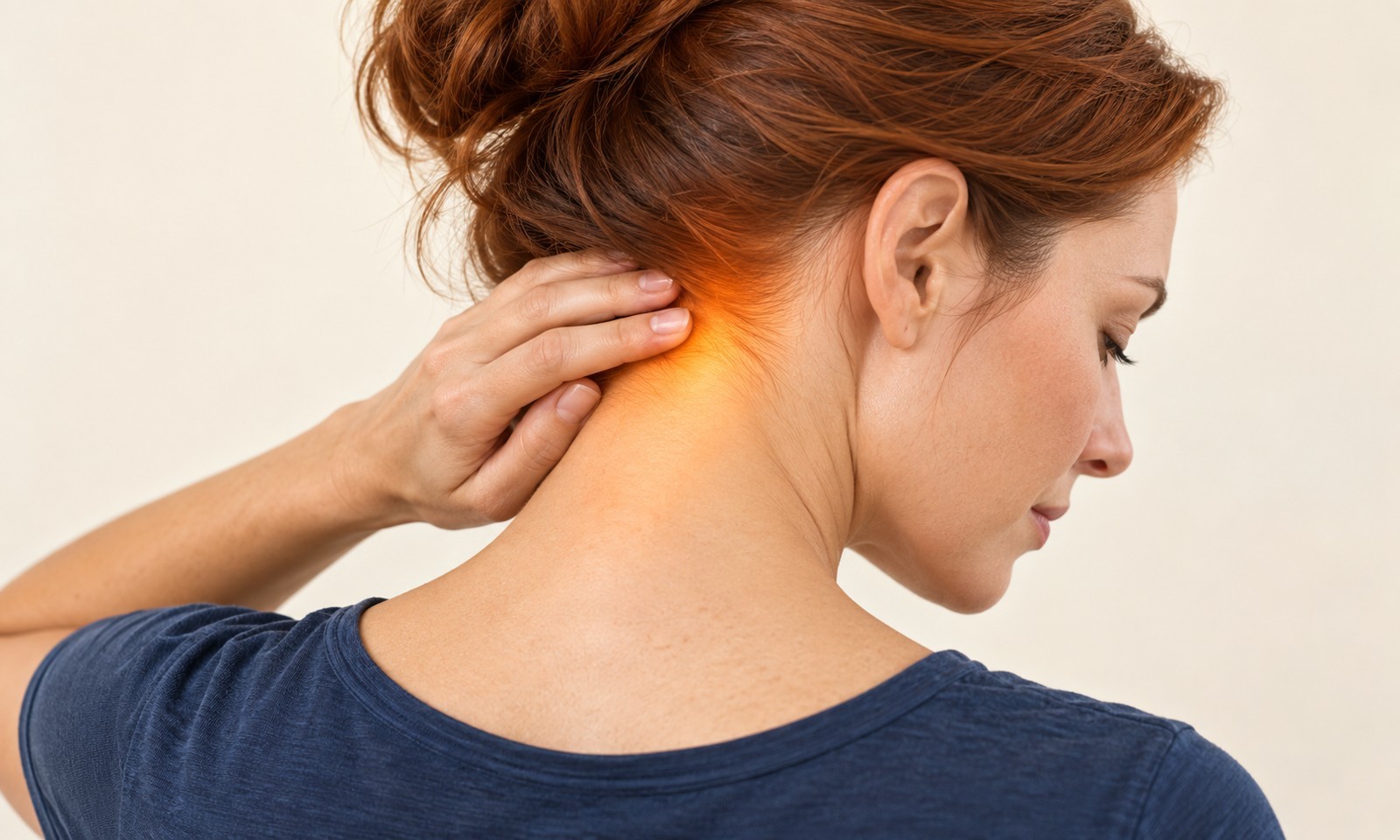
Quick Summary
Occipital neuralgia can cause sharp or electric-shock-like pain over the back of the scalp. Other headaches can feel similar, so medical diagnosis matters. Once the cause and appropriate pathway are clear, physiotherapy may help associated neck movement or muscle problems; it is not presented as a guaranteed treatment for the nerve pain itself.
What is Occipital Neuralgia?
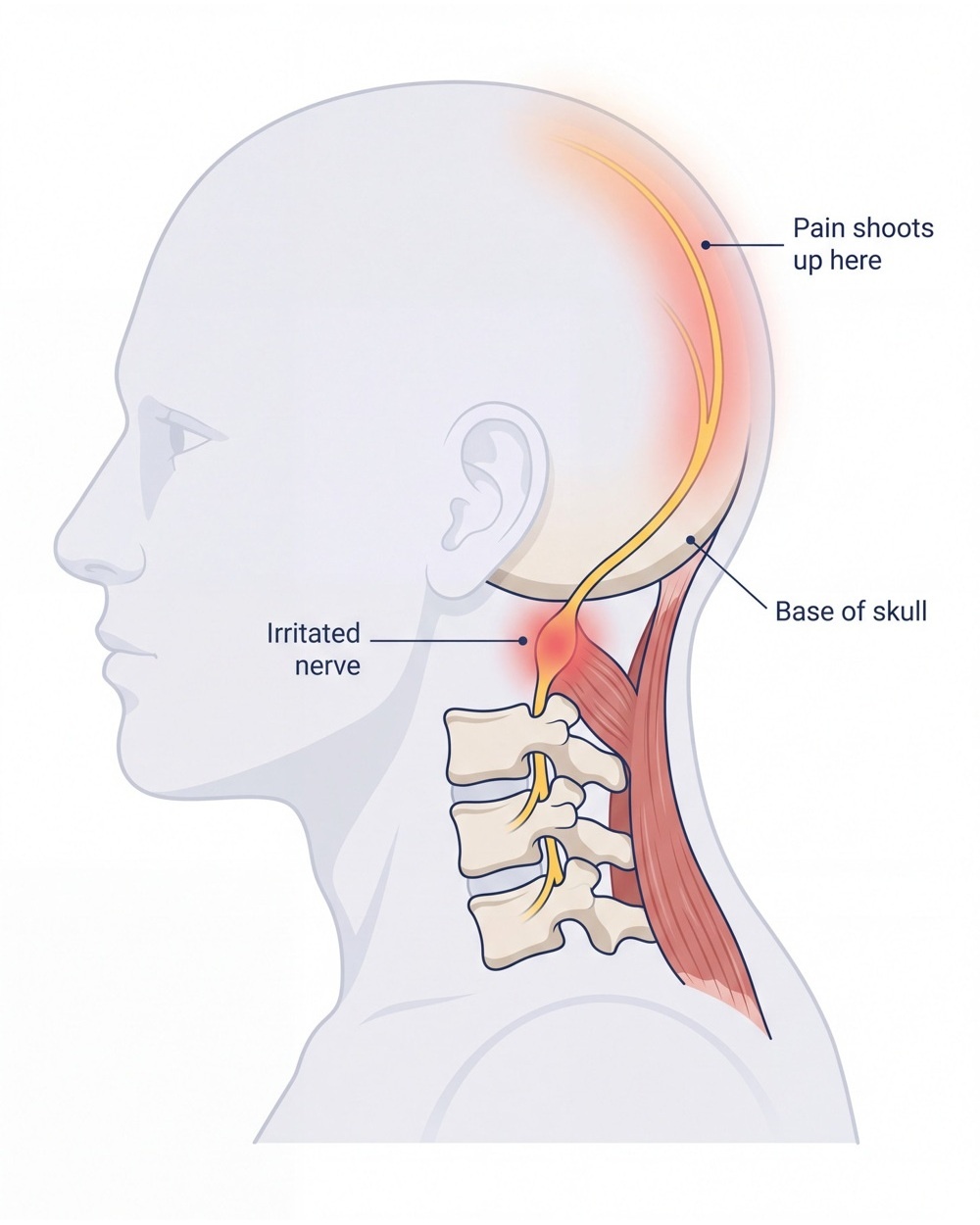
The occipital nerves carry sensation from the upper neck to the back of the head. Neuralgia describes pain associated with these nerves. Episodes may be brief and intense, sometimes with scalp sensitivity. Migraine and cervicogenic headache are different conditions that can overlap, and evidence for one should not automatically be applied to another.
Your assessment at J&J Therapy looks at how symptoms affect your day, relevant health history, movement and strength. We explain the findings, agree priorities with you and advise when medical review or imaging would change your care.
Do You Experience These Symptoms?
- Brief shooting or stabbing pain towards the back or top of the head.
- Scalp sensitivity, sometimes noticeable with hair brushing or a pillow.
- Aching between episodes; a new headache pattern needs medical assessment.
An assessment helps guide your next step, based on your symptoms, health and goals.
Why can it develop?
Irritation or injury affecting an occipital nerve may contribute, but a definite cause is not always found. Tender neck muscles do not prove that the nerve is trapped. A GP or specialist may consider medicines, diagnostic procedures or other treatment depending on the presentation.
Your treatment plan at J&J Therapy
Hands-On Manual Therapy
Gentle soft tissue care may help accompanying muscular discomfort when appropriate. We avoid forceful pressure over an irritable nerve and explain the limited evidence for physiotherapy specifically for occipital neuralgia.
Is Shockwave Suitable?
Shockwave is not an established treatment for occipital neuralgia. It is not used as a substitute for appropriate headache diagnosis or nerve-pain management.
Targeted Exercise Programme
If a neck movement problem is present, a carefully graded exercise plan may support comfort and function. Exercises are adjusted to avoid repeatedly triggering shooting scalp pain.
When to Seek Urgent Medical Help
While most symptoms are not serious, urgent medical attention is required if you experience any of the following:
- A sudden extremely severe headache, collapse or headache with weakness, speech difficulty or vision changes needs emergency assessment; call 999.
- A severe headache with fever and neck stiffness needs emergency assessment; call 999 or attend A&E. Seek urgent help after significant head or neck injury or with new neurological symptoms.
- Arrange GP review for a new, unexplained or changing pattern before treating it as occipital neuralgia.
Your questions answered
Is this the same as a headache coming from my neck?
Not exactly. Occipital neuralgia involves a nerve-pain pattern; cervicogenic headache is attributed to a neck disorder. They may overlap, but diagnosis and medical treatment options can differ.
Can massage cure occipital neuralgia?
A cure cannot be promised. Hands-on care may help associated muscle symptoms, but neuralgic pain may need medical management. A new or worsening headache should be assessed before booking massage.
Which appointment should I book?
Have a new, changing or unexplained headache assessed by a GP first. For an established neck-related problem, book a Physiotherapy Initial Assessment. Soft Tissue Therapy may support associated muscle tension after assessment, but does not replace headache diagnosis or medical treatment.
Book an appointment at J&J Therapy, ground floor, CI Tower, New Malden. Need help choosing? Call our reception team on 07935 869938.
Sources and further reading

This page is for general information only and does not replace professional medical advice.
Information updated 15 October 2026. General information only; this page does not diagnose your symptoms or replace an individual assessment. Treatment depends on your health, examination and preferences. Use the urgent-care advice above when needed.