
Quick Summary
Myofascial neck pain describes regional muscle pain and tenderness, sometimes with pain felt in nearby areas. The sensations are real, but a tender “knot” is not proof of trapped toxins or damaged fascia. We assess the pattern and offer an individual plan for comfort, movement and the daily activities that have become difficult.
What is Myofascial Neck Pain?
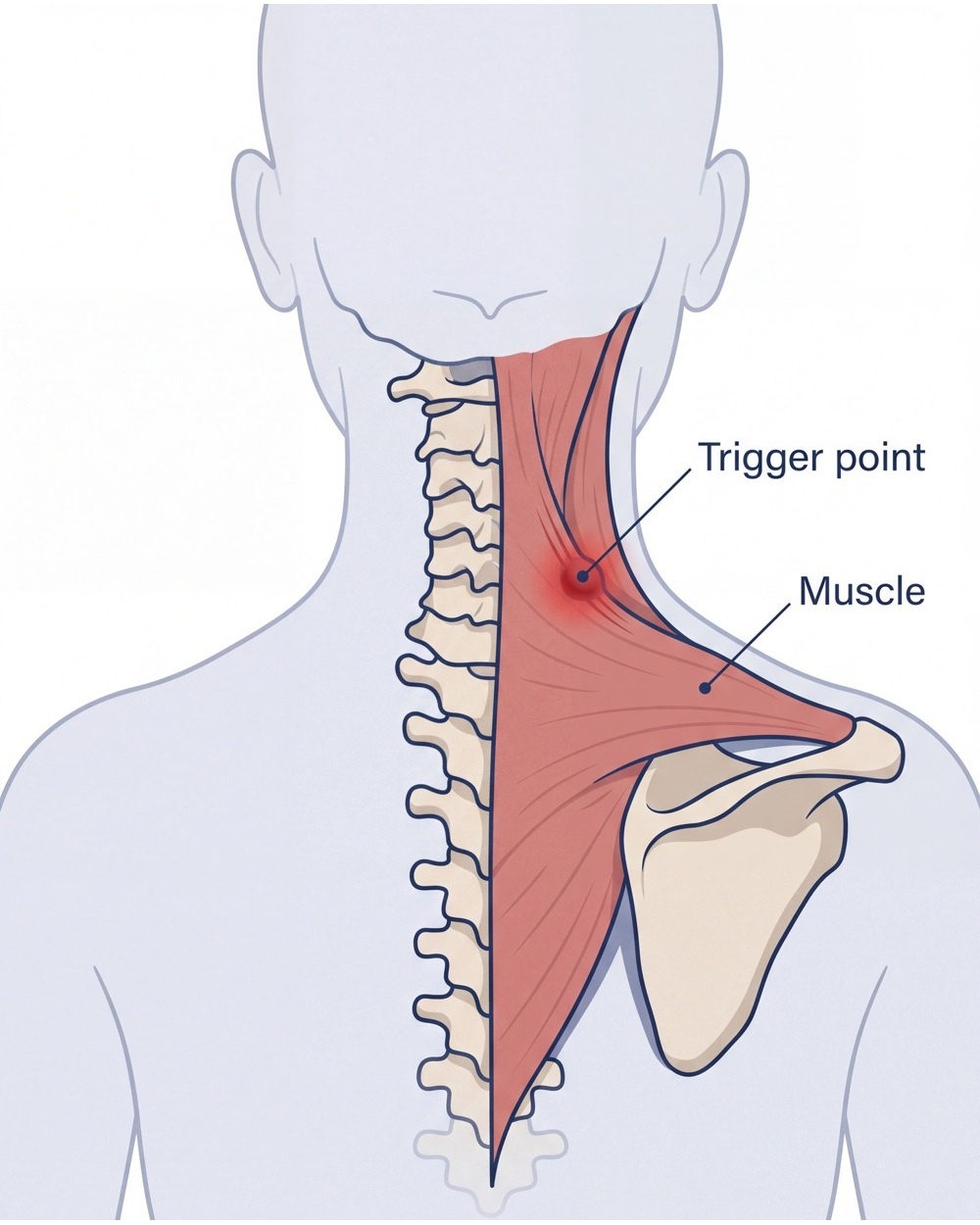
Clinicians sometimes use the term trigger point for a particularly sensitive area within a muscle. These findings can be part of the assessment, but they do not explain every episode of neck pain. Joint, nerve and headache conditions may overlap. Treatment is aimed at useful changes in symptoms and function rather than eliminating every tender spot.
Your assessment at J&J Therapy looks at how symptoms affect your day, relevant health history, movement and strength. We explain the findings, agree priorities with you and advise when medical review or imaging would change your care.
Do You Experience These Symptoms?
- A deep ache across the neck and shoulder muscles.
- Tender spots that reproduce familiar discomfort when pressed.
- Muscle fatigue or symptoms during prolonged tasks.
An assessment helps guide your next step, based on your symptoms, health and goals.
Why can it develop?
Changes in muscle loading, recovery, sleep and stress may influence symptoms. An old injury or another painful condition can also affect muscle sensitivity. We look for manageable contributors without assuming that tenderness means the tissue must be “broken down”.
Your treatment plan at J&J Therapy
Hands-On Manual Therapy
Soft tissue treatment may help you feel more comfortable and tolerate activity. Pressure and technique are agreed with you; bruising or severe pain is not a necessary sign of effective treatment.
Is Shockwave Suitable?
Shockwave is not an automatic treatment for myofascial neck pain. Evidence and suitability differ from established tendon indications, so it is not presented as a guaranteed way to remove trigger points.
Targeted Exercise Programme
We combine mobility and gradually increased neck or shoulder endurance with activity advice. A small, realistic home programme is preferable to repeatedly stretching a sore area throughout the day.
When to Seek Urgent Medical Help
While most symptoms are not serious, urgent medical attention is required if you experience any of the following:
- Seek urgent medical advice through NHS 111 or an urgent GP appointment for new or increasing arm weakness, numbness, unsteady walking or clumsy hands.
- Attend A&E for new bladder or bowel control problems with neck or limb symptoms, or rapidly worsening neurological symptoms. Call 999 for a sudden severe headache with weakness, speech or vision changes.
- Arrange medical assessment after a significant injury, or for fever, unexplained weight loss or steadily worsening pain.
Your questions answered
Are muscle knots dangerous?
A tender area is usually not dangerous by itself, but a new lump, unexplained swelling or changing symptoms should be checked. An assessment helps distinguish familiar tenderness from a problem needing medical review.
Is deep pressure always better?
No. Pressure should be tolerable and agreed with you. We judge treatment by useful improvement in comfort and activity, not by how painful the session feels.
Which appointment should I book?
For familiar muscular tightness without a recent injury or nerve symptoms, Soft Tissue Therapy may be a suitable starting point. Choose a Physiotherapy Initial Assessment for persistent pain, recurring flare-ups, headaches or restricted movement. Your assessment guides any combination of hands-on care and exercise.
Book an appointment at J&J Therapy, ground floor, CI Tower, New Malden. Need help choosing? Call our reception team on 07935 869938.
Sources and further reading

This page is for general information only and does not replace professional medical advice.
Information updated 15 October 2026. General information only; this page does not diagnose your symptoms or replace an individual assessment. Treatment depends on your health, examination and preferences. Use the urgent-care advice above when needed.