
Quick Summary
Pain at the base of your spine when sitting or standing up may be coccydynia. We assess the pattern, discuss ways to reduce uncomfortable pressure and help you find suitable movement strategies, with medical or pelvic health referral when needed.
Understanding Coccydynia (Tailbone Pain)
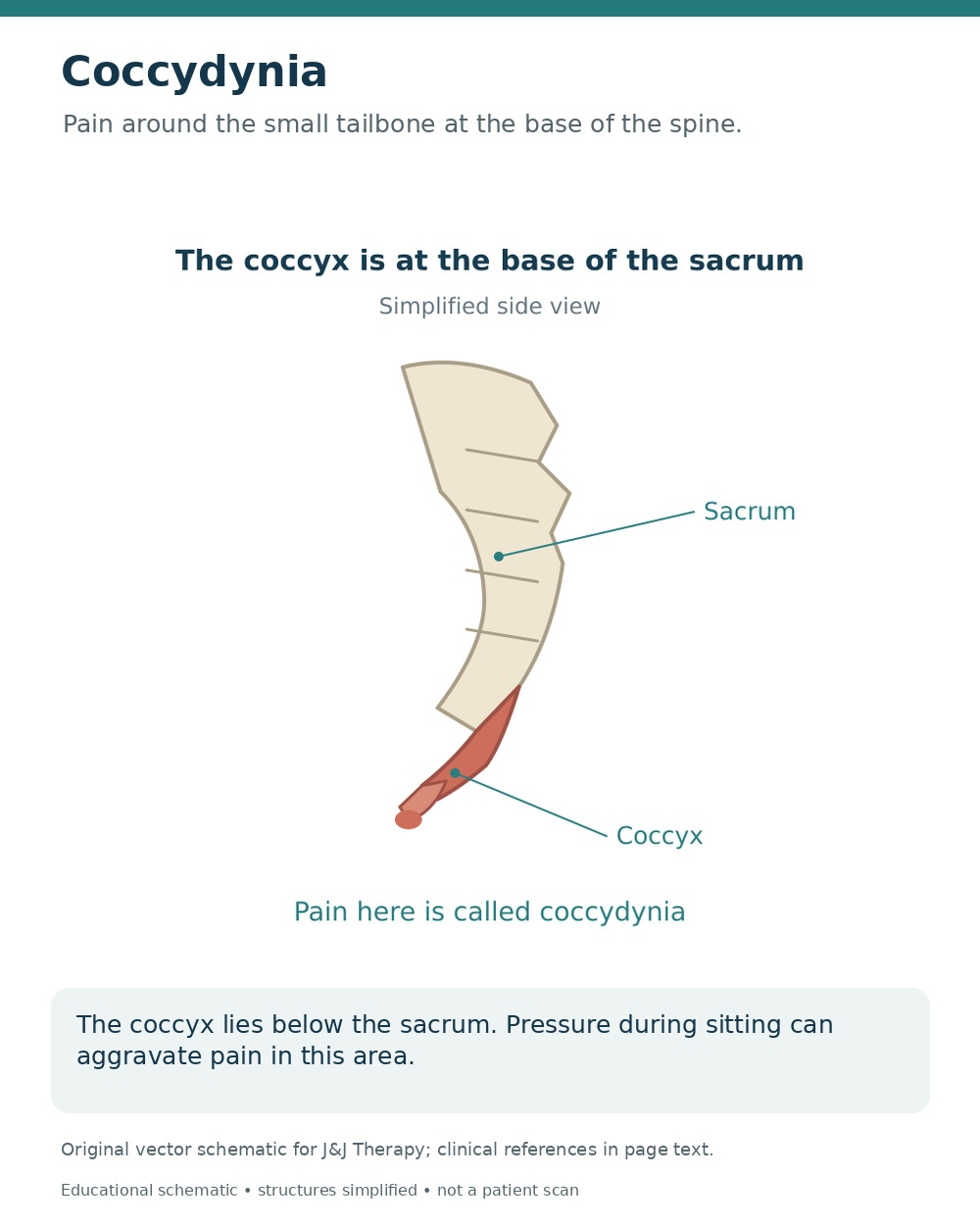
Coccydynia means pain around the coccyx, the small tailbone at the bottom of the spine. It can be particularly troublesome with sitting and changes of position. Pain in this area has several possible causes, so persistent or unusual symptoms should be assessed rather than repeatedly massaged.
How we assess your symptoms
We review how symptoms began, sitting tolerance and any birth or injury history. We assess relevant external movement and function. Our clinic does not offer internal pelvic or coccyx examination; if this is needed, we discuss appropriate specialist referral.
Do You Experience These Symptoms?
- Localised tenderness near the top of the buttock crease.
- Pain while sitting or when moving from sitting to standing.
- Possible discomfort during bowel movements or activities that press on the area.
An assessment helps guide your next step, based on your symptoms, health and goals.
What may contribute?
A fall, childbirth or prolonged pressure such as sitting or cycling may contribute. Sometimes there is no clear trigger. Infection and other less common causes need consideration if there is fever, a lump, skin change or pain that behaves unusually.
A treatment plan built around you
Hands-On Manual Therapy
Gentle external treatment may address associated muscle discomfort when suitable. We do not forcefully manipulate the coccyx or promise to reposition it. Any hands-on care is paired with practical advice and an individual movement plan.
Is Shockwave Suitable?
Shockwave is not routinely recommended for coccydynia (tailbone pain). Your assessment will guide appropriate rehabilitation, symptom management and whether medical or specialist review is needed. We will explain why each proposed treatment fits your symptoms before you decide whether to proceed.
Targeted Exercise Programme
We explore comfortable sitting options, changes of position and graded activity. A coccyx cushion may help reduce direct pressure. Pelvic floor advice, if relevant, should be individualised rather than assuming every person needs stronger contractions.
When to Seek Urgent Medical Help
While most symptoms are not serious, urgent medical attention is required if you experience any of the following:
- Go to A&E immediately for new numbness around your genitals or bottom, difficulty starting or controlling urine, loss of bowel control, or severe or worsening weakness in both legs. These can signal cauda equina compression. Call 999 if you need an ambulance.
- Seek urgent medical advice for rapidly worsening leg weakness, fever or feeling unwell with back pain, or significant pain after an injury. Contact your GP about unexplained weight loss, a cancer history or persistent night pain.
Your questions answered
Should I buy a special cushion?
A suitable coccyx cushion may improve sitting comfort, but it is only one option. We consider your chair, sitting duration and symptoms; no cushion guarantees recovery.
Which appointment suits pain after childbirth?
Women’s Health Physiotherapy is a useful starting point for external movement assessment. Contact us about pelvic floor, bowel or internal-treatment concerns first so the appropriate service or referral can be arranged.
Which appointment should I book?
Choose a Physiotherapy Initial Assessment for new, persistent or uncertain symptoms. We will assess what is limiting you, explain the options and agree the next steps. If you already have a diagnosis, bring any relevant scan report or specialist advice.
Visit J&J Therapy on the ground floor of CI Tower, New Malden. Book an assessment or call our reception team on 07935 869938 if you are unsure which service to choose.
Related conditions
Pregnancy-related pelvic pain · Low back pain
Sources and further reading

This page is for general information only and does not replace professional medical advice.
Information updated 15 October 2026. General information to support informed choices; it is not a diagnosis or a personalised treatment plan. Suitability and any need for referral are assessed individually. Seek urgent medical help for the warning signs listed above.