
Quick Summary
Facet joints are small joints at the back of the neck. They can contribute to neck pain, but a painful movement or a scan finding does not confirm that one joint is the cause. Our physiotherapists assess the whole pattern and offer a tailored approach to movement, comfort and everyday function.
What is Cervical Facet Joint Pain?
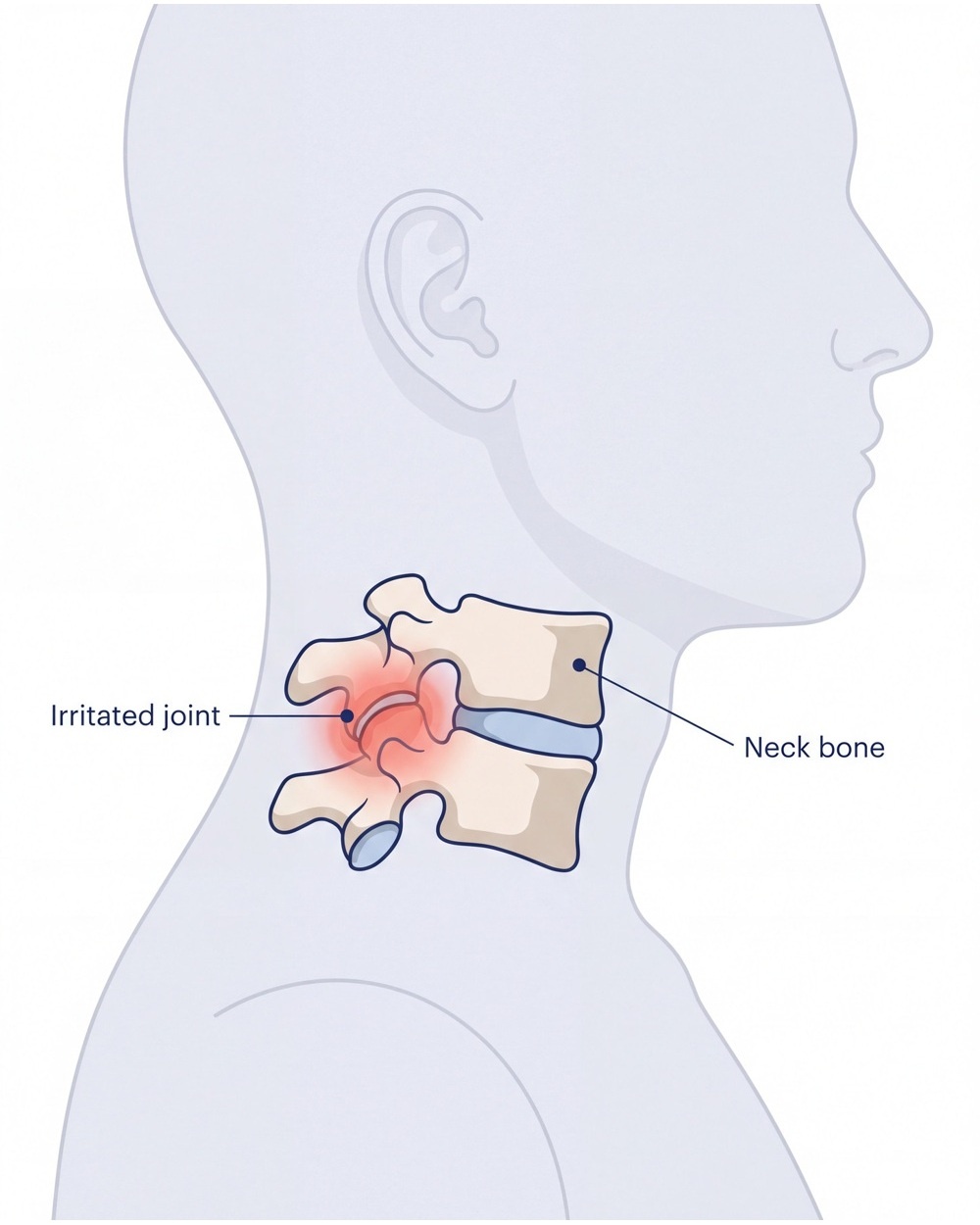
Facet-related pain may be felt around the neck and sometimes towards the head or shoulder. Symptoms overlap with other neck conditions. A routine physical examination cannot reliably identify a painful facet joint on its own; specialist diagnostic procedures are only considered when they would guide an appropriate medical treatment.
Your assessment at J&J Therapy looks at how symptoms affect your day, relevant health history, movement and strength. We explain the findings, agree priorities with you and advise when medical review or imaging would change your care.
Do You Experience These Symptoms?
- Local neck ache or one-sided stiffness.
- Discomfort with some turning or looking-up movements.
- Pain that may spread towards the shoulder or upper neck.
An assessment helps guide your next step, based on your symptoms, health and goals.
Why can it develop?
A history of whiplash, joint changes or repeated loading may be relevant. Symptoms cannot be assigned to a specific joint simply because an X-ray shows arthritis. We consider how pain behaves, your movement and any neurological or other concerning findings.
Your treatment plan at J&J Therapy
Hands-On Manual Therapy
Gentle joint mobilisation and soft tissue treatment may support comfortable movement. We explain what the treatment aims to do without claiming that a joint has been put back into place.
Is Shockwave Suitable?
Shockwave is not a standard treatment for cervical facet pain. It does not remove joint changes or establish which structure is painful.
Targeted Exercise Programme
We build a manageable neck movement and strengthening programme, adjusting tasks that consistently aggravate symptoms. Progress is judged by function and comfort, with further medical advice when needed.
When to Seek Urgent Medical Help
While most symptoms are not serious, urgent medical attention is required if you experience any of the following:
- Seek urgent medical advice through NHS 111 or an urgent GP appointment for new or increasing arm weakness, numbness, unsteady walking or clumsy hands.
- Attend A&E for new bladder or bowel control problems with neck or limb symptoms, or rapidly worsening neurological symptoms. Call 999 for a sudden severe headache with weakness, speech or vision changes.
- Arrange medical assessment after a significant injury, or for fever, unexplained weight loss or steadily worsening pain.
Your questions answered
Can a scan prove that my facet joint is painful?
Not usually. Joint changes may be present without symptoms. Clinical assessment and, in selected specialist pathways, diagnostic blocks may be used to guide decisions.
What if physiotherapy does not help enough?
We review the diagnosis, goals and response. A GP or pain specialist may consider other options for persistent disabling pain; injections or other procedures are not automatically required.
Which appointment should I book?
Choose a Physiotherapy Initial Assessment to understand this problem and plan your rehabilitation. Soft Tissue Therapy may be considered for associated muscle tension when appropriate; it does not replace assessment of an injury, tendon problem or joint restriction.
Book an appointment at J&J Therapy, ground floor, CI Tower, New Malden. Need help choosing? Call our reception team on 07935 869938.
Sources and further reading

This page is for general information only and does not replace professional medical advice.
Information updated 15 October 2026. General information only; this page does not diagnose your symptoms or replace an individual assessment. Treatment depends on your health, examination and preferences. Use the urgent-care advice above when needed.