
Quick Summary
A cervical disc herniation, sometimes called a slipped disc in the neck, can irritate a nearby nerve and cause arm pain or altered sensation. Some disc changes cause no symptoms. We assess your movement and nerve function and help you understand whether physiotherapy, medical review or specialist care is the appropriate next step.
What is Cervical Disc Herniation?
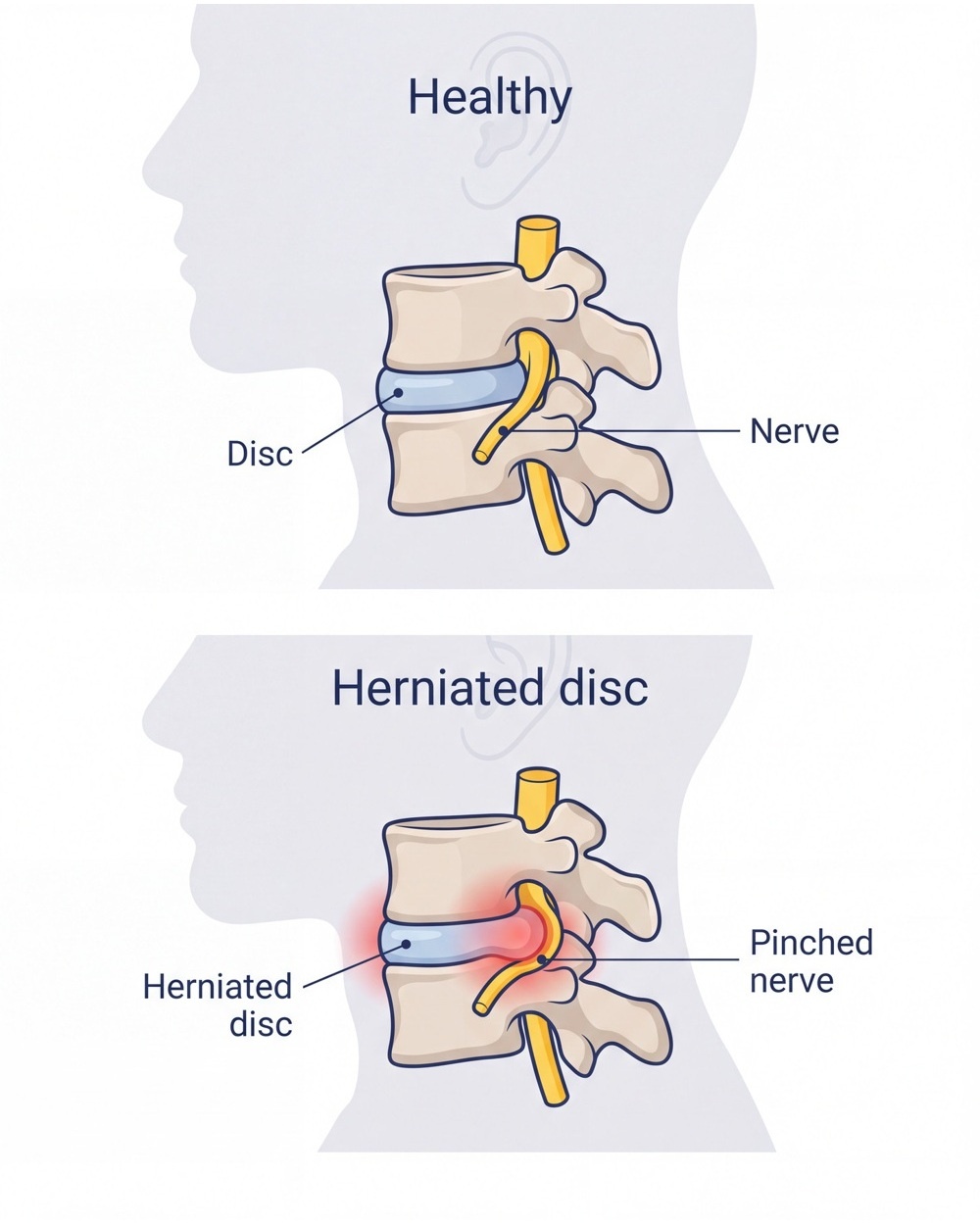
Discs sit between the vertebrae. A herniation occurs when disc material extends beyond its usual boundary; the disc does not literally slip out of place. Symptoms depend on whether nearby structures, particularly a nerve root or the spinal cord, are affected. A scan should be interpreted alongside your symptoms and examination.
Your assessment at J&J Therapy looks at how symptoms affect your day, relevant health history, movement and strength. We explain the findings, agree priorities with you and advise when medical review or imaging would change your care.
Do You Experience These Symptoms?
- Neck or shoulder pain with pain spreading into the arm.
- Tingling or numbness in a particular part of the hand.
- Weakness or reduced grip; balance or hand-coordination changes need medical assessment.
An assessment helps guide your next step, based on your symptoms, health and goals.
Why can it develop?
Disc changes may develop gradually or become symptomatic around an injury or change in loading. There is not always a single trigger. Treatment is guided by nerve findings and function, not simply by the size of a disc change mentioned in a report.
Your treatment plan at J&J Therapy
Hands-On Manual Therapy
Gentle hands-on treatment may help associated stiffness when safe. It cannot physically push a herniated disc back. Any increase in neurological symptoms changes the plan and may require onward referral.
Is Shockwave Suitable?
Shockwave does not treat a cervical disc herniation or release pressure on a nerve root. It is not part of the routine plan for this condition.
Targeted Exercise Programme
We tailor movement and strengthening to your response, build activity gradually and explain which symptoms should be monitored. Do not force stretches that reproduce or progressively worsen arm symptoms.
When to Seek Urgent Medical Help
While most symptoms are not serious, urgent medical attention is required if you experience any of the following:
- Seek urgent medical advice through NHS 111 or an urgent GP appointment for new or increasing arm weakness, numbness, unsteady walking or clumsy hands.
- Attend A&E for new bladder or bowel control problems with neck or limb symptoms, or rapidly worsening neurological symptoms. Call 999 for a sudden severe headache with weakness, speech or vision changes.
- Arrange medical assessment after a significant injury, or for fever, unexplained weight loss or steadily worsening pain.
Your questions answered
Does every cervical disc herniation need an operation?
No. Many people are managed without surgery. Significant or progressive nerve weakness, spinal cord signs or persistent disabling symptoms need medical or specialist review to decide the safest approach.
Can I work with a disc problem?
Often work is possible with changes to tasks, duration or loading. The right advice depends on your symptoms, strength and job demands; we can help plan and review a gradual return.
Which appointment should I book?
For stable symptoms without the warning signs above, a Physiotherapy Initial Assessment can help assess nerve function and decide whether rehabilitation or medical review is appropriate. New or worsening weakness, coordination or walking problems need medical review first. Massage alone is not appropriate for unexplained nerve symptoms.
Book an appointment at J&J Therapy, ground floor, CI Tower, New Malden. Need help choosing? Call our reception team on 07935 869938.
Sources and further reading

This page is for general information only and does not replace professional medical advice.
Information updated 15 October 2026. General information only; this page does not diagnose your symptoms or replace an individual assessment. Treatment depends on your health, examination and preferences. Use the urgent-care advice above when needed.