
Quick Summary
Calcific tendinitis, also called calcific tendinopathy, involves calcium deposits in a shoulder tendon. Some deposits cause no symptoms, while an acute flare can be intensely painful. We assess your shoulder and help you manage movement and daily activity, with medical review when pain or findings require it.
What is Calcific Tendinitis?
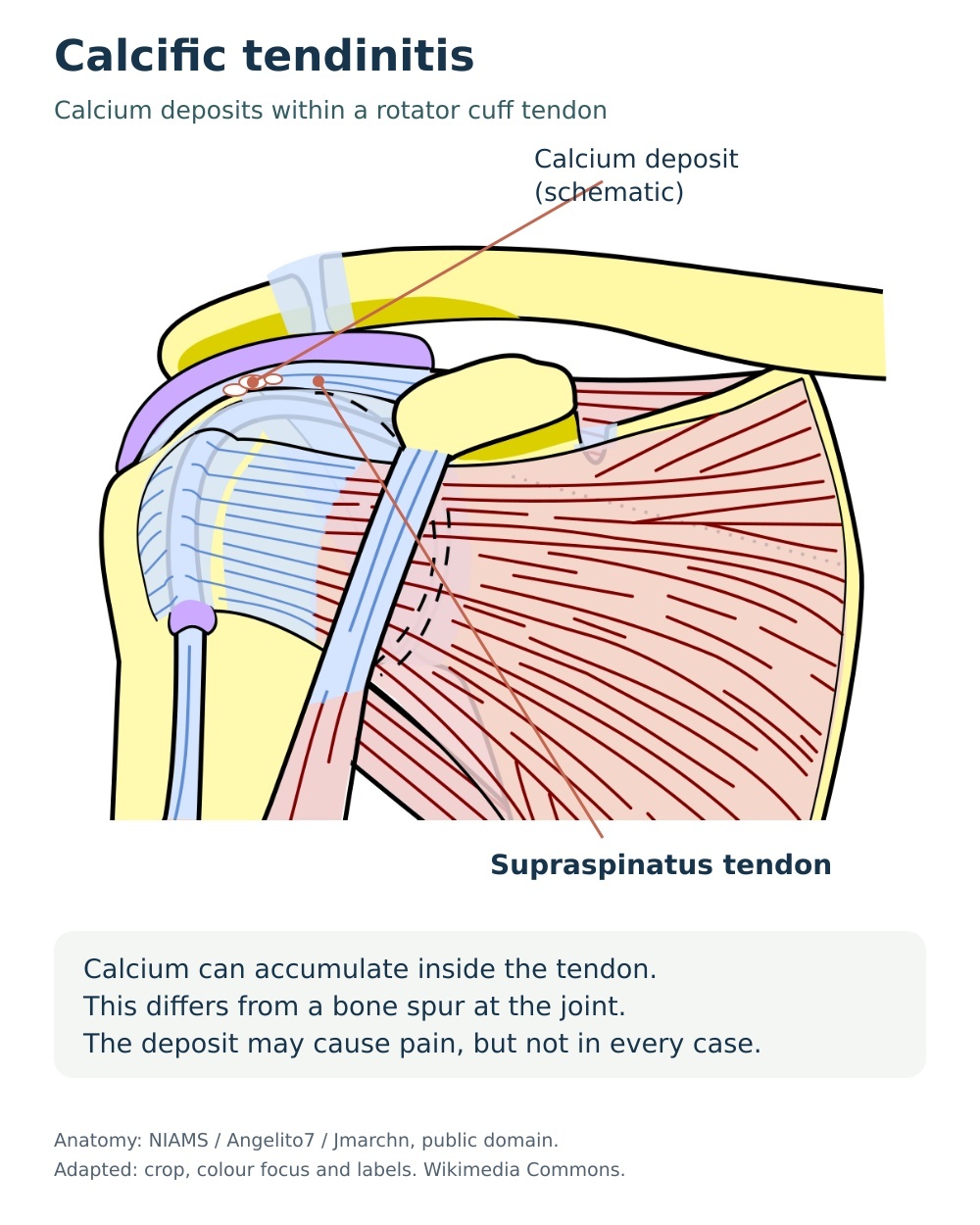
Deposits most often occur in the rotator cuff tendons. Their size on a scan does not tell the whole story: symptoms can vary as the deposit changes. X-ray or ultrasound may help confirm the diagnosis. A severely painful shoulder should not automatically be assumed to be a calcium flare without considering infection, injury and other causes.
Your assessment at J&J Therapy looks at how symptoms affect your day, relevant health history, movement and strength. We explain the findings, agree priorities with you and advise when medical review or imaging would change your care.
Image: NIAMS / Angelito7 / Jmarchn · Public domain. Adapted.
Do You Experience These Symptoms?
- Shoulder or upper-arm pain with reaching or lifting.
- Night discomfort and reduced movement.
- Sometimes a sudden severe flare with marked difficulty using the arm.
An assessment helps guide your next step, based on your symptoms, health and goals.
Your treatment plan at J&J Therapy
Hands-On Manual Therapy
Gentle hands-on care may help surrounding muscle discomfort and tolerable movement. During a highly painful flare we reduce intensity and may recommend medical pain-management advice. Massage does not break up or remove the deposit.
Is Shockwave Suitable?
NICE HTG645 recommends shockwave for calcific shoulder tendinopathy only in research because efficacy evidence is inadequate. We do not present our radial device as routine calcium-removal treatment or assume results from focused shockwave apply to it.
Targeted Exercise Programme
Movement and loading are adjusted to irritability: gentle activity during a flare, then gradually increased shoulder strength and everyday function. A programme should be reviewed when severe pain prevents progress.
When to Seek Urgent Medical Help
While most symptoms are not serious, urgent medical attention is required if you experience any of the following:
- Seek urgent GP advice or contact NHS 111 for sudden severe pain, inability to move the arm, marked swelling, persistent numbness or a hot shoulder with fever.
- After an injury, a changed shoulder shape or sudden loss of strength needs urgent assessment. Do not try to put a dislocated shoulder back yourself.
- Call 999 for shoulder or arm pain with chest pressure, breathlessness, sweating or feeling faint.
Your questions answered
Do I need to reduce calcium in my diet?
Do not make dietary restrictions solely because of a shoulder deposit. Calcific tendinopathy is not a simple consequence of calcium intake. Discuss nutrition or medical concerns with an appropriate clinician.
What if rehabilitation does not control the pain?
Your GP or shoulder specialist can review diagnosis and options such as medicines, injections or other procedures. Benefits and uncertainties differ between treatments; an intervention is not chosen only because a deposit is visible.
Which appointment should I book?
Choose a Physiotherapy Initial Assessment to understand this problem and plan your rehabilitation. Soft Tissue Therapy may be considered for associated muscle tension when appropriate; it does not replace assessment of an injury, tendon problem or joint restriction.
Book an appointment at J&J Therapy, ground floor, CI Tower, New Malden. Need help choosing? Call our reception team on 07935 869938.
Sources and further reading

This page is for general information only and does not replace professional medical advice.
Information updated 15 October 2026. General information only; this page does not diagnose your symptoms or replace an individual assessment. Treatment depends on your health, examination and preferences. Use the urgent-care advice above when needed.