
Quick Summary
An acromioclavicular, or AC, joint sprain often follows a fall onto the shoulder. The severity can vary, so a new injury should be medically assessed before treatment. Once the diagnosis and precautions are clear, we help you regain movement, strength and confidence for work, lifting and sport.
What is AC Joint Injury / Sprain?
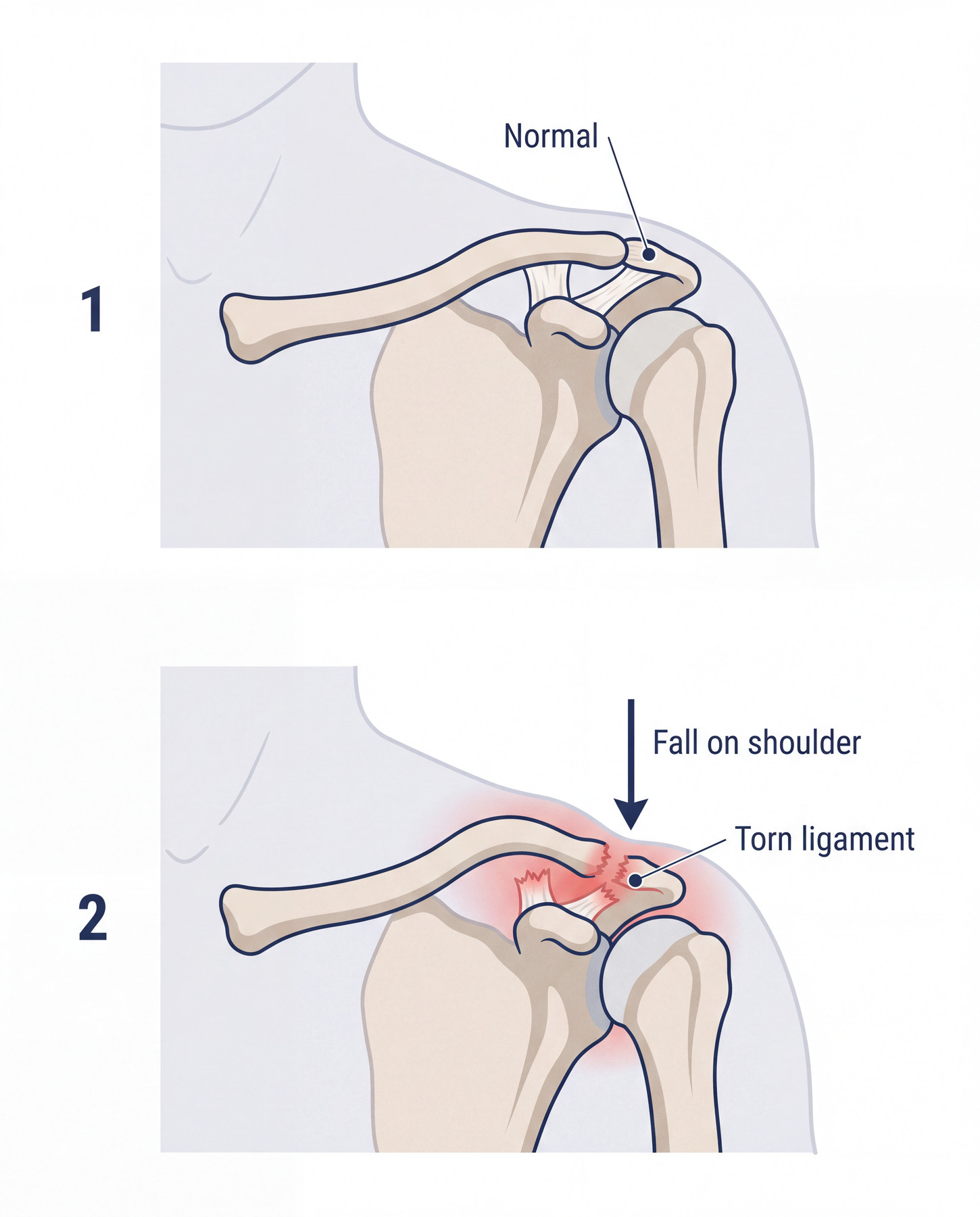
The AC joint is where the collarbone meets the top of the shoulder blade. A sprain affects supporting ligaments; more significant injury can separate the bones and leave a visible bump. This differs from dislocation of the main ball-and-socket joint. The injury grade and symptoms help determine whether rehabilitation or specialist treatment is needed.
Your assessment at J&J Therapy looks at how symptoms affect your day, relevant health history, movement and strength. We explain the findings, agree priorities with you and advise when medical review or imaging would change your care.
Do You Experience These Symptoms?
- Pain or tenderness on the top of the shoulder after a fall or collision.
- Pain reaching across the body, lifting or pushing.
- Swelling or a visible bump, which should be assessed after injury.
An assessment helps guide your next step, based on your symptoms, health and goals.
Your treatment plan at J&J Therapy
Hands-On Manual Therapy
After the injury has been assessed, gentle treatment for surrounding muscle discomfort may help. We respect healing ligaments and avoid forceful pressure or attempts to push a displaced joint back into position.
Is Shockwave Suitable?
Shockwave is not routine treatment for an acute AC sprain or separation. It does not restore ligament attachment or correct the position of the collarbone.
Targeted Exercise Programme
Your programme follows any sling and loading advice, progressing from comfortable movement to shoulder strength and task-specific activity. Pushing, heavy carrying and contact sport are reintroduced according to healing and function.
When to Seek Urgent Medical Help
While most symptoms are not serious, urgent medical attention is required if you experience any of the following:
- Seek urgent assessment after an injury with a changed shoulder shape, significant swelling, severe pain or inability to use the arm.
- Go to A&E immediately for a newly cold, pale or blue hand after injury. Persistent numbness or increasing weakness also needs urgent medical assessment.
- Get medical advice for fever, spreading redness or pain that is worsening unexpectedly.
Your questions answered
Will the bump on my shoulder disappear?
It may remain after some AC injuries even when function improves. A clinician should assess the injury and explain what is expected; rehabilitation is not intended to force the bump back down.
Do all AC injuries need surgery?
No. Many are managed without surgery. More severe displacement, persistent disability or particular activity demands may need a specialist opinion to discuss the options.
Which appointment should I book?
Choose a Physiotherapy Initial Assessment to understand this problem and plan your rehabilitation. Soft Tissue Therapy may be considered for associated muscle tension when appropriate; it does not replace assessment of an injury, tendon problem or joint restriction.
Book an appointment at J&J Therapy, ground floor, CI Tower, New Malden. Need help choosing? Call our reception team on 07935 869938.
Sources and further reading

This page is for general information only and does not replace professional medical advice.
Information updated 15 October 2026. General information only; this page does not diagnose your symptoms or replace an individual assessment. Treatment depends on your health, examination and preferences. Use the urgent-care advice above when needed.