Quick Summary
Pregnancy-related pelvic girdle pain (PGP) is pain in and around the joints of the pelvis — the pubic symphysis at the front and the two sacroiliac joints at the back — that arises during or after pregnancy and affects around one in five pregnant women. At J&J Therapy in New Malden, our physiotherapists use gentle, pregnancy-appropriate manual therapy and targeted exercises specifically suited to each stage of pregnancy and recovery. Most patients notice meaningful relief within 4–6 sessions alongside a personalised home programme.
What Is Pregnancy-Related Pelvic Girdle Pain?
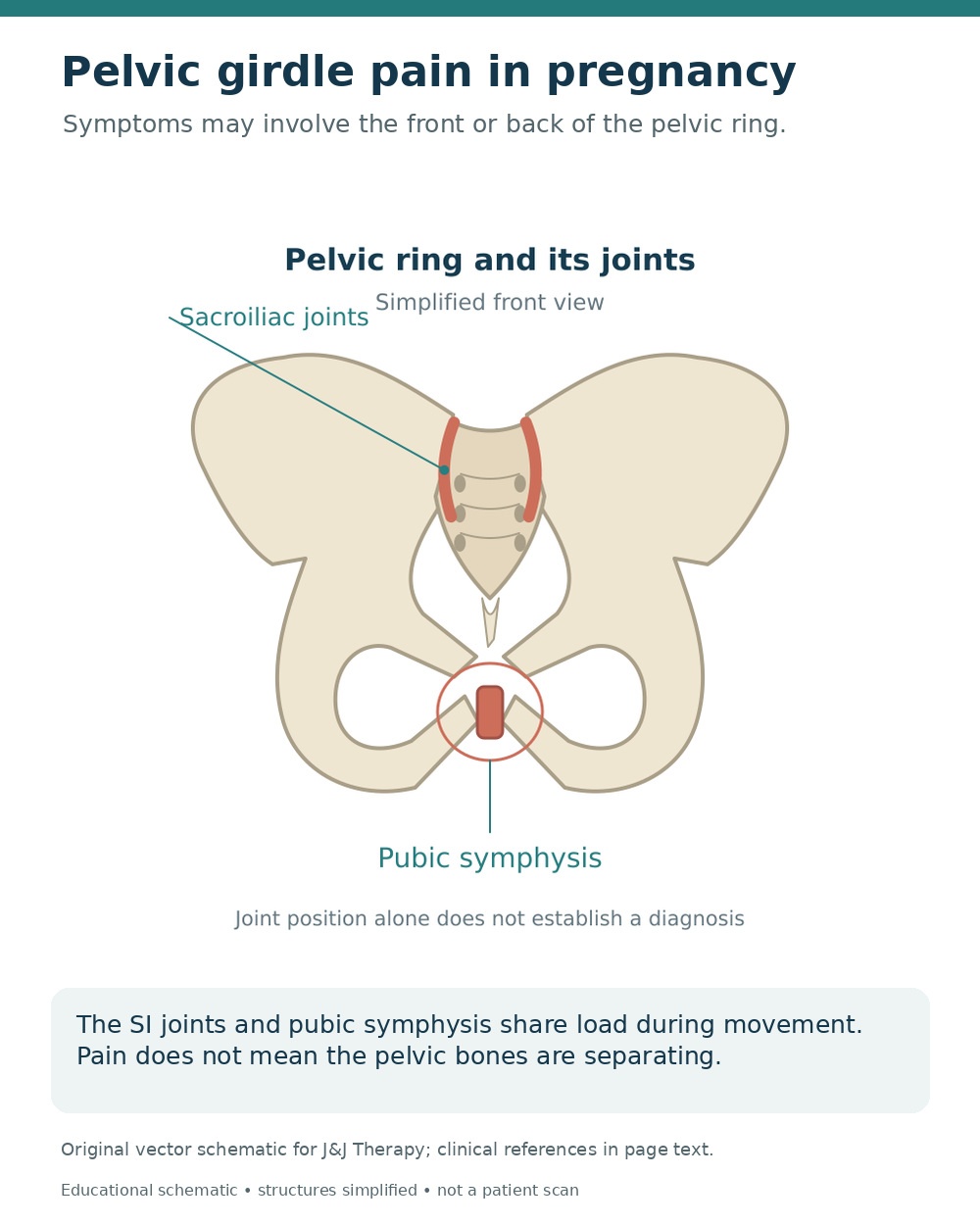
Pelvic girdle pain (PGP) is an umbrella term for pain arising from one or more of the three joints of the pelvic ring: the pubic symphysis at the front and the two sacroiliac joints at the back. It was previously known as symphysis pubis dysfunction (SPD), but PGP is now the accepted term because it more accurately reflects that the whole pelvic girdle — not just the symphysis — may be involved.
How your pelvis transfers load
Your pelvis transfers weight between your trunk and your legs. Stability of the pelvic joints depends on both the shape of the bones and their supporting ligaments, and on the compression generated by coordinated muscle activity across the pelvis. PGP is understood to relate to non-optimal stability of these joints, where load is not transferred smoothly and the surrounding muscles struggle to control it — rather than a joint being "out of place" (Vleeming et al., European Spine Journal, 2008).
What about pregnancy hormones?
It is often assumed that the hormone relaxin causes PGP by loosening the pelvic ligaments. The higher-quality evidence does not support this: a systematic review found that most better-designed studies reported no correlation between relaxin levels and pelvic girdle pain (Aldabe et al., European Spine Journal, 2012). Current understanding is that relaxin contributes to a normal, physiological increase in joint laxity, but does not by itself explain who develops pain — which is why assessment of your movement and muscle control matters more than hormones alone.
Types of pelvic girdle pain
PGP is usually grouped by which joints are involved: pain at the pubic symphysis at the front, pain on one or both sides at the sacroiliac joints at the back, or combined pain involving both areas. It can occur separately from, or together with, lower back pain. It is also distinct from diastasis of the symphysis pubis, a much rarer condition confirmed on imaging when the joint separates beyond the normal range.
How common is it, and will it settle?
Around one in five pregnant women experience PGP; among those affected, research suggests about a quarter have serious pain and around 8% experience severe disability during pregnancy (Wu et al., European Spine Journal, 2004). The outlook is generally favourable, and for most women symptoms settle after birth. However, roughly one in ten continue to have symptoms beyond three months postnatally, and untreated PGP is not always self-limiting — which is why early assessment and treatment are recommended rather than waiting it out.
Do You Experience These Symptoms?
✓ Pain over the pubic bone at the front of your pelvis, and/or over one or both sacroiliac joints at the back, which may spread into your groin, buttocks, hips or the backs of your thighs
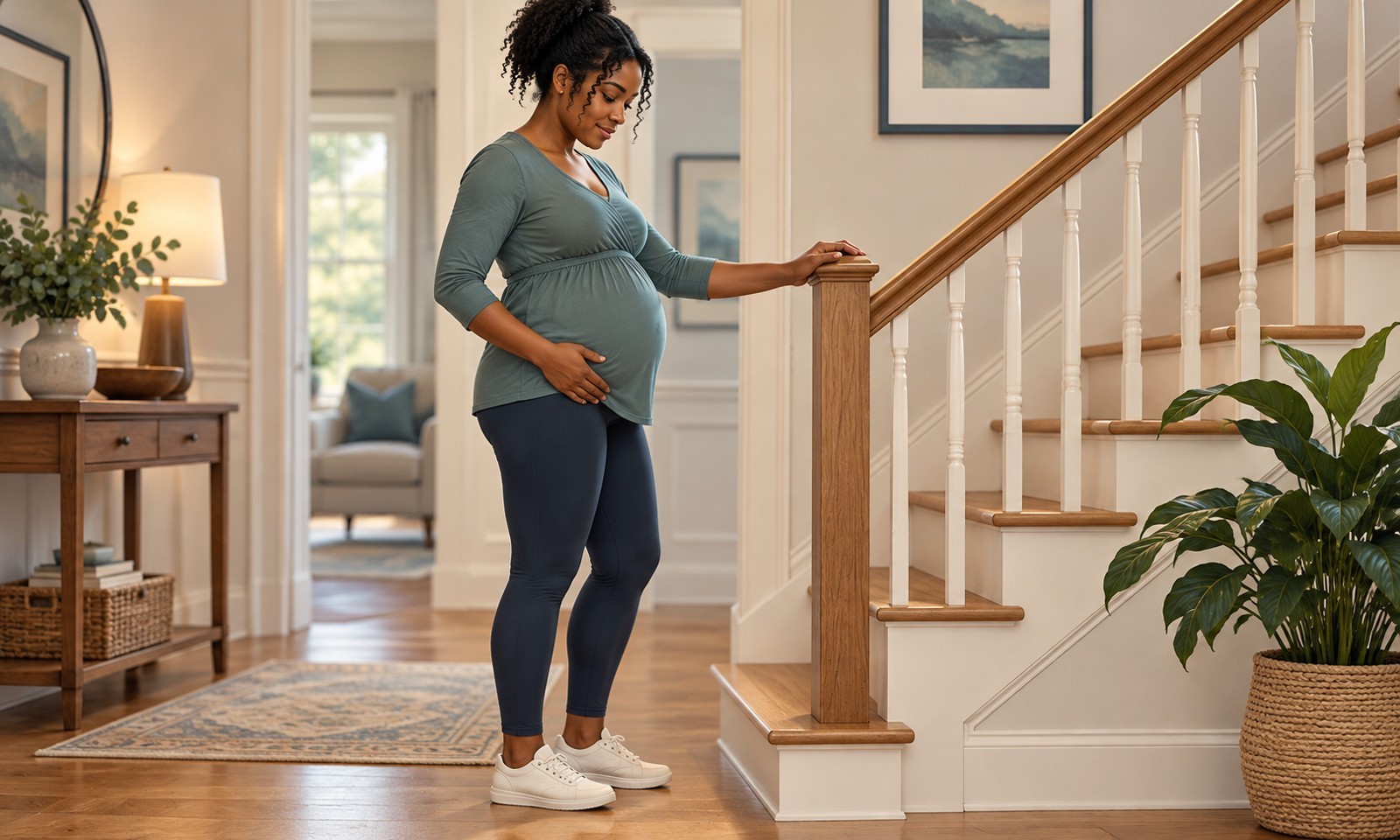
✓ Pain when putting weight through one leg — walking, climbing stairs, standing on one leg, or getting dressed
✓ Difficulty and pain when parting your legs — turning over in bed, or getting in and out of a car or bath
✓ A clicking, grinding or catching sensation in the pelvic area that you may feel or hear
✓ A waddling walking pattern, with reduced tolerance for standing, walking or sitting for long periods
✓ Pain that is worse at night or after activity, sometimes disturbing your sleep
✓ Pain or discomfort during sexual intercourse
These symptoms can be treated.
The sooner you begin, the better your chances of a smoother recovery.
What Causes Pregnancy-Related Pelvic Girdle Pain?
• Altered pelvic joint movement and non-optimal stability
PGP is most often linked to the pelvic joints moving asymmetrically or unevenly, so that load is not transferred smoothly through the pelvic ring.
This is described as non-optimal stability rather than a joint being displaced, which is why treatment focuses on restoring balanced movement and control.
• Reduced muscle control around the pelvis
Weak or poorly coordinated deep abdominal, gluteal and pelvic floor muscles lower the supportive compression that stabilises your pelvic joints.
Research has shown altered recruitment of the lumbopelvic muscles in people with sacroiliac pain (Hungerford et al., Spine, 2003).
• Increased mechanical load and hormonal laxity
The growing weight of your baby, changes in your posture, and a physiological rise in ligament laxity together increase the demand placed on your pelvic joints.
While relaxin does increase joint laxity, evidence shows it does not by itself reliably predict who develops pain (Aldabe et al., European Spine Journal, 2012).
• A previous history of back, pelvic or hip problems
The strongest single risk factor is previous low back or pelvic girdle pain, or previous trauma to the pelvis.
PGP in an earlier pregnancy also makes recurrence more likely, which is why we take a detailed history at your first appointment.
• Occupational and lifestyle demands
Heavy lifting, awkward or asymmetrical postures, and prolonged standing or sitting can all increase strain across the pelvic joints.
Higher body mass index and general joint hypermobility have also been associated with a greater risk of developing PGP.
How We Treat Pregnancy-Related Pelvic Girdle Pain at J&J Therapy
Hands-On Manual Therapy
Gentle, pregnancy-appropriate joint mobilisation, muscle energy techniques and soft tissue work to ease pain and improve how your pelvis, spine and hips move — positioned in comfortable side-lying with pillow support, avoiding any position that provokes your pain.
Shockwave Therapy*
Shockwave therapy is not suitable for pregnancy-related pelvic girdle pain.
Extracorporeal shockwave therapy is contraindicated during pregnancy, and this condition affects the pelvis during and around pregnancy — the very area that must be avoided. For this reason we do not use our Swiss Storz Medical MASTERPULS system for this condition.
Instead, our care emphasises specialised manual therapy and targeted exercises — the most appropriate approach for your specific needs at every stage of pregnancy and recovery.
Targeted Exercise Programme
An individualised programme building pelvic floor activation, deep abdominal control and gluteal strength to improve how your pelvis handles load — progressed safely through pregnancy and into the postnatal period, with advice on pelvic support belts where these may help.
When to Seek Urgent Medical Help
While most symptoms are not serious, urgent medical attention is required if you experience any of the following:
Reduced or changed fetal movements, vaginal bleeding, a gush or trickle of fluid, or regular tightenings that could signal preterm labour
A severe or persistent headache, visual disturbance, or sudden swelling of your face, hands or feet (possible signs of pre-eclampsia)
A sudden marked increase in pubic pain with a feeling that your pelvis is giving way and severe difficulty bearing weight
Numbness or tingling around your genitals, buttocks or inner thighs, new difficulty controlling your bladder or bowels, or new leg weakness
FAQs About Pregnancy-Related Pelvic Girdle Pain
Is pelvic girdle pain harmful to my baby?
No. PGP is painful and can limit your daily activities, but it does not harm your baby. It is very common, but it is not something you simply have to put up with — early assessment and treatment can relieve your pain and help you stay mobile.
Will it go away after I give birth?
For most women, yes — symptoms settle after birth in the large majority of cases. A minority have longer-lasting pain, with roughly one in ten still experiencing symptoms beyond three months postnatally. If your pain persists beyond a couple of weeks after birth, we recommend a physiotherapy review rather than waiting.
Is physiotherapy safe during pregnancy?
Yes. Advice, gentle manual therapy and individualised exercise can be delivered safely at any stage during or after pregnancy. We position you comfortably, usually in supported side-lying rather than flat on your back in later pregnancy, avoid anything that provokes your pain, and tailor every technique to your stage of pregnancy.
Why do you not use shockwave therapy for this condition?
We are transparent about this. Extracorporeal shockwave therapy is contraindicated during pregnancy, and pelvic girdle pain by definition involves the pelvis during and around pregnancy — the area that must be avoided. Both international consensus guidance from the ISMST and our device manufacturer, Storz Medical, list pregnancy as a contraindication, so we do not use our MASTERPULS shockwave system for this condition. Manual therapy and targeted exercise are the appropriate and evidence-based choice here.
What can I do at home to help myself?
Stay active within your pain limits and avoid movements that clearly worsen your symptoms. Keep your knees together when turning in bed or getting in and out of a car, take stairs one at a time, sit down to dress, place a pillow between your knees at night, and pace demanding tasks across the day. Your physiotherapist will give you a personalised home exercise and advice plan.
This page is for general information only and does not replace professional medical advice.
Reviewed by Lavya Arigalayan, MSc, HCPC Registered Physiotherapist.
Last reviewed:
2026년 8월 20일