
Quick Summary
Deep buttock pain, sometimes with symptoms down the leg, is often labelled piriformis syndrome. There are several possible causes, so we assess the back, hip and nerves before recommending stretching, hands-on treatment or an exercise plan.
Understanding Piriformis Syndrome
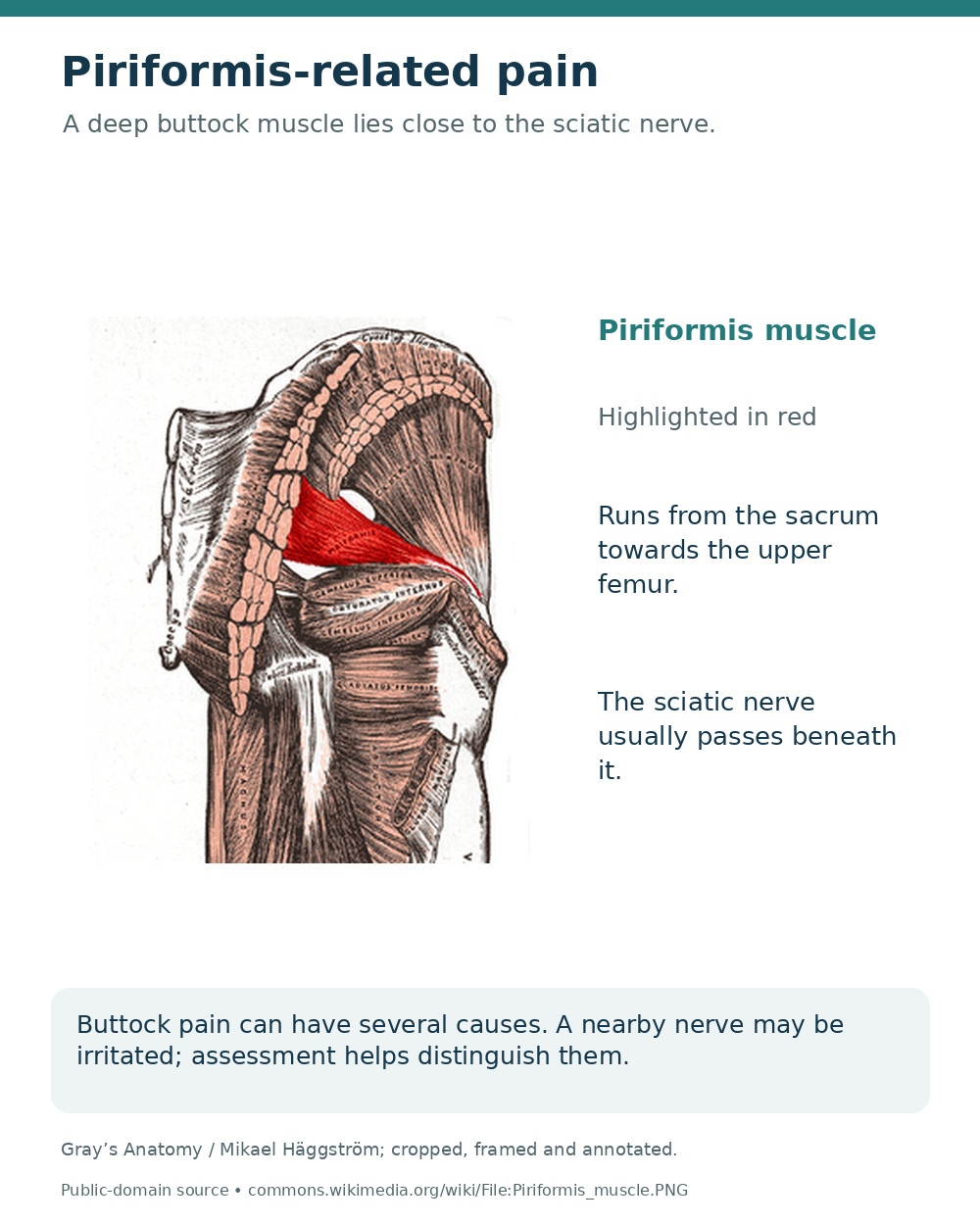
The piriformis is a small muscle deep in the buttock near the sciatic nerve. “Piriformis syndrome” describes suspected irritation involving this region and is sometimes grouped under deep gluteal syndrome. It should not be assumed from buttock tenderness alone or used to explain every case of sciatica.
How we assess your symptoms
We discuss where symptoms travel and examine the back, hip, strength and sensation where relevant. No single stretch test confirms every case. Persistent or worsening neurological symptoms, trauma or an unclear diagnosis may require GP or specialist assessment.
Image: Gray’s Anatomy / Mikael Häggström · Public domain. Cropped and annotated.
Do You Experience These Symptoms?
- Deep buttock discomfort, sometimes worse with sitting.
- Pain during certain hip movements or activities.
- Possible radiating leg symptoms that need nerve assessment.
An assessment helps guide your next step, based on your symptoms, health and goals.
What may contribute?
A change in running, prolonged sitting or local injury may be relevant, but the diagnosis is not always clear. Lumbar nerve-root pain, hip problems and other deep buttock conditions can overlap. Identifying the likely source helps avoid repeatedly stretching the wrong tissue.
A treatment plan built around you
Hands-On Manual Therapy
Gentle soft tissue treatment may help assessed buttock muscle discomfort alongside rehabilitation. Deep pressure that reproduces tingling or shooting pain is avoided. We do not promise to “release” a trapped nerve with massage.
Is Shockwave Suitable?
Shockwave is not routinely recommended for piriformis syndrome. Your assessment will guide appropriate rehabilitation, symptom management and whether medical or specialist review is needed. We will explain why each proposed treatment fits your symptoms before you decide whether to proceed.
Targeted Exercise Programme
We select hip and trunk exercises and adjust sitting or activity loads. Stretching is optional and should be comfortable; aggressive stretching through radiating pain can be counterproductive. Progress is based on your daily function.
When to Seek Urgent Medical Help
While most symptoms are not serious, urgent medical attention is required if you experience any of the following:
- Go to A&E immediately for new numbness around your genitals or bottom, difficulty starting or controlling urine, loss of bowel control, or severe or worsening weakness in both legs. These can signal cauda equina compression. Call 999 if you need an ambulance.
- Seek urgent medical advice for rapidly worsening leg weakness, fever or feeling unwell with back pain, or significant pain after an injury. Contact your GP about unexplained weight loss, a cancer history or persistent night pain.
Your questions answered
Is buttock pain always piriformis syndrome?
No. It may come from the spine, hip, tendons or other structures. A clear assessment is useful before booking repeated massage or following a strong stretching routine.
Should I use a hard ball on the painful spot?
Avoid forceful pressure that causes tingling, numbness or pain down the leg. Ask for an assessment so self-management can be adapted to the likely cause and your response.
Which appointment should I book?
Choose a Physiotherapy Initial Assessment for new, persistent or uncertain symptoms. We will assess what is limiting you, explain the options and agree the next steps. If you already have a diagnosis, bring any relevant scan report or specialist advice. For assessed muscle tension, Soft Tissue Therapy with Brigitte may complement your exercise plan. New weakness or nerve symptoms should be assessed before massage.
Visit J&J Therapy on the ground floor of CI Tower, New Malden. Book an assessment or call our reception team on 07935 869938 if you are unsure which service to choose.
Related conditions
Sciatica · Sacroiliac joint pain
Sources and further reading

This page is for general information only and does not replace professional medical advice.
Information updated 15 October 2026. General information to support informed choices; it is not a diagnosis or a personalised treatment plan. Suitability and any need for referral are assessed individually. Seek urgent medical help for the warning signs listed above.