
Quick Summary
An X-ray heel spur does not always explain heel pain. Assessment focuses on the painful tissues and daily demands so treatment targets what is actually limiting you. Our physiotherapists in New Malden can assess your symptoms and help you choose appropriate next steps for your goals.
Understanding Heel Spur
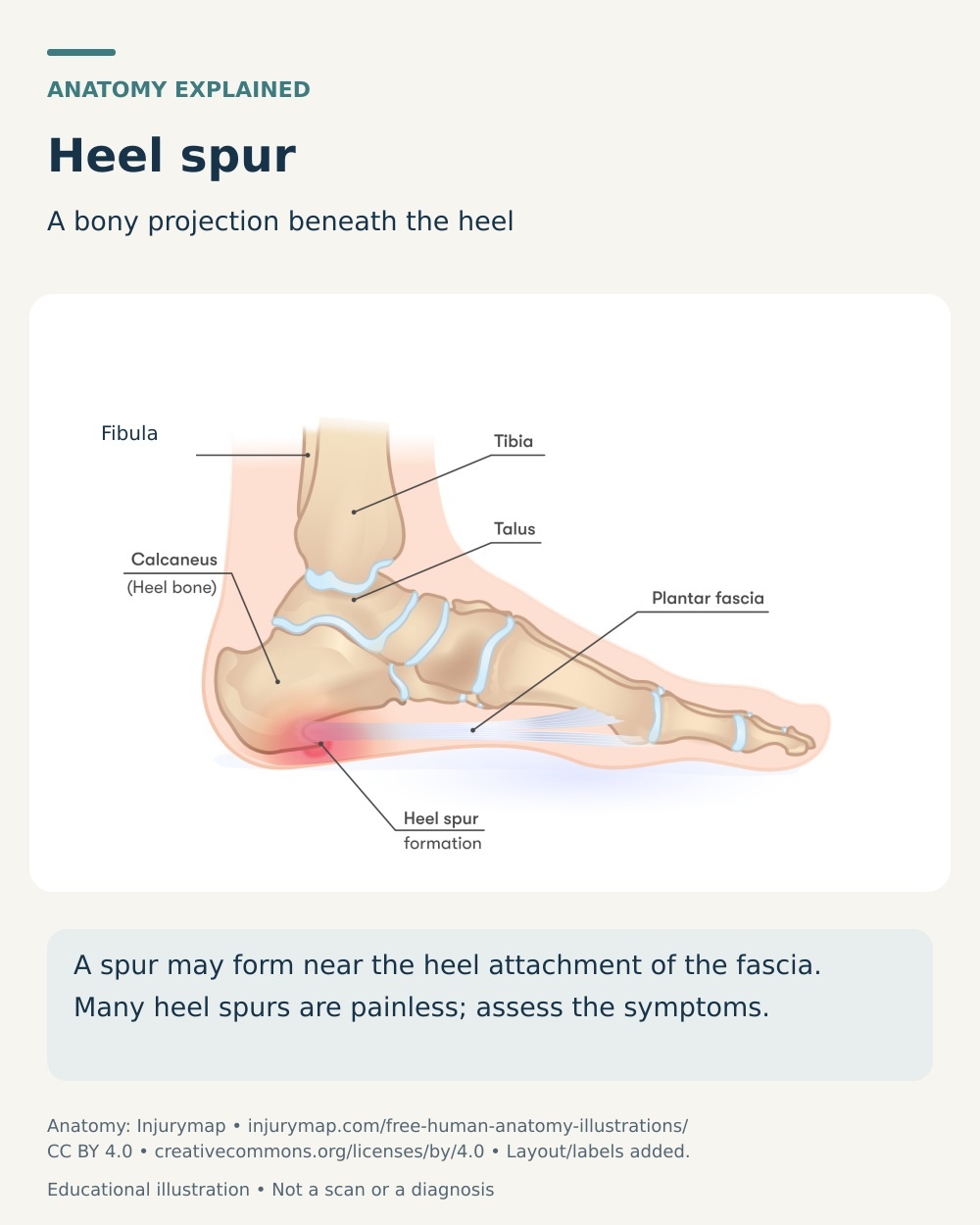
A heel spur is a bony projection from the heel bone. Spurs beneath the heel are often found alongside plantar heel pain, but they can also be present in people without symptoms. A spur at the back of the heel is a different finding and may involve the Achilles attachment.
Assessment at J&J Therapy
We ask where the pain is, how it behaves and what the scan report actually describes. Examination considers foot and calf function, footwear and loading. Night pain, neurological symptoms or focal bone tenderness may need further investigation.
Do You Experience These Symptoms?
- Pain under the heel, sometimes worst on the first few steps.
- Discomfort after prolonged standing or walking.
- An X-ray finding that may or may not match your symptoms.
An assessment helps guide your next step, based on your symptoms, health and goals.
Why symptoms may develop
Spurs may develop where tissues attach to bone over time. Their presence alone does not mean they are digging into the foot or need removal. Plantar fascia pain, Achilles problems, nerve symptoms and stress injury need to be distinguished.
Treatment and rehabilitation options
Hands-On Manual Therapy
Hands-on treatment may help associated calf or foot stiffness where appropriate. It cannot dissolve or physically remove a bony spur. Direct pressure on a sensitive heel is adjusted to your comfort. We explain the purpose and check your comfort and response throughout treatment.
Is Shockwave Suitable?
Shockwave is not used simply to break up a heel spur. If the actual diagnosis is persistent plantar heel pain, a clinician may discuss it separately, including uncertain benefits and the relevant NICE consent and monitoring requirements. Your physiotherapist can explain the more suitable options and how their effect will be reviewed during your ongoing rehabilitation.
Targeted Exercise Programme
Exercise and advice are matched to the cause of heel pain. This may include calf and foot strengthening, comfortable stretching, footwear changes and gradual walking or running progression. The target is improved function, not a change in the X-ray appearance.
When to Seek Urgent Medical Help
While most symptoms are not serious, urgent medical attention is required if you experience any of the following:
- Seek urgent GP or NHS 111 advice for severe pain after injury, inability to bear weight, or a hot swollen joint with fever.
- Go to A&E for an obvious deformity or a foot that becomes cold, pale or numb.
- If you have diabetes and a new foot wound, redness or swelling, contact your GP or diabetic foot team the same day; use NHS 111 if unavailable. Persistent altered sensation also needs medical review.
Your questions answered
Does every heel spur need treatment?
No. An incidental spur without symptoms usually does not need treatment. When there is pain, the assessment should identify the likely source.
Will massage or shockwave remove the spur?
Neither should be promised to remove it. Symptom improvement can occur without changing the bone, and any shockwave decision should relate to a supported diagnosis rather than the image alone.
Which appointment should I book?
Start with a Physiotherapy Initial Assessment for new, persistent or recurring symptoms. We can assess the problem and agree a plan linked to your daily activities. If you have already had medical care or surgery, bring the relevant instructions.
Soft Tissue Therapy may be a supporting option for associated muscle discomfort once the condition has been assessed. It is not a substitute for diagnosis or the rehabilitation needed for the underlying problem.
Book a Physiotherapy Assessment or call our reception team on 07935 869938. Find J&J Therapy at CI Tower, Ground Floor, New Malden.
Related conditions
Plantar Fasciitis · Achilles Tendinopathy
Sources and further reading

This page is for general information only and does not replace professional medical advice.
Information updated 15 October 2026. General information only; this page cannot diagnose your symptoms. Treatment is agreed after assessment. For urgent or severe symptoms, use the medical services described above.