
Quick Summary
Calf pain after sprinting or pushing off may be a muscle strain. Assessment helps identify when urgent medical checks for an Achilles rupture or a clot are needed before rehabilitation. Our physiotherapists in New Malden can assess your symptoms and help you choose appropriate next steps for your goals.
Understanding Calf Strain / Tear
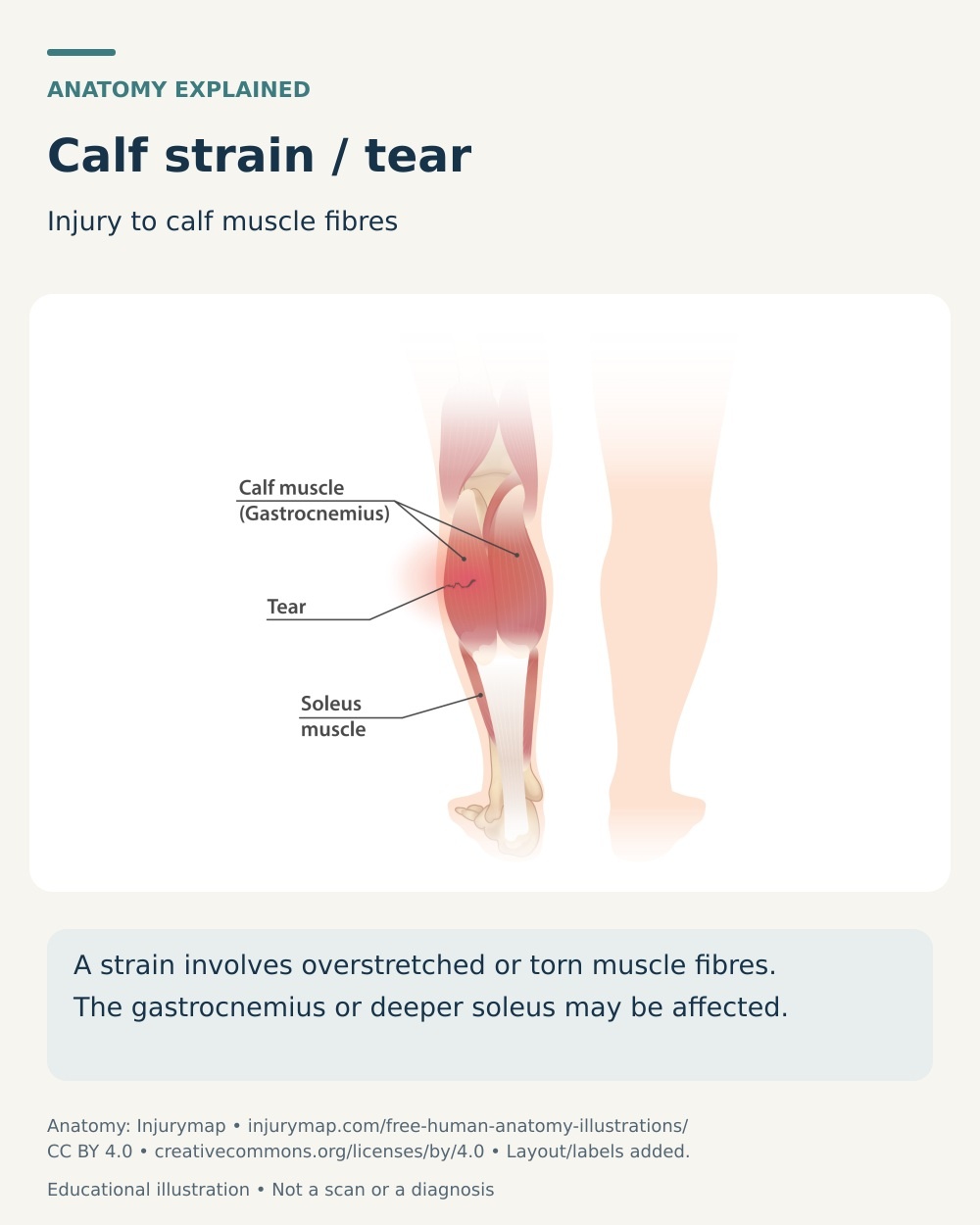
A calf strain is an injury to muscle fibres in the gastrocnemius or soleus at the back of the lower leg. Severity ranges from mild damage to a more substantial tear. An Achilles rupture, blood clot or other problem can produce similar symptoms and needs a different response.
Assessment at J&J Therapy
We review the onset, walking and push-off ability and screen for symptoms requiring urgent medical care. Once a muscle injury is established, we assess strength and function to plan protection, movement and gradual loading.
Do You Experience These Symptoms?
- Sudden local pain during acceleration, jumping or a quick push-off.
- Tenderness, bruising or swelling in the calf.
- Pain with walking, calf raises or stretching the muscle.
An assessment helps guide your next step, based on your symptoms, health and goals.
Why symptoms may develop
A sudden high force, fatigue or a rapid change in activity can overload the calf. Previous injury may affect capacity. Calf pain without a clear injury, especially with one-sided swelling or clot risk factors, should not be assumed to be muscular.
Treatment and rehabilitation options
Hands-On Manual Therapy
Deep massage over a fresh tear or unexplained swollen calf is avoided. Later, gentle soft tissue care may help comfort and movement when healing and clinical assessment allow. It does not replace progressive strengthening or return-to-running preparation. We explain the purpose and check your comfort and response throughout treatment.
Is Shockwave Suitable?
Shockwave is not a routine treatment for a fresh calf strain or tear. A suspected clot or Achilles rupture requires medical assessment, not a device or massage appointment. Your physiotherapist can explain the more suitable options and how their effect will be reviewed during your ongoing rehabilitation.
Targeted Exercise Programme
Rehabilitation progresses from comfortable walking and movement to calf strengthening with different knee positions, then faster loading, hopping and running. We monitor the response and rebuild the demands of your sport or work before full return. Your home plan is adapted as your function and confidence improve.
When to Seek Urgent Medical Help
While most symptoms are not serious, urgent medical attention is required if you experience any of the following:
- Seek urgent GP or NHS 111 advice for new one-sided calf swelling, warmth or unexplained pain.
- Call 999 for sudden breathlessness, chest pain or collapse, whether or not the leg is swollen.
- A sudden snap with loss of push-off or inability to rise onto the toes needs urgent assessment for Achilles rupture.
Your questions answered
Can I stretch it hard to release the pain?
Forceful stretching may aggravate an acute injury. Early movement should be comfortable, with stretching and loading progressed according to your recovery.
How do I know it is not a clot?
Symptoms can overlap and a clot cannot be excluded by a home test. New unexplained one-sided swelling, warmth or calf pain needs urgent medical advice.
Which appointment should I book?
Start with a Physiotherapy Initial Assessment for new, persistent or recurring symptoms. We can assess the problem and agree a plan linked to your daily activities. If you have already had medical care or surgery, bring the relevant instructions.
Soft Tissue Therapy may be a supporting option for associated muscle discomfort once the condition has been assessed. It is not a substitute for diagnosis or the rehabilitation needed for the underlying problem.
Book a Physiotherapy Assessment or call our reception team on 07935 869938. Find J&J Therapy at CI Tower, Ground Floor, New Malden.
Related conditions
Achilles Tendinopathy · Shin Splints
Sources and further reading

This page is for general information only and does not replace professional medical advice.
Information updated 15 October 2026. General information only; this page cannot diagnose your symptoms. Treatment is agreed after assessment. For urgent or severe symptoms, use the medical services described above.