
Quick Summary
Outer elbow pain when gripping, lifting a kettle or turning a handle? Tennis elbow, also called lateral elbow tendinopathy, can affect work and hobbies as well as sport. We help you manage loading and rebuild comfortable use of your arm.
Understanding Tennis Elbow
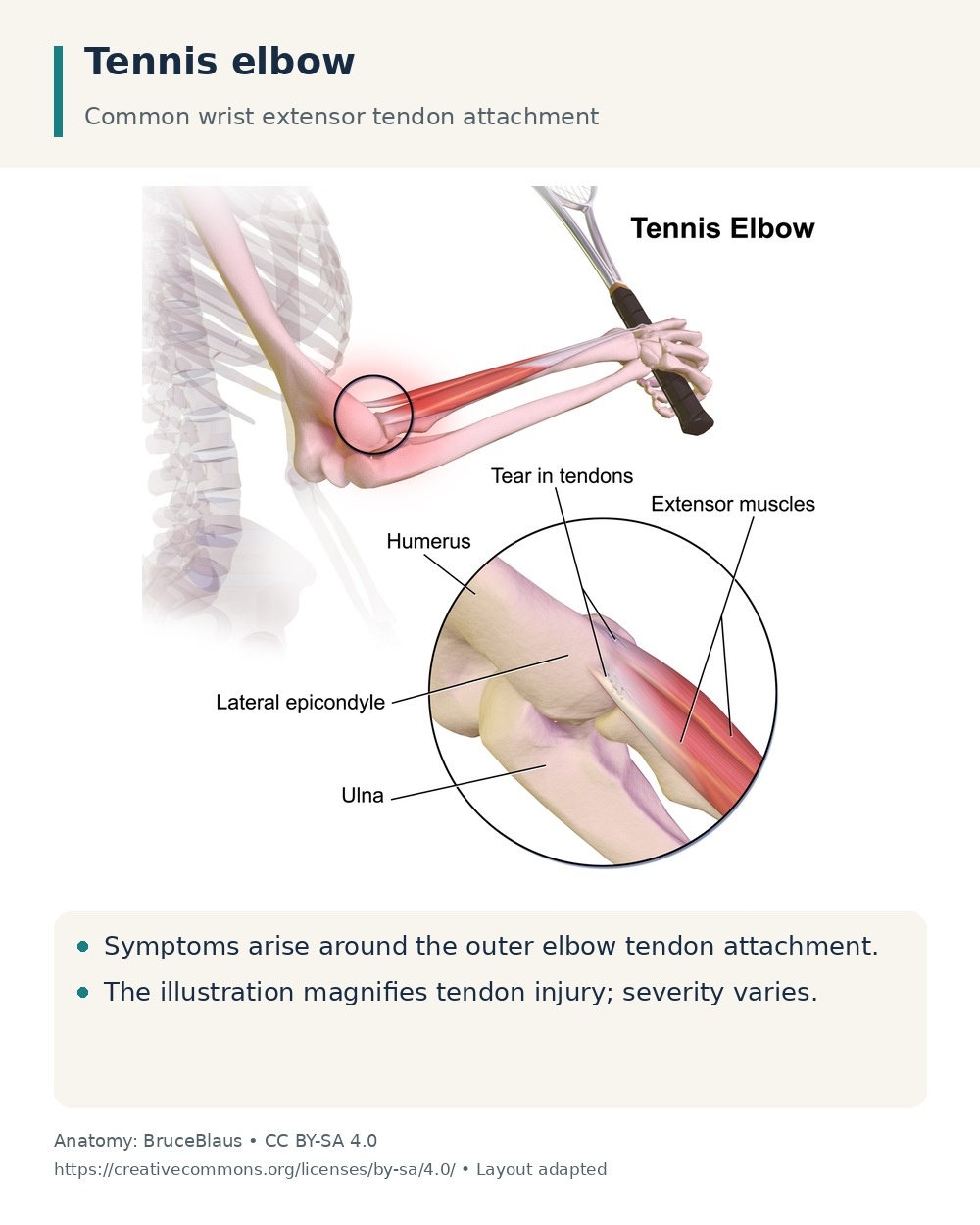
Tennis elbow involves the tendon attachment of the wrist-extensor muscles on the outside of the elbow. The older term is lateral epicondylitis. Symptoms do not always mean ongoing inflammation, and tendon pain can persist after the original increase in activity has passed.
How we assess your symptoms
We check the site of pain, grip and response to wrist loading, and screen the neck and nerves where indicated. Together we identify the tasks you need to keep doing and a manageable starting point for rehabilitation.
Image: BruceBlaus · CC BY-SA 4.0. Adapted; this image is also licensed CC BY-SA 4.0.
Do You Experience These Symptoms?
- Tenderness around the outer bony point of the elbow.
- Pain with gripping, lifting or resisted wrist movement.
- Reduced comfortable grip strength, sometimes with forearm aching.
An assessment helps guide your next step, based on your symptoms, health and goals.
What may contribute?
A sudden increase in gripping, tools, racquet sports or lifting may exceed your current tolerance. Recovery time, task technique and general health can also matter. A similar pain pattern can arise from a nerve or the neck, especially if there is tingling.
A treatment plan built around you
Hands-On Manual Therapy
Hands-on techniques may ease discomfort and help movement temporarily. They support a loading programme and practical changes at work or in sport; they are not a guaranteed tendon-healing treatment.
Is Shockwave Suitable?
Shockwave is not a first-line or guaranteed solution. NICE HTG201 finds inconsistent efficacy for refractory tennis elbow and requires special governance, informed consent and audit or research. Any proposal needs an individual assessment and discussion of alternatives and uncertainty.
Targeted Exercise Programme
Progressive wrist-extensor and grip exercises are adjusted to your response. We build from tolerable daily use towards heavier lifting or sport, reviewing function rather than promising a fixed number of sessions.
When to Seek Urgent Medical Help
While most symptoms are not serious, urgent medical attention is required if you experience any of the following:
- Go to A&E immediately after an injury if a joint is deformed or the hand or finger is cold, pale or blue, or has severe loss of sensation. For other severe swelling or inability to use the arm, seek urgent assessment through NHS 111.
- A hot, red, rapidly swollen joint with fever needs urgent medical assessment. Arrange prompt review for persistent numbness, increasing weakness or loss of dexterity.
Your questions answered
Should I stop using my arm completely?
Usually the aim is to reduce the most aggravating loads temporarily while keeping comfortable movement. We can help adjust grip, lifting and workload so you can build back gradually.
Is shockwave the first treatment?
No. Exercise and load management are central. NICE reports inconsistent evidence for shockwave in persistent tennis elbow and requires special governance, consent and audit or research arrangements.
Which appointment should I book?
Choose a Physiotherapy Initial Assessment for new, persistent or uncertain symptoms. We will assess what is limiting you, explain the options and agree the next steps. If you already have a diagnosis, bring any relevant scan report or specialist advice. For assessed muscle tension, Soft Tissue Therapy with Brigitte may complement your exercise plan. New weakness or nerve symptoms should be assessed before massage.
Visit J&J Therapy on the ground floor of CI Tower, New Malden. Book an assessment or call our reception team on 07935 869938 if you are unsure which service to choose.
Related conditions
Golfer’s elbow · Wrist tendonitis
Sources and further reading

This page is for general information only and does not replace professional medical advice.
Information updated 15 October 2026. General information to support informed choices; it is not a diagnosis or a personalised treatment plan. Suitability and any need for referral are assessed individually. Seek urgent medical help for the warning signs listed above.