
Quick Summary
Rotator cuff problems can make reaching, lifting and sleeping on your side uncomfortable. Tendinopathy and tears are not the same, and treatment depends on your symptoms, strength and injury history. Our physiotherapists in New Malden help you understand the findings and build a suitable rehabilitation plan, with medical referral when needed.
What is Rotator Cuff Tendinopathy / Tear?
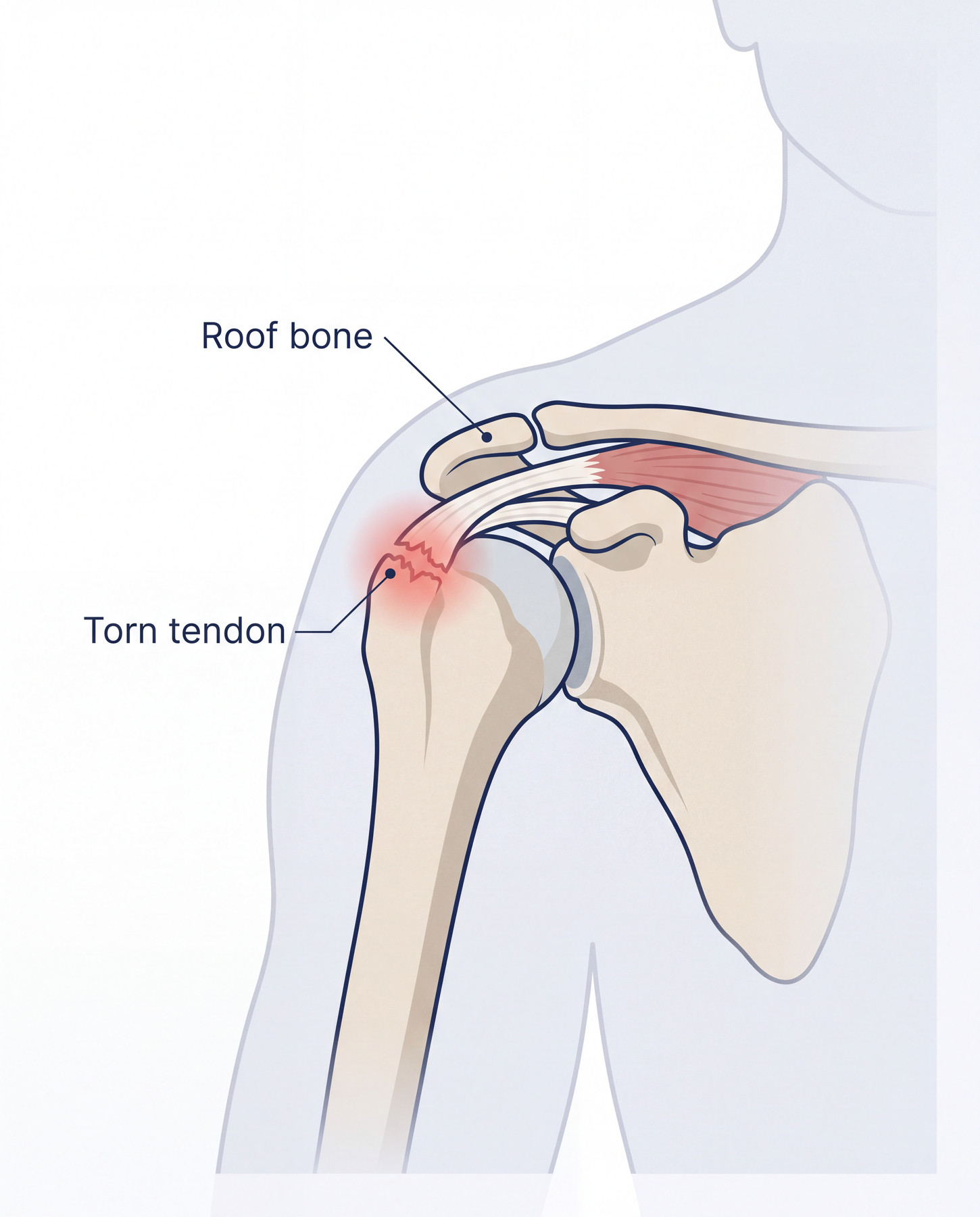
The rotator cuff is a group of muscles and tendons that helps move and control the shoulder. Tendinopathy describes a painful tendon problem; a tear is a partial or complete disruption of a tendon. Some tears cause few symptoms. A new injury with major weakness or inability to raise the arm needs prompt assessment for a traumatic tear.
Your assessment at J&J Therapy looks at how symptoms affect your day, relevant health history, movement and strength. We explain the findings, agree priorities with you and advise when medical review or imaging would change your care.
Do You Experience These Symptoms?
- Pain in the shoulder or outer upper arm when lifting or reaching.
- Discomfort lying on the affected side.
- Weakness or reduced endurance; sudden weakness after injury needs urgent review.
An assessment helps guide your next step, based on your symptoms, health and goals.
Why can it develop?
Tendon changes may develop with age, repeated loading or an abrupt increase in activity. Tears can also follow a fall or other injury. Imaging may be useful in selected cases, but scan changes must be interpreted alongside the examination and what you can do.
Your treatment plan at J&J Therapy
Hands-On Manual Therapy
Hands-on muscle or joint techniques may help short-term comfort as part of rehabilitation. They do not knit a torn tendon together. We use the response to decide whether they add value to your programme.
Is Shockwave Suitable?
Shockwave is not recommended routinely for rotator cuff tendinopathy without calcification. Calcific disease has a separate pathway, and NICE recommends shockwave for calcific shoulder tendinopathy only in research; it is not a routine tear-repair treatment.
Targeted Exercise Programme
A graded shoulder-strengthening programme is commonly central to non-surgical care. We adapt the starting load, range and progression to your symptoms and tear status, then work towards daily, work or sporting demands.
When to Seek Urgent Medical Help
While most symptoms are not serious, urgent medical attention is required if you experience any of the following:
- Seek urgent GP advice or contact NHS 111 for sudden severe pain, inability to move the arm, marked swelling, persistent numbness or a hot shoulder with fever.
- After an injury, a changed shoulder shape or sudden loss of strength needs urgent assessment. Do not try to put a dislocated shoulder back yourself.
- Call 999 for shoulder or arm pain with chest pressure, breathlessness, sweating or feeling faint.
Your questions answered
Does a rotator cuff tear always need surgery?
No. Many people can improve pain and function with rehabilitation, even when a tear remains. A fresh traumatic tear, significant weakness or persistent disability may warrant specialist assessment.
Do I need an ultrasound or MRI before physiotherapy?
Not always. Your history and examination guide whether imaging would change management. Prompt imaging or specialist review may be appropriate after an injury with substantial weakness.
Which appointment should I book?
Choose a Physiotherapy Initial Assessment to understand this problem and plan your rehabilitation. Soft Tissue Therapy may be considered for associated muscle tension when appropriate; it does not replace assessment of an injury, tendon problem or joint restriction.
Book an appointment at J&J Therapy, ground floor, CI Tower, New Malden. Need help choosing? Call our reception team on 07935 869938.
Sources and further reading

This page is for general information only and does not replace professional medical advice.
Information updated 15 October 2026. General information only; this page does not diagnose your symptoms or replace an individual assessment. Treatment depends on your health, examination and preferences. Use the urgent-care advice above when needed.