
Quick Summary
Painful catching at the front or inner knee can have several causes. Assessment helps establish whether an irritated plica is contributing and what to change next. Our physiotherapists in New Malden can assess your symptoms and help you choose appropriate next steps for your goals.
Understanding Plica Syndrome
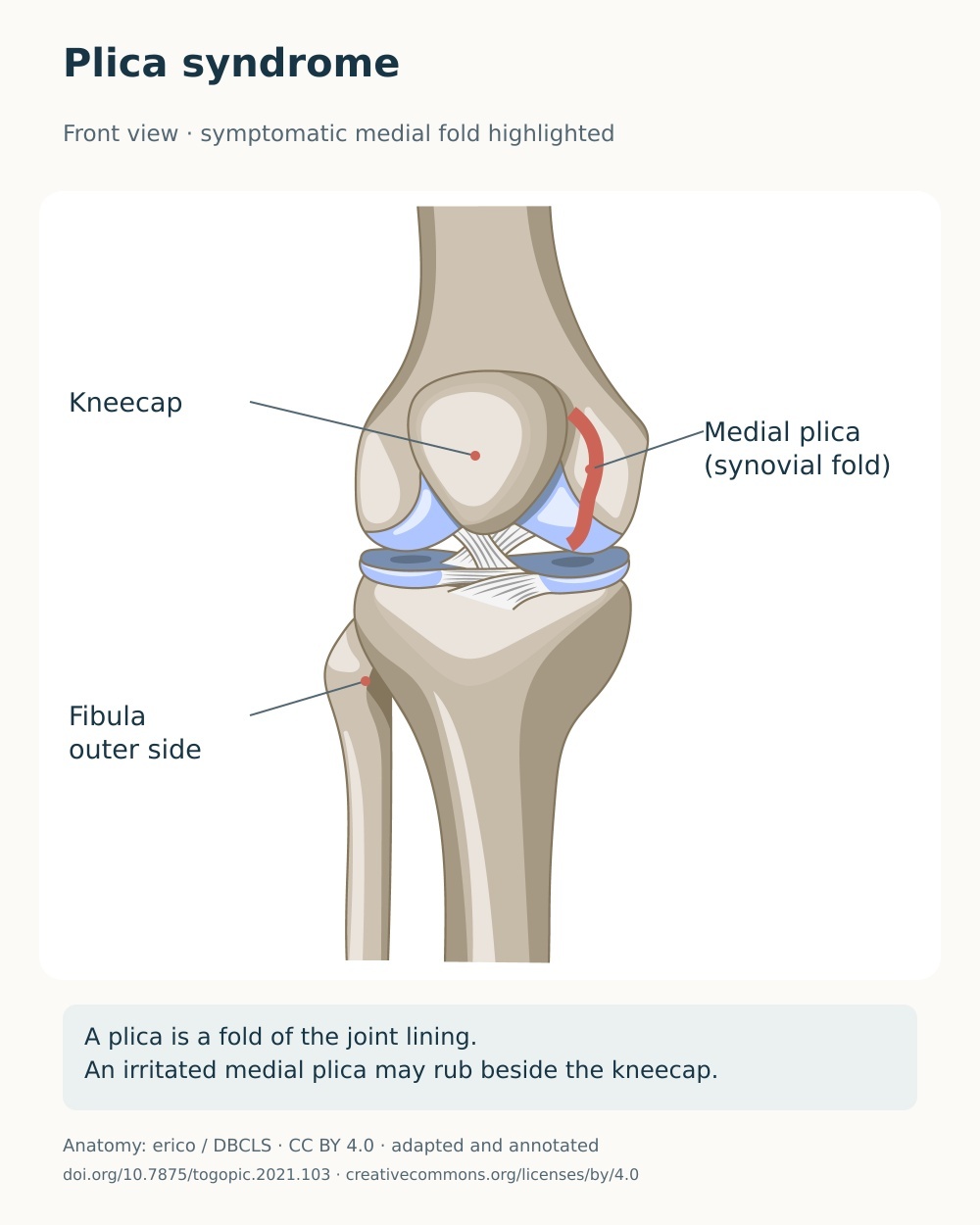
A plica is a fold in the lining of the knee joint. Many people have these folds without symptoms. A fold may sometimes become sensitive or irritated, producing pain around the front or inner knee. Similar symptoms can arise from the kneecap joint or a meniscus injury, so a click alone does not confirm plica syndrome.
Assessment at J&J Therapy
We review how symptoms started and examine swelling, movement and control during everyday tasks. A genuinely locked knee or repeated significant swelling needs medical review. Imaging is considered through the appropriate medical pathway if it would change management.
Image: erico / DBCLS, Togo picture gallery · CC BY 4.0. Adapted and annotated.
Do You Experience These Symptoms?
- Local tenderness near the inner edge of the kneecap.
- Pain with repeated bending, squatting or stairs.
- A catching sensation that may occur with movement.
An assessment helps guide your next step, based on your symptoms, health and goals.
Why symptoms may develop
Repeated loaded bending or a knee injury may precede symptoms. The relevant issue is how your knee tolerates current activity, not simply whether a fold is visible on a scan. Other joint problems can coexist and change the treatment approach.
Treatment and rehabilitation options
Hands-On Manual Therapy
Comfortable mobilisation or work to surrounding thigh muscles may support movement if stiffness is relevant. Hands-on treatment is not intended to break down or remove a plica, and direct pressure that reproduces catching is avoided. We explain the purpose and check your comfort and response throughout treatment.
Is Shockwave Suitable?
Shockwave is not a routine treatment for an irritated synovial plica. Activity adjustment and rehabilitation are the main conservative options to consider after assessment. Your physiotherapist can explain the more suitable options and how their effect will be reviewed during your ongoing rehabilitation.
Targeted Exercise Programme
We adapt painful bending tasks and build knee and hip strength in a tolerable range. Load and depth are increased gradually. The aim is to restore confidence with stairs, gym exercise or sport while checking for recurrent catching or swelling.
When to Seek Urgent Medical Help
While most symptoms are not serious, urgent medical attention is required if you experience any of the following:
- Seek urgent GP or NHS 111 advice if you cannot move the knee, bear weight, or straighten a knee that is locked.
- A hot swollen knee with fever or feeling unwell needs urgent medical assessment.
- Go to A&E for a deformed leg after injury or a foot that becomes cold, pale or numb.
Your questions answered
Does clicking mean I need treatment?
Painless clicking is common. Pain, swelling or a loss of movement makes assessment more useful than the noise itself.
Can physiotherapy avoid surgery?
A trial of activity adjustment and rehabilitation is often appropriate. Persistent symptoms with a confirmed symptomatic plica may need specialist advice; improvement or avoidance of surgery cannot be guaranteed.
Which appointment should I book?
Start with a Physiotherapy Initial Assessment for new, persistent or recurring symptoms. We can assess the problem and agree a plan linked to your daily activities. If you have already had medical care or surgery, bring the relevant instructions.
Book a Physiotherapy Assessment or call our reception team on 07935 869938. Find J&J Therapy at CI Tower, Ground Floor, New Malden.
Related conditions
Hoffa’s Fat Pad Impingement · Patellofemoral Pain Syndrome (Runner’s Knee)
Sources and further reading

This page is for general information only and does not replace professional medical advice.
Information updated 15 October 2026. General information only; this page cannot diagnose your symptoms. Treatment is agreed after assessment. For urgent or severe symptoms, use the medical services described above.