top of page
Physiotherapist at J&J Therapy in New Malden treating a patient's neck and shoulder blade for levator scapulae syndrome

Levator Scapulae Syndrome

300+ Reviews 5.0

Open 7 Days

10+ Years' Experience

HCPC Physio On Team

Insurance Accepted

85% Return Rate

PHYSIOTHERAPY & THERAPEUTIC MASSAGE IN NEW MALDEN

Quick Summary

If you feel a nagging, deep ache where your neck meets the top of your shoulder blade, levator scapulae syndrome may be the cause — often linked to carrying heavy bags on one shoulder or long hours at a desk.


Our HCPC-registered physiotherapists assess your neck, shoulder blade and posture together, then combine hands-on treatment with a targeted exercise programme. Research suggests most people with muscle-related neck pain can expect meaningful improvement in pain and movement with physiotherapy.

What Is Levator Scapulae Syndrome?

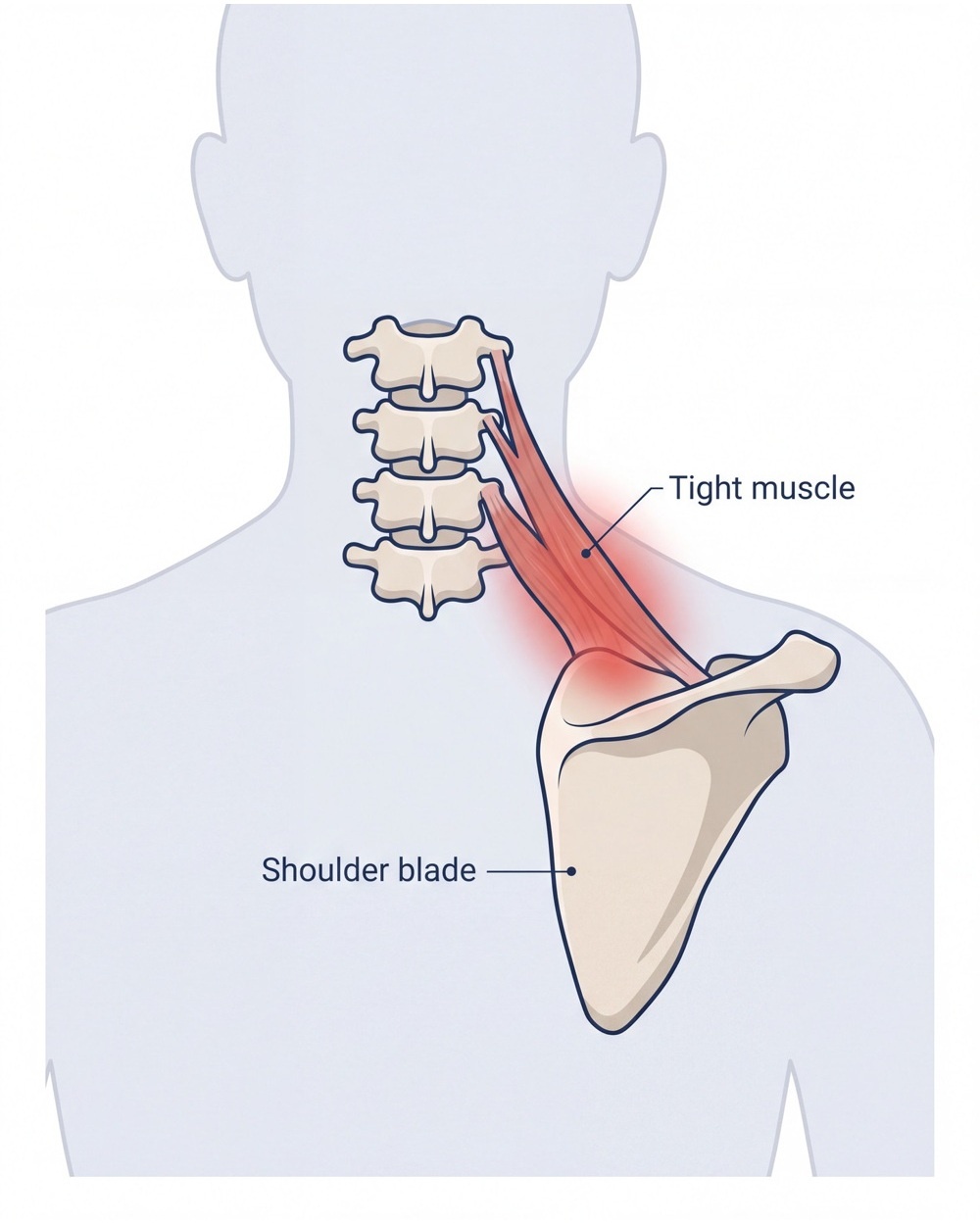
Anatomical illustration of the levator scapulae muscle running from the upper neck to the top corner of the shoulder blade

The levator scapulae is a slender, strap-like muscle on each side of your neck. It runs from the top four neck bones (C1–C4) down to the upper inner corner of your shoulder blade, where it helps lift the shoulder blade and turn and tilt your neck (Henry & Munakomi, StatPearls, 2023).


Levator scapulae syndrome describes pain over the upper inner angle of the shoulder blade — a recognisable cluster of symptoms rather than a single disease (Menachem et al., Bull Hosp Jt Dis, 1993). When the muscle is overloaded or held tense, it can develop myofascial trigger points: hypersensitive knots in a taut band of muscle that are tender to touch and can refer pain along the inner border of the shoulder blade and towards the back of the shoulder. The levator scapulae is one of the muscles most commonly involved in neck-related myofascial pain (Fernández-de-las-Peñas et al., Manual Therapy, 2007).


The syndrome is closely tied to posture and shoulder blade control. In forward head and rounded-shoulder postures, the levator scapulae is often shortened and overworked while the deeper neck muscles and lower shoulder-blade stabilisers weaken. That is why our assessment looks at your neck and shoulder blade together, rather than the sore spot alone.

Do You Experience These Symptoms?

✓  A deep, nagging ache or tightness where your neck meets the top of your shoulder blade

✓  Neck stiffness, especially turning or side-bending away from the painful side

✓  Tenderness and a palpable knot at the upper inner corner of the shoulder blade

✓  Pain spreading along the inner edge of the shoulder blade or towards the back of the shoulder

✓  Tension-type headaches referred from tight neck muscles

✓  Symptoms that worsen after long desk sessions, carrying bags, or on waking

✓  A persistent urge to stretch or rub the base of your neck for relief

These symptoms can be treated.
The sooner you begin, the better your chances of a smoother recovery.

What Causes Levator Scapulae Syndrome?

•  Prolonged desk and screen posture

Sitting for long periods with your head pushed forward loads the neck and shoulder-blade muscles continuously. Research links prolonged sitting and forward-bent neck postures with neck pain in office workers (Ariëns et al., Occup Environ Med, 2001).


•  Carrying heavy bags on one shoulder

A heavy shoulder bag or laptop case forces the levator scapulae to work constantly to keep the shoulder blade elevated. This repetitive one-sided load is a recognised contributor to muscle tension and trigger points.


•  Stress-related muscle tension

Emotional stress commonly raises resting tension in the neck and shoulder muscles, keeping the levator scapulae switched on. Psychosocial factors are established contributors to neck pain in UK clinical guidance.


•  Sleeping position

Sleeping with your neck twisted or unsupported can hold the muscle in a shortened, strained position overnight. This often provokes morning stiffness and pain at the base of the neck.


•  Repetitive overhead or one-sided activity

Swimming, throwing, racquet sports and repetitive reaching load the shoulder blade and neck repeatedly. This increases demand on the levator scapulae and predisposes it to trigger points and strain.

Not sure which condition applies to you?

How We Treat Levator Scapulae Syndrome at J&J Therapy

Hands-On Manual Therapy

Our physiotherapists begin with a thorough assessment of your neck, shoulder blade and posture to confirm the levator scapulae is the main pain source. We then use hands-on techniques including trigger point release, soft tissue mobilisation and myofascial release to ease muscle tension and restore movement. Research suggests manual therapy combined with exercise provides greater short-term relief for mechanical neck pain than exercise alone.

Shockwave Therapy*

Swiss Storz Medical MASTERPULS may complement your manual therapy and exercise programme when your physiotherapist identifies specific indications during assessment. Non-invasive, evidence-based.

Targeted Exercise Programme

We design a targeted, progressive programme for you: gentle stretching of the levator scapulae and upper trapezius to restore length, scapular stabilisation and strengthening of the lower trapezius and serratus anterior, plus deep neck flexor and postural retraining. We finish with practical workstation, bag-carrying and sleeping-position advice to reduce recurrence.

When to Seek Urgent Medical Help

While most symptoms are not serious, urgent medical attention is required if you experience any of the following:

  • Weakness, numbness or pins and needles spreading into your arms or legs, problems with balance or walking, or loss of bladder or bowel control

  • Neck pain following significant trauma such as a fall or road accident, or if you have osteoporosis or fragile bones

  • Unexplained weight loss, fever, night sweats, a history of cancer, or constant unremitting pain that disturbs sleep

  • Sudden severe headache, dizziness, visual disturbance, or an electric-shock sensation down your spine when bending your neck

FAQs About Levator Scapulae Syndrome

  • How long does levator scapulae syndrome take to get better?

Most muscle-related neck pain improves over a few weeks with the right treatment and self-management, though timescales vary between individuals. Persistent cases often relate to posture, workload or stress, which is why we address these alongside hands-on treatment.


  • Do I need a scan or X-ray?

Usually not. For typical muscle-related neck pain, imaging rarely changes management and is not routinely recommended in UK guidance. Our assessment is designed to identify when onward referral is appropriate.


  • Can I keep exercising and working at my desk?

Yes — staying active is encouraged, as gentle movement generally helps recovery. We will give you practical workstation adjustments, regular movement breaks, and guidance on carrying bags more evenly while your symptoms settle.


  • Can shockwave therapy help my levator scapulae pain?

It may, in some cases. Shockwave is never our first-line treatment for this condition, and direct research on shockwave for levator scapulae syndrome specifically is limited — most evidence comes from studies of myofascial trigger points in nearby muscles, where research suggests it can help reduce pain. If your physiotherapist identifies specific indications during assessment, our Swiss Storz Medical MASTERPULS shockwave may complement your manual therapy and exercise programme.


  • Is my one-sided shoulder bag really the problem?

It can be a major contributor. Carrying a heavy bag on the same shoulder every day keeps the levator scapulae working continuously on that side. Switching to a rucksack, lightening the load and alternating sides often makes a noticeable difference.

Not sure this condition matches your symtoms?
Find your condition and explore related pain areas.

Logo_Navy.png

Ready to start your recovery?
Book your Initial Assessment today.

This page is for general information only and does not replace professional medical advice.

Reviewed by Lavya Arigalayan, MSc, HCPC Registered Physiotherapist.

Last reviewed

2026년 8월 20일

bottom of page