
Quick Summary
A labral tear affects the rim of cartilage around the shoulder socket. Some tears are associated with instability, while others cause few symptoms. We assess your history, strength and confidence using the arm, then guide rehabilitation or referral according to the type of injury and your goals.
What is Shoulder Labral Tear (SLAP / Bankart)?
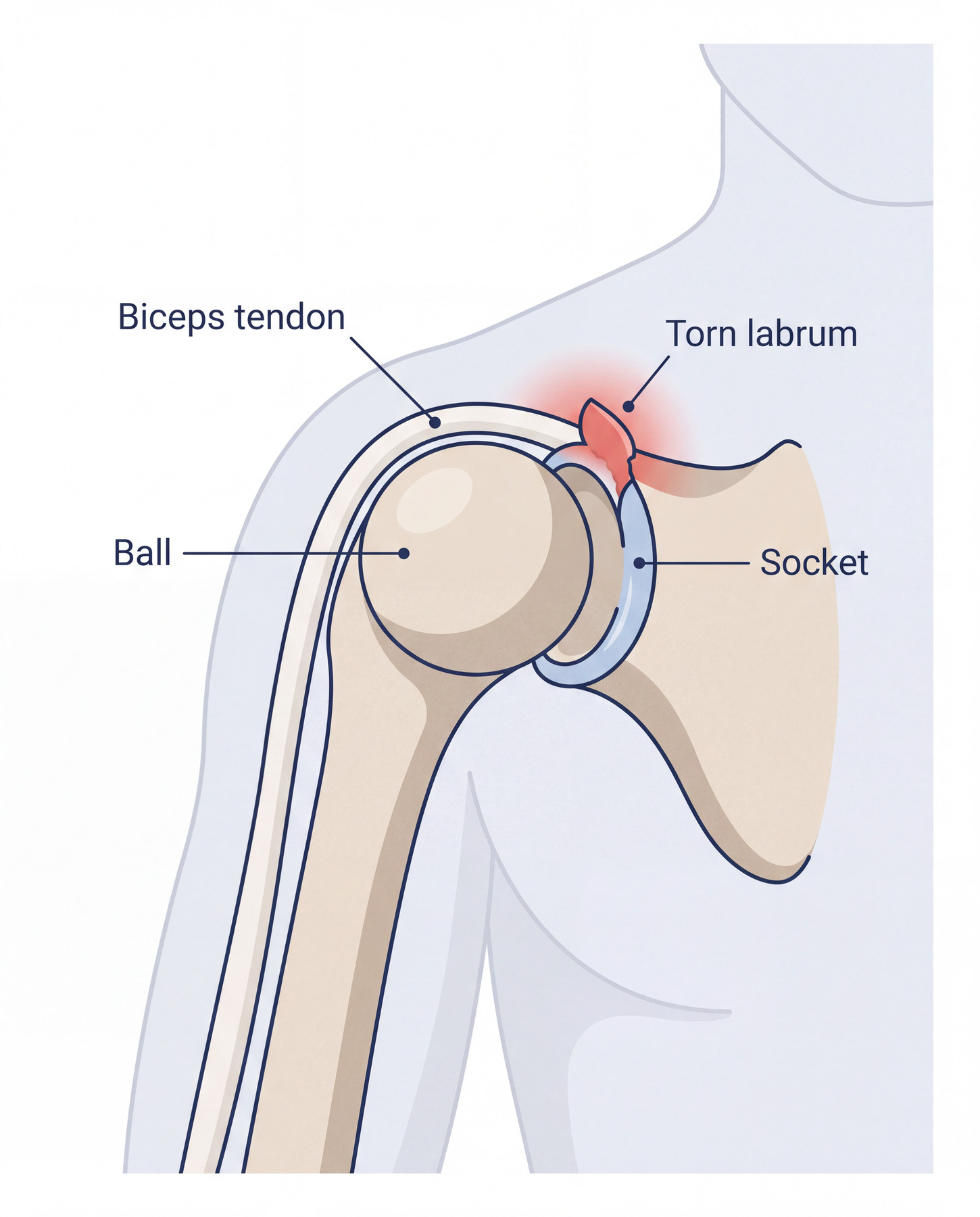
A SLAP tear involves the upper labrum near the long-head biceps attachment. A Bankart injury affects the front lower labrum and is often associated with a dislocation. These labels describe different problems. Clicking alone does not confirm a tear, and imaging findings must be interpreted alongside symptoms and examination.
Your assessment at J&J Therapy looks at how symptoms affect your day, relevant health history, movement and strength. We explain the findings, agree priorities with you and advise when medical review or imaging would change your care.
Do You Experience These Symptoms?
- Deep shoulder discomfort during certain lifting or overhead activities.
- Catching or clicking with pain, sometimes with a slipping sensation.
- Reduced confidence after an injury or dislocation.
An assessment helps guide your next step, based on your symptoms, health and goals.
Why can it develop?
A fall, dislocation, traction injury or repeated overhead loading may be relevant. Some labral changes occur with age and are not necessarily the cause of pain. Decisions about treatment depend on instability, function and activity needs rather than a scan label alone.
Your treatment plan at J&J Therapy
Hands-On Manual Therapy
Hands-on care may address associated muscle discomfort or stiffness when suitable. It cannot reattach the labrum, and unstable positions are avoided. After surgery, all treatment follows the repair precautions.
Is Shockwave Suitable?
Shockwave does not repair a torn labrum or stabilise a Bankart lesion. It is not a routine treatment for SLAP or Bankart injuries.
Targeted Exercise Programme
A programme may build rotator cuff and shoulder-blade control, progressive strength and tolerance for work or sport. After repair, loading and movement are progressed only within the surgeon’s protocol.
When to Seek Urgent Medical Help
While most symptoms are not serious, urgent medical attention is required if you experience any of the following:
- Seek urgent GP advice or contact NHS 111 for sudden severe pain, inability to move the arm, marked swelling, persistent numbness or a hot shoulder with fever.
- After an injury, a changed shoulder shape or sudden loss of strength needs urgent assessment. Do not try to put a dislocated shoulder back yourself.
- Call 999 for shoulder or arm pain with chest pressure, breathlessness, sweating or feeling faint.
Your questions answered
Does every labral tear need surgery?
No. Some people improve with rehabilitation, and some scan findings are not symptomatic. Recurrent instability, a traumatic injury or persistent functional problems may warrant a specialist opinion.
Does shoulder clicking mean I have a tear?
Not necessarily. Painless clicking is common and has several explanations. Painful catching, a history of injury or a slipping sensation should be assessed in context.
Which appointment should I book?
Choose a Physiotherapy Initial Assessment to understand this problem and plan your rehabilitation. Soft Tissue Therapy may be considered for associated muscle tension when appropriate; it does not replace assessment of an injury, tendon problem or joint restriction.
Book an appointment at J&J Therapy, ground floor, CI Tower, New Malden. Need help choosing? Call our reception team on 07935 869938.
Sources and further reading

This page is for general information only and does not replace professional medical advice.
Information updated 15 October 2026. General information only; this page does not diagnose your symptoms or replace an individual assessment. Treatment depends on your health, examination and preferences. Use the urgent-care advice above when needed.