top of page
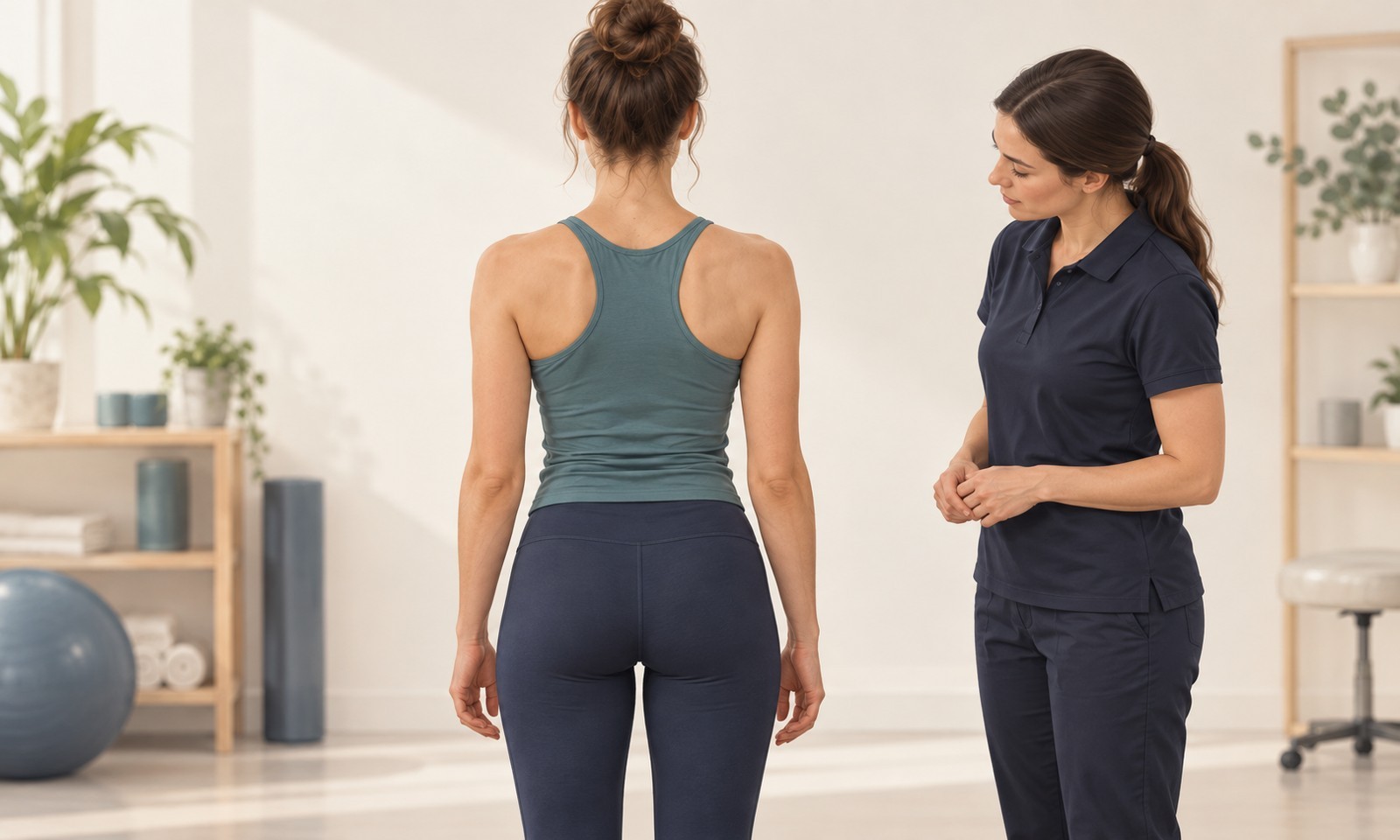
Physiotherapist assessing the spinal curve of a patient with scoliosis at J&J Therapy in New Malden

Scoliosis

300+ Reviews 5.0

Open 7 Days

10+ Years' Experience

HCPC Physio On Team

Insurance Accepted

85% Return Rate

PHYSIOTHERAPY & THERAPEUTIC MASSAGE IN NEW MALDEN

Quick Summary

Scoliosis is a sideways curvature of the spine that can cause uneven posture, back pain and reduced flexibility. Our HCPC-registered physiotherapists cannot straighten the spine, but we can help you manage pain, improve mobility and build the strength that supports everyday function through manual therapy and a scoliosis-specific exercise programme.


Because scoliosis is a long-term condition rather than an injury that heals, we treat it as an ongoing programme rather than a fixed short course. Most people begin with an initial course of around six to eight sessions to establish and learn their exercises, followed by periodic reviews — adolescents are monitored through growth, while adults focus on managing symptoms.

What Is Scoliosis?

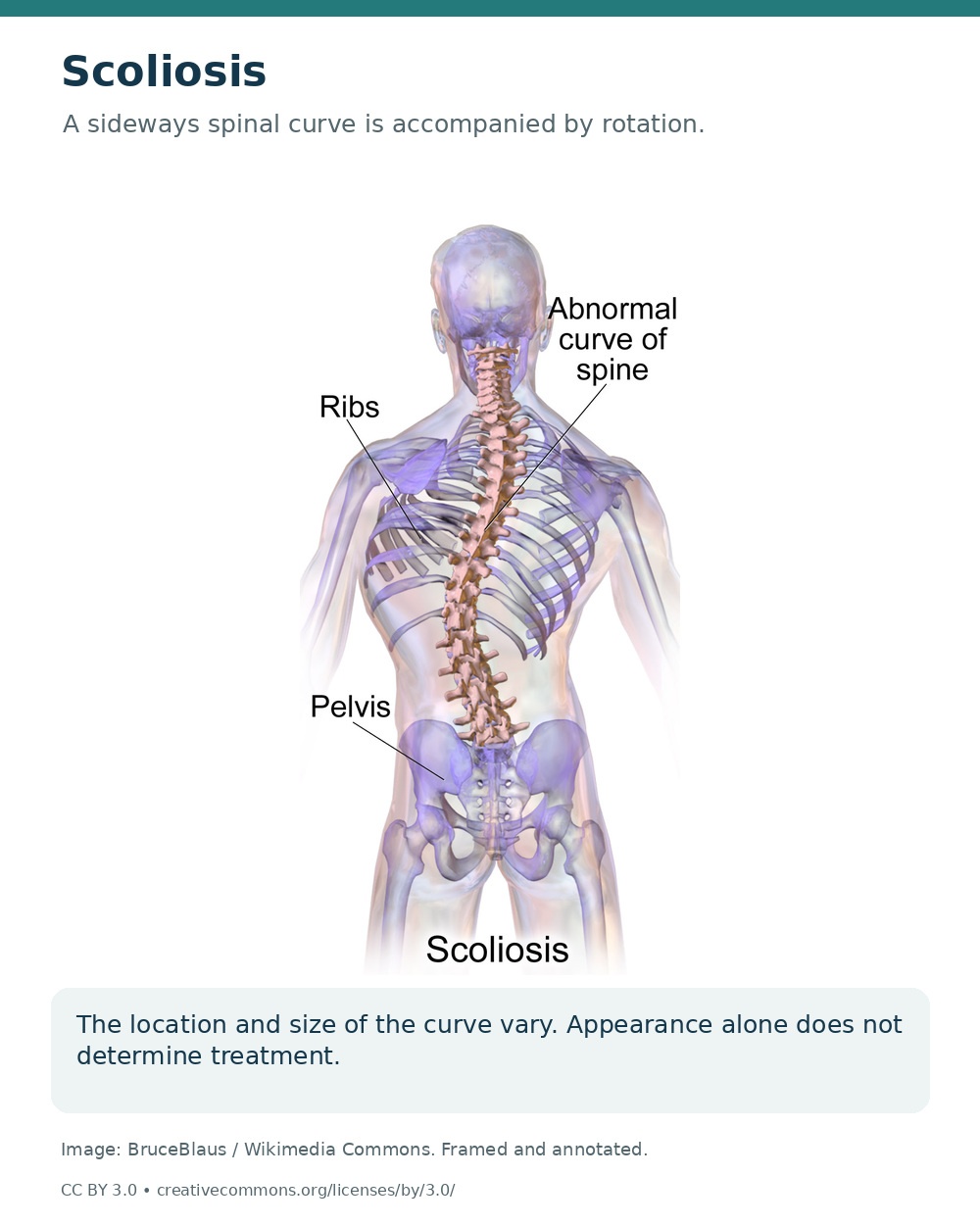
Diagram of a scoliosis spinal curve showing sideways curvature and vertebral rotation compared with a straight spine

Scoliosis is a three-dimensional deformity of the spine and trunk — a sideways curvature combined with rotation of the vertebrae. It is diagnosed on X-ray when the curve, measured as the Cobb angle, is greater than 10 degrees (Negrini et al., Scoliosis and Spinal Disorders, 2018).


Specialists first separate structural scoliosis, a fixed curve of the spine and trunk, from non-structural or postural curvature, which happens as a result of something else such as a leg-length difference or muscle spasm and settles once that cause is addressed.


Structural scoliosis is then grouped by cause:

•  Adolescent idiopathic scoliosis — by far the most common form, affecting around 2 to 4 per cent of adolescents.

•  Early-onset idiopathic scoliosis — appearing in infancy or childhood.

•  Congenital scoliosis — caused by vertebrae that formed differently before birth.

•  Neuromuscular scoliosis — linked to conditions such as cerebral palsy, muscular dystrophy or spina bifida.

•  Adult degenerative scoliosis — developing after skeletal maturity from age-related wear of the spine (Silva and Lenke, Neurosurgical Focus, 2010).


Growth and the risk of progression

In growing adolescents the risk of a curve worsening is highest during rapid growth. Your specialist may refer to the Risser sign, a measure of skeletal maturity, alongside the size of the curve to estimate that risk. Girls are affected more often than boys, and the difference widens as curves become larger (Konieczny et al., Journal of Children's Orthopaedics, 2013). This is why the same curve can behave very differently in a growing child and in a skeletally mature adult.


How adult scoliosis differs

Degenerative scoliosis develops in a previously straight spine, usually after the age of 50, when the discs and facet joints wear unevenly and allow the spine to lean and rotate. Here the picture is dominated by mechanical back pain and, where the space around the nerves narrows, leg pain or heaviness on walking — rather than by the appearance of the curve itself.

Do You Experience These Symptoms?

✓  Uneven shoulders, or one shoulder blade that sticks out more than the other

✓  An uneven waistline, or hips that appear to sit at different heights

✓  A visible rib hump or one-sided prominence of your back when you bend forwards

✓  Clothes that hang unevenly, or a feeling that your body leans to one side

✓  Back pain and stiffness, with reduced flexibility when you twist or bend

✓  Aching or fatigue that builds with prolonged standing or sitting

✓  In adults, leg pain, numbness or heaviness when walking, from associated narrowing around the nerves

These symptoms can be treated.
The sooner you begin, the better your chances of a smoother recovery.

What Causes Scoliosis?

•  Idiopathic — no identifiable single cause

In roughly 80 per cent of cases no single cause is found, and the condition is described as idiopathic.

Evidence points to a combination of genetic, growth-related and neuromuscular factors rather than anything you or your child did.


•  Growth spurts and skeletal immaturity

Rapid adolescent growth is the single biggest driver of curve progression in idiopathic scoliosis.

The more growth that remains, the greater the chance that an existing curve will increase, which is why regular monitoring matters during these years.


•  Degenerative change in adults

In adult degenerative scoliosis, uneven wear of the discs and facet joints allows the spine to settle and rotate towards one side.

This produces a new curve after skeletal maturity, often alongside stiffness and mechanical back pain.


•  Congenital vertebral differences

Some people are born with vertebrae that did not form or separate in the usual way.

These create a structural curve that is present from birth and may change as the child grows.


•  Neuromuscular conditions

Conditions affecting the nerves and muscles that support the spine, such as cerebral palsy, muscular dystrophy or spina bifida, reduce trunk control.

Scoliosis is common in these situations and is managed alongside the underlying condition.


•  A common myth worth correcting

Poor posture and heavy schoolbags do not cause structural scoliosis.

A heavy bag can certainly cause muscle fatigue and back pain, and slouching can make an existing curve look more obvious, but neither creates a structural curve where none existed.

Not sure which condition applies to you?

How We Treat Scoliosis at J&J Therapy

Hands-On Manual Therapy

Hands-on treatment to ease the symptoms of scoliosis — pain, stiffness and restricted movement. We use gentle spinal mobilisation, soft tissue work on the paraspinal muscles that are loaded unevenly by the curve, and thoracic and rib mobility work.
Manual therapy does not change the Cobb angle, and we are always clear about that. Research suggests it may help with pain and comfort alongside your exercise programme.

Shockwave Therapy*

Swiss Storz Medical MASTERPULS radial shockwave
may complement your manual therapy and exercise programme when your physiotherapist identifies specific indications during assessment — typically a skeletally mature adult with secondary muscular pain. It is applied to the surrounding soft tissues and never directly over the spine, ribs or lungs.
It does not treat the curve itself and is not suitable for growing adolescents. Non-invasive and assessment-based.

Targeted Exercise Programme

A scoliosis-specific exercise programme built around active self-correction, drawing on established approaches such as Schroth and SEAS, together with core stabilisation and general strengthening.
Research suggests these exercises may help limit progression during growth and reduce pain and disability in adults. We monitor your curve and refer you promptly to a spinal specialist if bracing or surgical review is indicated.

When to Seek Urgent Medical Help

While most symptoms are not serious, urgent medical attention is required if you experience any of the following:

  • Rapid or visible worsening of the curve, or a new change in the shape of your back, shoulders or waist

  • New leg weakness, numbness, pins and needles, or a foot that drags

  • Difficulty passing or controlling urine or stool, or numbness around the back passage, buttocks or inner thighs — seek emergency care

  • Unexplained back pain in a child, particularly night pain, or breathlessness with a large curve of the upper back

FAQs About Scoliosis

  • Can physiotherapy straighten my spine or reduce the curve?

Physiotherapy does not straighten a structural scoliosis, and we will never promise that. In growing adolescents, research suggests scoliosis-specific exercises may help slow or limit progression and, in some studies, modestly improve the curve. In adults, they can help with pain, posture and function. The main aim of our programme is to manage your symptoms and keep you strong and mobile.


  • Does scoliosis always get worse?

No. Many curves stay stable, particularly in skeletally mature adults and where the curve is small. The risk of progression is highest during adolescent growth spurts and with larger curves, which is why regular monitoring matters and why we watch for any signs of change.


  • Can adults with scoliosis benefit from physiotherapy?

Yes. In adults the priority is usually pain relief, mobility and everyday function rather than the curve itself. Manual therapy, a tailored exercise programme and core strengthening can all help, and evidence shows that staying active is beneficial rather than something to avoid.


  • Is exercise safe with scoliosis, and is there anything I should avoid?

Exercise is safe and encouraged — being inactive is worse for your spine than being active. We tailor your programme to your curve and your symptoms. There is no universal list of banned exercises, but we will adjust loading and technique to your comfort and liaise with your specialist if you are under active spinal review.


  • Can shockwave therapy help my scoliosis?

Shockwave therapy does not treat the spinal curve itself, and the direct evidence for it in scoliosis is limited to small studies. For some skeletally mature adults with secondary muscular pain, your physiotherapist may consider radial shockwave to the surrounding muscles as an optional addition to manual therapy and exercise — only after assessment, and never applied directly over the spine, ribs or lungs.

It is not used for growing adolescents because of open growth plate safety considerations, and it is never a first-line or stand-alone treatment.

Not sure this condition matches your symtoms?
Find your condition and explore related pain areas.

Logo_Navy.png

Ready to start your recovery?
Book your Initial Assessment today.

This page is for general information only and does not replace professional medical advice.

Reviewed by Lavya Arigalayan, MSc, HCPC Registered Physiotherapist.

Last reviewed

2026년 8월 20일

bottom of page