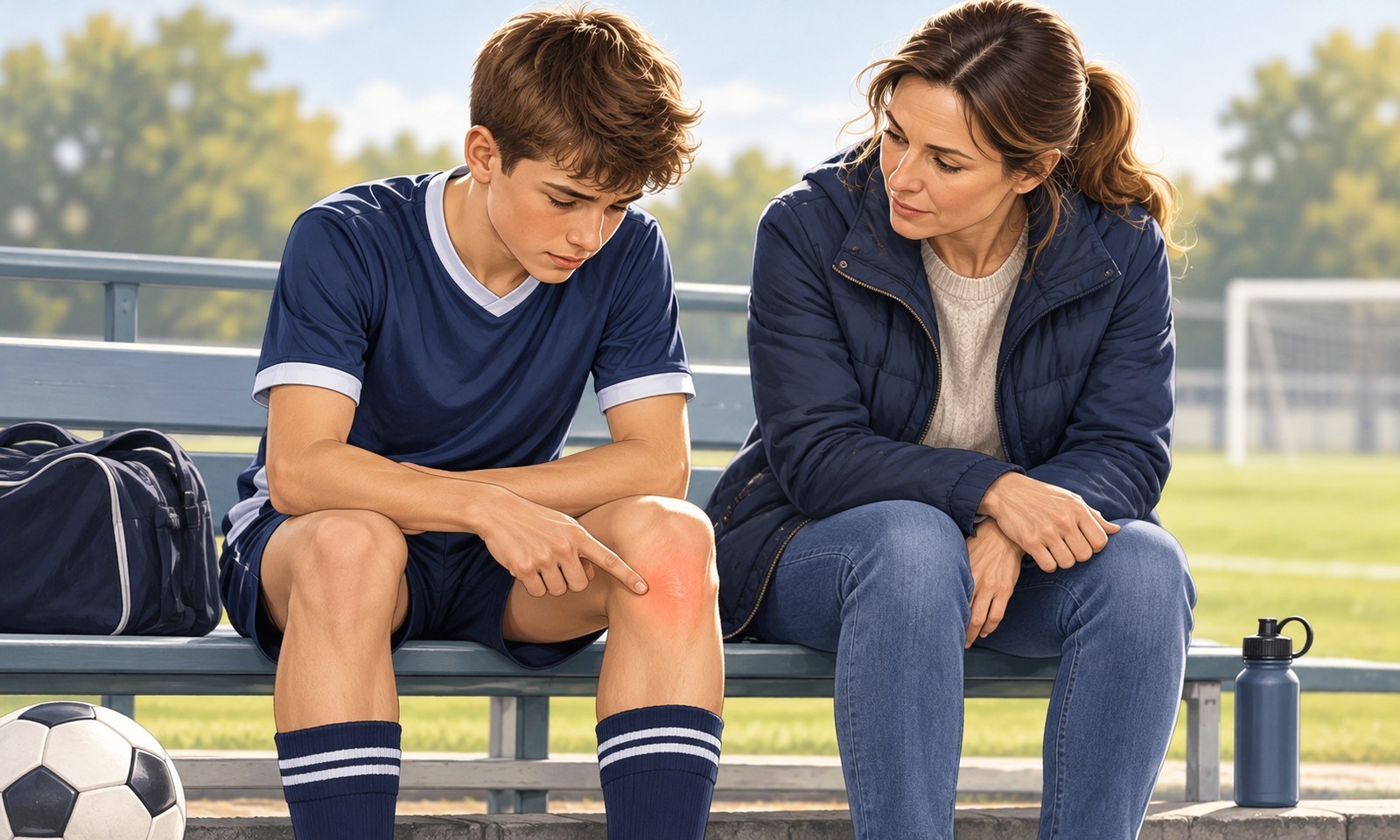
Quick Summary
Pain over the bump below a growing child’s knee is often manageable with activity adjustments. Assessment helps keep sport participation appropriate and reassuring. Contact our New Malden reception team to confirm a suitable appointment for your child and discuss the appropriate next step. We agree practical goals and review your progress.
Understanding Osgood–Schlatter Disease
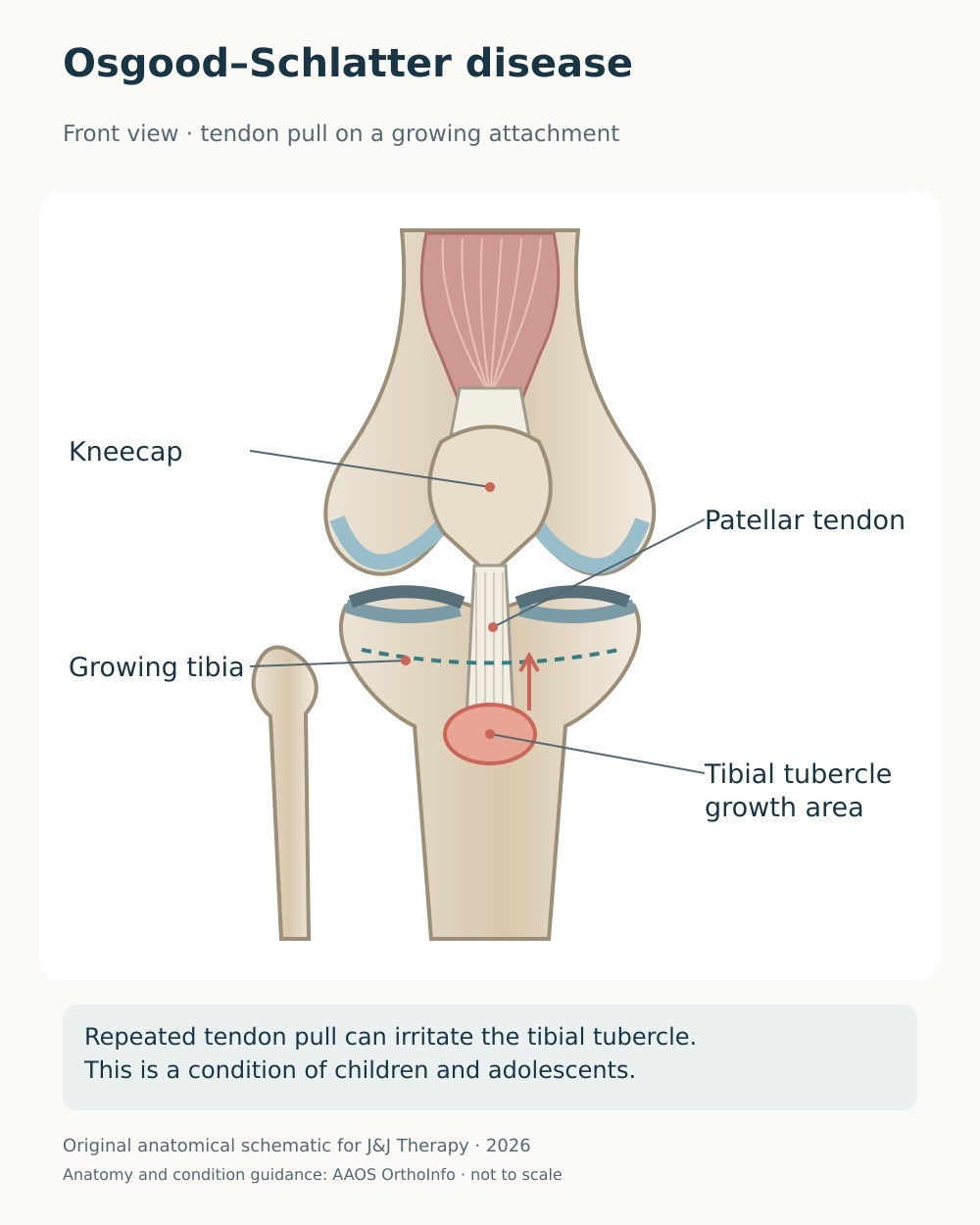
Osgood–Schlatter disease is irritation where the patellar tendon attaches to a growth area at the top of the shin. It occurs in children and adolescents during growth. Despite its name, it is not an infection. The bump may remain even after pain settles.
Assessment at J&J Therapy
Contact reception before booking so we can confirm a suitable clinician and appointment for your child. Assessment considers age, growth, symptom location and activity. We work with the young person and parent or carer to agree realistic school and sport modifications.
Do You Experience These Symptoms?
- Local tenderness over the bony bump just below the kneecap.
- Pain with running, jumping, kneeling or climbing stairs.
- Symptoms affecting one or both knees and fluctuating with activity.
An assessment helps guide your next step, based on your symptoms, health and goals.
Why symptoms may develop
Repeated tendon loading during a period of growth can irritate the attachment. Sporting demands and recovery affect symptoms. Persistent night pain, fever, a major injury or inability to bear weight should not be assumed to be a normal growth-related problem.
Treatment and rehabilitation options
Hands-On Manual Therapy
Gentle care to surrounding muscles may help comfort when appropriate, but direct deep massage over the painful growth area is avoided. Treatment should not attempt to flatten the bony bump. We explain the purpose and check your comfort and response throughout treatment.
Is Shockwave Suitable?
Shockwave is not a routine treatment for Osgood–Schlatter disease. A growing child needs age-appropriate assessment and activity advice rather than a standard adult tendon protocol. Your physiotherapist can explain the more suitable options and how their effect will be reviewed during your ongoing rehabilitation.
Targeted Exercise Programme
Exercise focuses on comfortable flexibility, leg strength and activity tolerance. Sport may need temporary modification if pain causes limping or worsens afterwards. Progression is guided by symptoms and function, with communication about PE and training where helpful. Your home plan is adapted as your function and confidence improve.
When to Seek Urgent Medical Help
While most symptoms are not serious, urgent medical attention is required if you experience any of the following:
- Seek urgent medical advice if your child cannot bear weight, has a hot swollen knee, fever or severe pain after injury.
- Arrange medical assessment for persistent night pain, unexplained illness or symptoms away from the typical tender bump.
- Do not continue sport through a marked limp or escalating pain.
Your questions answered
Does my child have to stop all sport?
Not always. Activity can be adjusted to symptoms, but limping or significant pain means the load needs reducing and the plan reviewing.
Will the bump disappear?
The bony prominence can remain after growth and may be harmless if it is no longer painful. Treatment aims at comfortable function rather than changing its appearance.
Which appointment should I book?
Call our reception team on 07935 869938 before booking for a child or teenager so we can confirm a suitable clinician and appointment. Tell us their age, symptoms and any medical advice already received. Urgent symptoms need medical assessment first.
Related conditions
Patellofemoral Pain Syndrome (Runner’s Knee) · Sever’s Disease
Sources and further reading

This page is for general information only and does not replace professional medical advice.
Information updated 15 October 2026. General information only; this page cannot diagnose your symptoms. Treatment is agreed after assessment. For urgent or severe symptoms, use the medical services described above.