
Quick Summary
Cervical spinal stenosis means narrowing of spaces in the neck spine. Some people have narrowing without symptoms; others develop nerve or spinal cord problems. The first priority is deciding whether physiotherapy is appropriate or whether medical assessment is needed. New hand clumsiness, walking changes or progressive weakness must not be treated as ordinary tightness.
What is Cervical Spinal Stenosis?
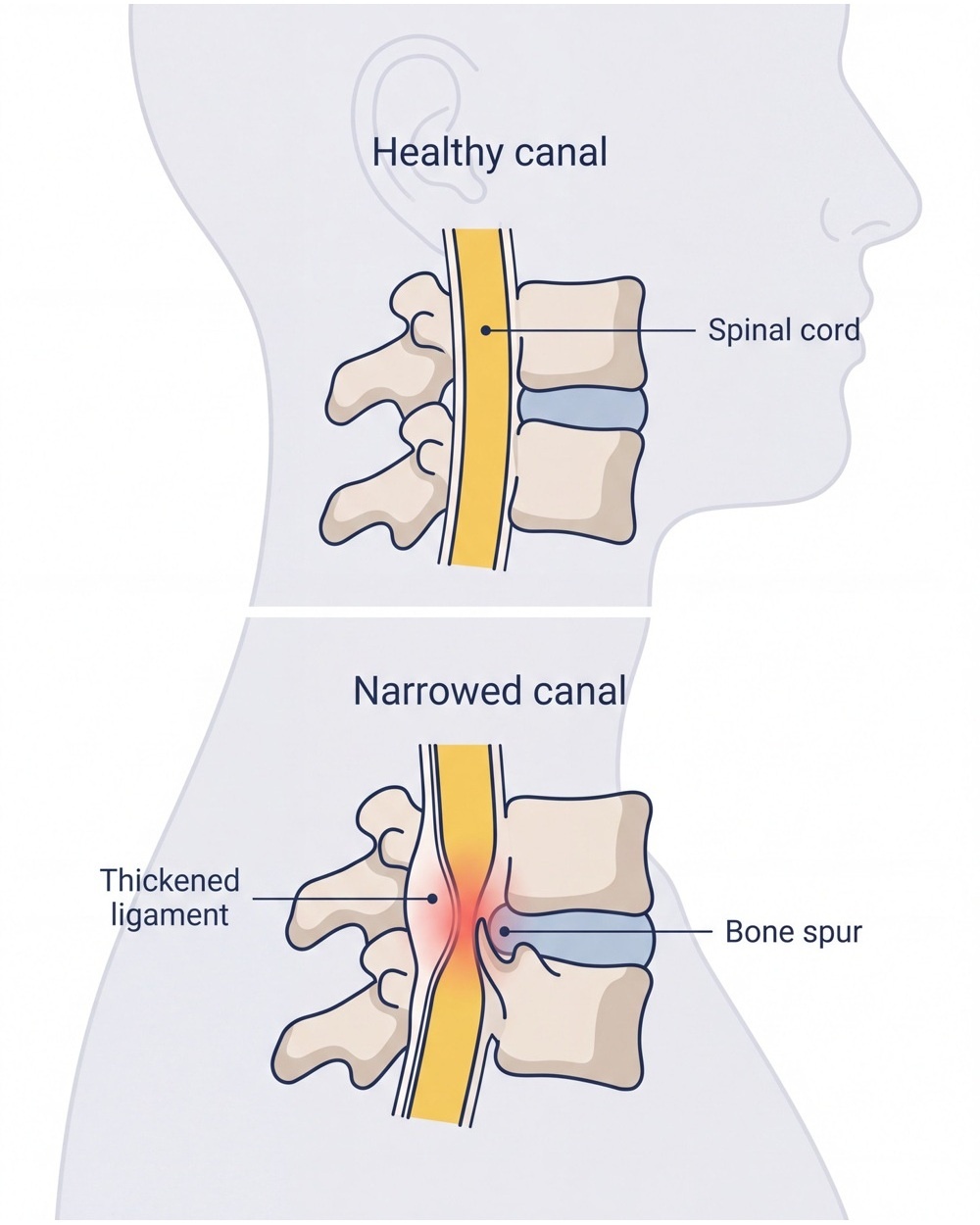
Narrowing can affect a nerve root or the central canal containing the spinal cord. Spinal cord dysfunction is called cervical myelopathy and may need specialist management. A scan report alone cannot establish severity: symptoms and neurological examination are essential. Rehabilitation may be appropriate for selected stable cases alongside the medical plan.
Your assessment at J&J Therapy looks at how symptoms affect your day, relevant health history, movement and strength. We explain the findings, agree priorities with you and advise when medical review or imaging would change your care.
Do You Experience These Symptoms?
- Neck stiffness with or without arm pain or altered sensation.
- Hand clumsiness, dropping objects or changes in fine tasks.
- Unsteadiness, leg symptoms or bladder changes may indicate spinal cord involvement.
An assessment helps guide your next step, based on your symptoms, health and goals.
Why can it develop?
Age-related disc, joint and ligament changes can reduce available space. Some people naturally have a narrower canal. Hands-on treatment cannot widen the canal, and symptom progression should trigger review rather than simply increasing treatment intensity.
Your treatment plan at J&J Therapy
Hands-On Manual Therapy
Any hands-on care is cautious and only considered after the neurological risks and medical plan are clear. Suspected spinal cord involvement takes priority over neck mobilisation or massage.
Is Shockwave Suitable?
Shockwave does not treat spinal canal narrowing or spinal cord compression. It is not part of the treatment pathway for cervical stenosis itself.
Targeted Exercise Programme
For suitable stable cases, exercises may support comfortable movement, general conditioning and daily function. We follow relevant specialist advice and review any changes in strength, coordination, walking or sensation.
When to Seek Urgent Medical Help
While most symptoms are not serious, urgent medical attention is required if you experience any of the following:
- Seek urgent medical assessment for new or worsening hand clumsiness, weakness, balance or walking problems, or symptoms affecting arms and legs.
- Attend A&E for rapidly progressing neurological symptoms or new bladder or bowel control problems with neck or limb symptoms. Call 999 if you cannot travel safely or symptoms are sudden and severe.
- If already under a spinal team, follow their escalation instructions and report deterioration promptly.
Your questions answered
Can physiotherapy remove the narrowing?
No. Rehabilitation may help selected symptoms and function, but does not reverse the structural narrowing. Myelopathy or worsening neurological signs requires medical or spinal specialist management.
Can mild symptoms still matter?
Yes. Difficulty with buttons, handwriting or balance can be important even when neck pain is mild. Report new or worsening changes promptly rather than waiting for your next routine therapy visit.
Which appointment should I book?
Start with a Physiotherapy Initial Assessment if medical assessment has confirmed that rehabilitation is appropriate. New or worsening weakness, coordination or walking problems need medical review first. Massage alone is not an appropriate route for unexplained nerve symptoms.
Book an appointment at J&J Therapy, ground floor, CI Tower, New Malden. Need help choosing? Call our reception team on 07935 869938.
Sources and further reading

This page is for general information only and does not replace professional medical advice.
Information updated 15 October 2026. General information only; this page does not diagnose your symptoms or replace an individual assessment. Treatment depends on your health, examination and preferences. Use the urgent-care advice above when needed.