HCPC Registered
300+ Reviews 5.0
Insurance Accepted
85% Patient Return Rate
Quick Summary
Non-specific mechanical neck pain is the most common type of neck pain, accounting for roughly 85% of all cases. At J&J Therapy in New Malden, we combine hands-on manual therapy with a progressive exercise programme, with additional treatments such as shockwave therapy integrated when your assessment indicates it may help. Most patients experience meaningful improvement within 4–6 sessions.
What Is Non-Specific Mechanical Neck Pain?
Non-specific mechanical neck pain refers to aching, stiffness or sharp pain in the neck that is not caused by a specific structural problem such as a disc herniation or nerve compression. It accounts for approximately 85% of all neck pain presentations and is the type most commonly seen in physiotherapy clinics.
Common contributors include muscular tension in the upper trapezius and levator scapulae, restricted movement of the cervical facet joints, prolonged static postures, and stress-related muscle guarding. Research published in Scientific Reports (2024) suggests that endurance of the cervical flexors and extensors correlates more closely with pain than posture angles alone — meaning building strength and movement capacity matters more than chasing a single "correct" posture.
Most episodes settle within 4–6 weeks with appropriate care, though some people develop recurring or persistent symptoms. Early treatment focused on movement, strengthening and pain education typically produces faster recovery than rest and avoidance (NICE NG59; CSP guidelines).

Do You Experience These Symptoms?

✓ Aching, stiffness or sharp pain in the neck, often one-sided
✓ Pain that worsens with sustained postures such as desk work, driving or reading
✓ Restricted ability to turn the head, check blind spots or look up
✓ Tension-type headaches radiating from the base of the skull
✓ Tenderness or tight bands in the upper trapezius and shoulder muscles
✓ Pain that eases with gentle movement and activity
✓ Discomfort disturbing sleep or making it hard to find a comfortable pillow position
These symptoms are treatable. Specialist physiotherapy can help.
What Causes Non-Specific Mechanical Neck Pain?
• Sustained static postures
Long hours at a desk, driving, or looking at screens place continuous low-level load on neck muscles. Load without variation — rather than any single "bad posture" — is the primary trigger.
• Muscular tension and trigger points
Stress, anxiety and physical fatigue can cause persistent tightening of the upper trapezius and levator scapulae. Tender knots (trigger points) form in these muscles and may refer pain into the neck, shoulder and head.
• Sleep position and pillow support
An unsupportive pillow or awkward sleeping posture can leave your neck in an irritated position for hours. Many people wake with stiffness or a sharp "crick" that takes several days to settle.
• Sudden unguarded movements
A quick turn, a heavy lift, or catching yourself after a slip can strain the small muscles and joints of the cervical spine. This produces acute, localised pain that typically responds well to early physiotherapy.
• Reduced cervical muscle endurance
Weakness or poor endurance of the deep neck flexors and extensors is increasingly recognised as a stronger predictor of neck pain than posture alone. Building muscular capacity is central to lasting recovery.
How We Treat Non-Specific Mechanical Neck Pain at J&J Therapy
We go beyond exercise sheets. Your first session is a full 45-minute assessment AND treatment - so you leave feeling the difference.
Hands-On Manual Therapy
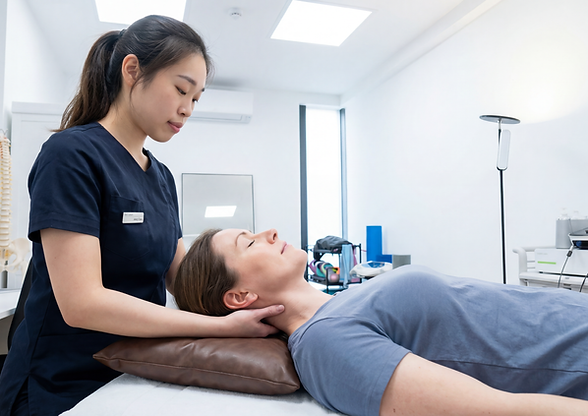
Our HCPC-registered physiotherapists use gentle cervical mobilisation, soft tissue release of the upper trapezius and levator scapulae, and targeted trigger point therapy to ease muscle tension, restore joint movement and reduce pain. Hands-on techniques are tailored to what your individual assessment reveals, and progress is reviewed at each session.
Shockwave Therapy*
Swiss Storz Medical MASTERPULS applied selectively to contributing muscular trigger points — particularly in the upper trapezius — when identified during your assessment. Non-invasive, evidence-based.
Targeted Exercise Programme
A progressive exercise programme targeting deep cervical flexor endurance, scapular stabilisers, thoracic mobility and graduated neck loading. Current research suggests building muscular endurance correlates more closely with lasting pain reduction than passive treatment alone. Your programme is tailored to your symptoms, work demands and physical capacity, with clear progressions you can continue at home.
Shockwave Therapy
.jpg)

Chronic neck tension and trigger points in the upper trapezius and surrounding muscles can be difficult to resolve with exercise alone. Our Swiss-manufactured Storz Medical MASTERPULS shockwave system delivers precise acoustic waves to break down muscle knots, improve blood flow, and support the body's natural healing response.
Swiss Storz Medical MASTERPULS - clinical-grade precision
Non-invasive — no needles, no medication
Stimulates natural tissue repair and blood flow
Typically 3-6 sessions for lasting improvement
Results may vary. Your physiotherapist will recommend the best plan for your specific condition.
When to Seek Urgent Medical Help
While most symptoms are not serious, urgent medical attention is required if you experience any of the following:
Electric shock sensations running down the spine or into the limbs when you bend your neck forward (Lhermitte's sign)
Numbness, tingling or clumsiness affecting both hands, or new difficulty with buttons, keys or handwriting
Unsteadiness on your feet, walking imbalance, or unexplained falls
New bladder or bowel urgency or loss of control
Severe neck pain following significant trauma, or neck pain with fever, unexplained weight loss or night sweats
FAQs About Non-Specific Mechanical Neck Pain
How long will my neck pain take to resolve?
Most episodes of non-specific mechanical neck pain improve within 4–6 weeks with appropriate physiotherapy. Acute cases often respond quickly to manual therapy and gentle movement, while longer-standing pain may take 8–12 weeks of progressive rehabilitation.
Do I need a scan?
For most mechanical neck pain, imaging is not required. Findings such as "disc degeneration" on MRI are extremely common in people without any pain and rarely change management. We recommend imaging only when your assessment identifies neurological red flags or your symptoms are not progressing as expected.
Is shockwave therapy effective for neck pain?
Evidence shows that shockwave therapy may help reduce pain from upper trapezius trigger points in the short term. However, recent rigorous placebo-controlled research suggests its benefit over manual therapy and exercise alone is modest. We therefore use shockwave as a selective adjunct — integrated only when your physiotherapist identifies specific muscular trigger points that may respond.
Should I rest or stay active?
Stay active. Prolonged rest typically makes neck pain worse, not better. We encourage a gradual return to normal tasks, with sensible modifications such as varying postures and taking regular movement breaks, rather than complete avoidance.
Is my posture really causing this?
The link between "bad posture" and neck pain is weaker than commonly assumed. Current research suggests muscular endurance and movement variation matter more than holding any single "correct" position. We focus on building capacity and improving movement, rather than blaming posture.

This page is for general information only and does not replace professional medical advice.
Reviewed by Lavya Arigalayan, MSc, HCPC Registered Physiotherapist.
Last reviewed:
17 April 2026