Quick Summary
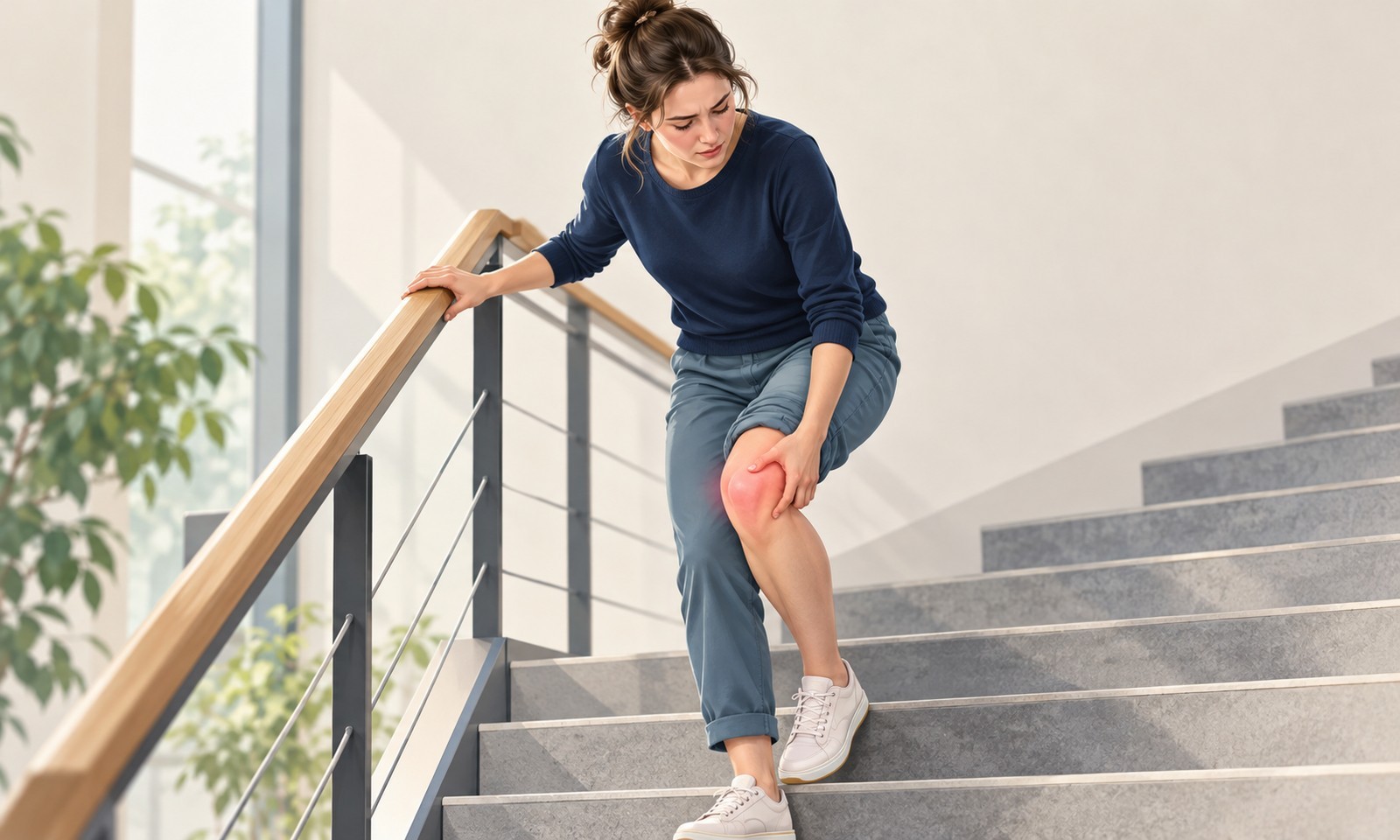
Pain around the kneecap with stairs, squats or running can be frustrating. A tailored strength and activity plan can help you work towards more comfortable movement. Our physiotherapists in New Malden can assess your symptoms and help you choose appropriate next steps for your goals.
Understanding Patellofemoral Pain Syndrome (Runner’s Knee)
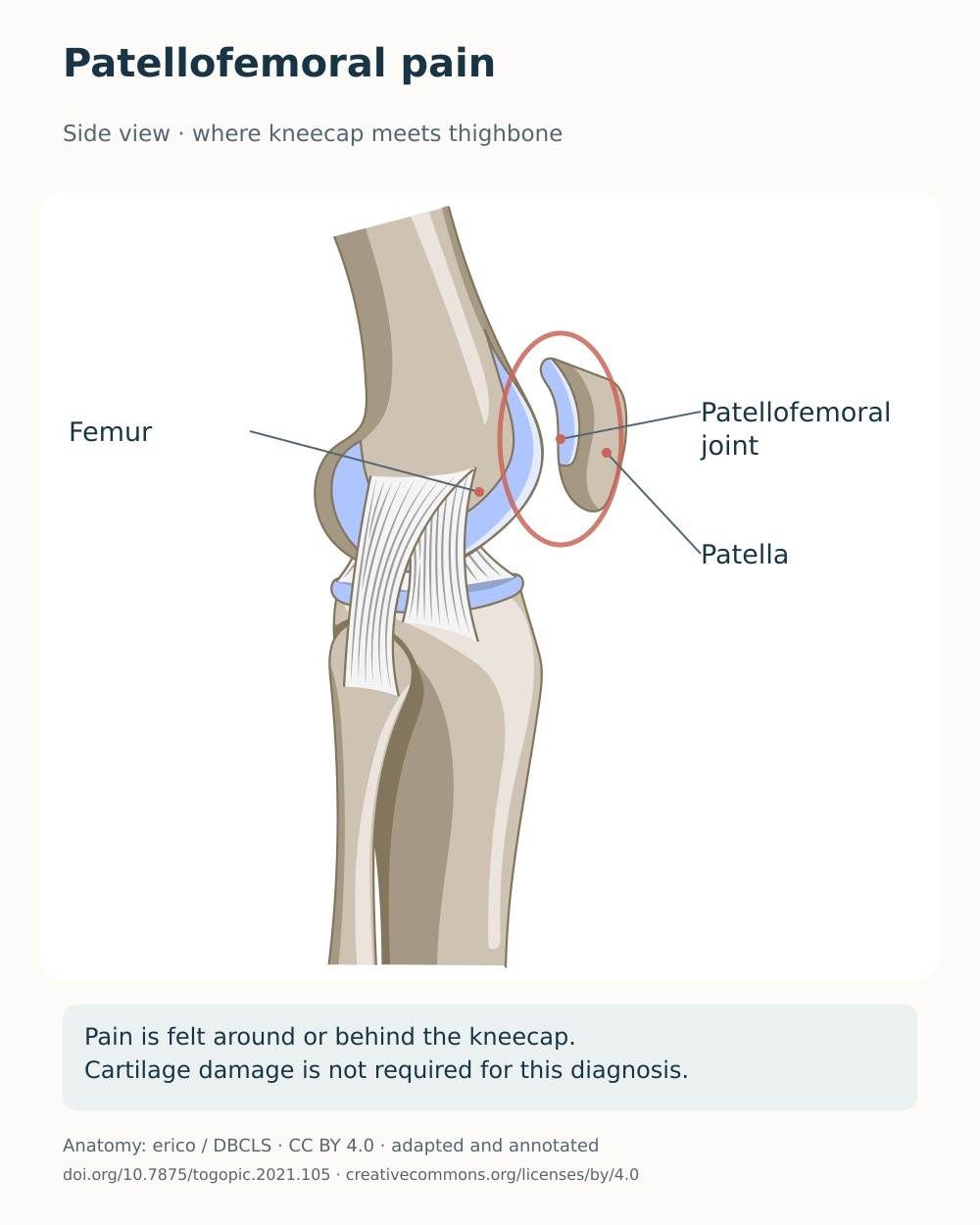
Patellofemoral pain is pain around or behind the kneecap, often provoked when the bent knee carries load. It affects runners and people who do not run. It does not automatically mean cartilage damage, a permanently misaligned kneecap or a need to stop exercise.
Assessment at J&J Therapy
We explore your daily activities, training and concerns, then assess the tasks that reproduce pain. Knee strength and hip function help guide treatment. A direct injury, marked swelling, true locking or repeated kneecap dislocation suggests a different problem.
Image: erico / DBCLS, Togo picture gallery · CC BY 4.0. Adapted and annotated.
Do You Experience These Symptoms?
- Diffuse aching around the kneecap during stairs or squats.
- Pain with running, jumping or getting up after sitting.
- Symptoms that change with training volume or the depth of knee bending.
An assessment helps guide your next step, based on your symptoms, health and goals.
Why symptoms may develop
A mismatch between current activity demands and capacity can contribute. Strength, recovery, previous pain and individual movement preferences may matter. There is no single correct posture or knee alignment that explains every person’s symptoms.
Treatment and rehabilitation options
Hands-On Manual Therapy
Manual therapy or soft tissue work can be a supporting option for short-term comfort where appropriate. It is paired with exercise and education, rather than presented as a way to permanently realign the kneecap. We explain the purpose and check your comfort and response throughout treatment.
Is Shockwave Suitable?
Shockwave is not a routine treatment for patellofemoral pain. Current best-practice guidance prioritises exercise and education, with supporting interventions chosen for the individual. Your physiotherapist can explain the more suitable options and how their effect will be reviewed during your ongoing rehabilitation.
Targeted Exercise Programme
Knee-targeted strengthening forms the foundation, with hip exercise added where useful. We adapt squat depth, running load or stair demands, then progress them. Taping, prefabricated insoles or movement changes may be trialled if they provide a measurable benefit. Your home plan is adapted as your function and confidence improve.
When to Seek Urgent Medical Help
While most symptoms are not serious, urgent medical attention is required if you experience any of the following:
- Seek urgent GP or NHS 111 advice if you cannot move the knee, bear weight, or straighten a knee that is locked.
- A hot swollen knee with fever or feeling unwell needs urgent medical assessment.
- Go to A&E for a deformed leg after injury or a foot that becomes cold, pale or numb.
Your questions answered
Do I have to give up running?
Usually the first step is to adjust the amount and type of activity, not assume you must stop permanently. We help establish a manageable starting point and progression.
How quickly should it improve?
Response varies and persistent symptoms can take time. We agree practical milestones and review the plan if function is not improving instead of promising a fixed recovery date.
Which appointment should I book?
Start with a Physiotherapy Initial Assessment for new, persistent or recurring symptoms. We can assess the problem and agree a plan linked to your daily activities. If you have already had medical care or surgery, bring the relevant instructions.
Sports Massage may support comfort in surrounding muscles alongside rehabilitation. A new injury, unexplained swelling or persistent pain should first be assessed rather than booked as massage alone.
Book a Physiotherapy Assessment or call our reception team on 07935 869938. Find J&J Therapy at CI Tower, Ground Floor, New Malden.
Related conditions
Patellar Tendinopathy (Jumper’s Knee) · Chondromalacia Patella
Sources and further reading

This page is for general information only and does not replace professional medical advice.
Information updated 15 October 2026. General information only; this page cannot diagnose your symptoms. Treatment is agreed after assessment. For urgent or severe symptoms, use the medical services described above.