top of page
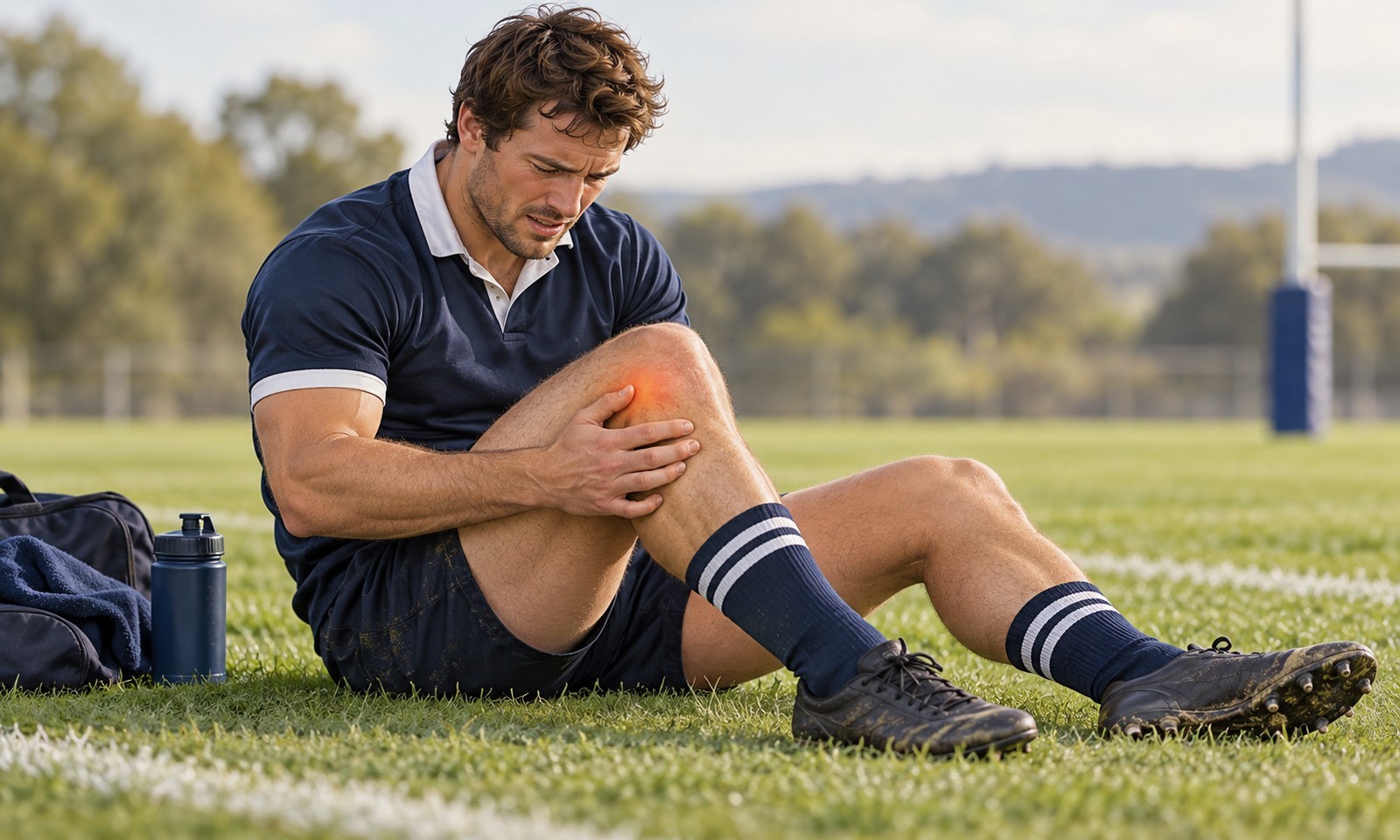
Physiotherapist assessing the outer side of a patient’s knee for a lateral collateral ligament injury at a New Malden clinic

LCL Injury

300+ Reviews 5.0

Open 7 Days

10+ Years' Experience

HCPC Physio On Team

Insurance Accepted

85% Return Rate

PHYSIOTHERAPY & THERAPEUTIC MASSAGE IN NEW MALDEN

Quick Summary

An LCL injury is a sprain or tear of the lateral collateral ligament — the cord-like band on the outer side of your knee that stops the joint bowing outwards. It causes pain and tenderness along the outside of the knee, and sometimes a feeling that the knee may give way. Most isolated LCL sprains recover well with hands-on physiotherapy and a structured exercise programme. Recovery typically ranges from around 3–4 weeks for a mild Grade I sprain to 8–12 weeks or more for higher-grade injuries.

What Is an LCL Injury?

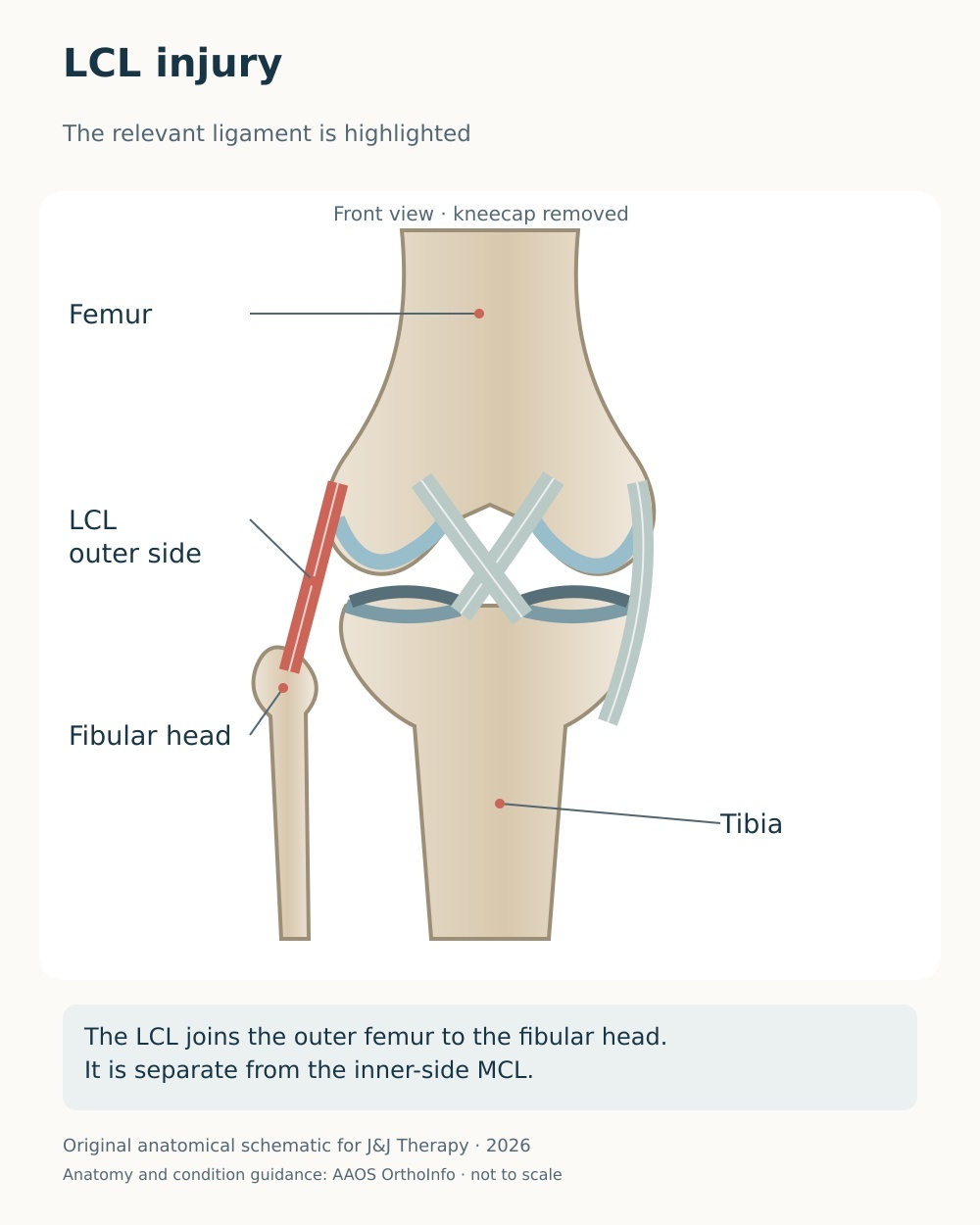
Anatomical illustration of the knee showing the lateral collateral ligament running from the thigh bone to the head of the fibula

The lateral collateral ligament (LCL), also called the fibular collateral ligament, is a narrow, cord-like band on the outer side of your knee. It runs from the lateral femoral epicondyle — the bony bump on the outer thigh bone — down to the head of the fibula, the smaller of the two shin bones. Unlike the ligament on the inner side of your knee, it is not attached to the meniscus or joint capsule, and it is relatively slender at roughly 2–3 mm thick and about 70 mm long.


What the LCL does

The LCL is the primary restraint against varus stress — forces that push your knee outwards into a bow-legged position — across all angles of knee bend. It also acts as a secondary restraint to outward rotation of the shin bone. It is a comparatively delicate structure, with an ultimate tensile strength of around 400 N, roughly half that of the ligament on the inner side of the knee (Wilson et al., JOSPT, 2012).


The posterolateral corner

The LCL is one part of a group of structures at the back and outer corner of the knee known as the posterolateral corner. Alongside it sit the popliteus tendon, the popliteofibular ligament, the biceps femoris tendon and the iliotibial band, working together to control sideways and rotational stability. The common peroneal nerve passes immediately behind the head and neck of the fibula, right beside where the LCL attaches — which is why injuries here can also affect this nerve.


Grading and healing

LCL injuries are graded by how far the outer side of the knee opens on a varus stress test compared with your uninjured knee. A Grade I mild sprain involves overstretched fibres with 0–5 mm of opening and a firm endpoint, typically recovering in around 3–4 weeks. A Grade II moderate or partial tear shows 6–10 mm of opening with some laxity, usually taking 8–12 weeks. A Grade III complete tear shows 11–15 mm of opening with no firm endpoint, is often associated with posterolateral corner and cruciate injury, and frequently takes more than four months (Geeslin and LaPrade, JBJS, 2011).


Why combined injuries matter

The LCL is injured on its own in fewer than 2% of knee injury cases, and is damaged alongside other structures in 7–16% of all knee ligament injuries (Yaras et al., StatPearls, 2024). It heals less reliably than the ligament on the inner side of the knee because the two opposing convex bone surfaces of the outer compartment limit scar formation. Research suggests around 72% of patients with a posterolateral corner injury also have a cruciate ligament injury, and evidence shows that missed posterolateral corner injuries are associated with chronic instability and a higher risk of cruciate graft failure. This is why our assessment always screens carefully for wider involvement before treatment begins.

Do You Experience These Symptoms?

✓  Pain and tenderness along the outer side of your knee, often right over the bony point at the top of your shin

✓  Swelling and bruising on the outside of the knee

✓  A feeling that your knee may give way or open up on the outer side, especially on uneven ground

✓  Stiffness and difficulty fully straightening or bending your knee

✓  Pain when a sideways force goes through the knee, such as pushing off or changing direction

✓  Numbness, tingling or weakness in your lower leg or foot, or a foot that catches when you walk

✓  A sense of instability when pivoting, twisting or going down stairs, particularly with higher-grade injuries

These symptoms can be treated.
The sooner you begin, the better your chances of a smoother recovery.

What Causes an LCL Injury?

•  A direct blow to the inside of the knee

The most common mechanism is an impact to the inner side of the knee that forces the joint outwards.

This drives the outer side of the knee open and overloads the LCL, sometimes combined with hyperextension.


•  Non-contact hyperextension or twisting

The LCL can also be injured without any contact, when the knee is forced backwards into hyperextension or twisted under a sideways load.

These mechanisms often happen when landing awkwardly or changing direction quickly with the foot planted.


•  Sporting mechanisms

High-velocity pivoting and jumping sports such as football, rugby, skiing and wrestling are typical culprits, with sport accounting for around 40% of these injuries.

A ten-year study of over 17,000 patients found LCL lesions made up about 1.1% of knee injuries, with links to tennis and gymnastics (Majewski et al., The Knee, 2006).


•  Previous injury and bow-legged alignment

A history of knee, ankle or hip injury increases the likelihood of a lateral knee injury.

Naturally bow-legged alignment places chronically higher load on the LCL, raising the risk of both initial injury and lingering instability afterwards.


•  Road traffic collisions and high-energy trauma

Vehicle collisions and falls from height can generate the forces needed to tear the LCL completely.

These high-energy injuries are the most likely to involve the wider posterolateral corner, the cruciate ligaments and the nerve at the outer shin.

Not sure which condition applies to you?

How We Treat LCL Injuries at J&J Therapy

Hands-On Manual Therapy

Our HCPC-registered physiotherapists begin with a thorough assessment to grade your injury and, importantly, to screen for posterolateral corner, cruciate and nerve involvement before any hands-on treatment begins.
Treatment includes soft-tissue work around the outer thigh, iliotibial band, hamstring and calf to ease pain and reduce protective muscle guarding, alongside joint mobilisation to restore full, pain-free movement — particularly regaining that last few degrees of straightening.
We also use gait re-training to correct the limp and compensations that develop after injury, and proprioceptive work to rebuild your knee’s sense of position and control.
Where appropriate, we advise on hinged bracing, taping and a safe, progressive return to weight-bearing.

Shockwave Therapy*

Swiss Storz Medical MASTERPULS
may complement your manual therapy and exercise programme when your physiotherapist identifies specific indications during assessment — never during the acute phase, and always applied well away from the nerve at the outer shin.
Shockwave is not a first-line treatment for ligament injuries, and we want to be clear that the research evidence for shockwave in ligament healing remains limited.
Non-invasive, assessment-led.

Targeted Exercise Programme

Your rehabilitation is staged and progressed according to the grade of your injury.
Phase 1 (roughly weeks 0–3) focuses on protection and movement: relative rest, protected weight-bearing, swelling management, early pain-free range of motion, and quadriceps activation such as quad sets and straight-leg raises.
Phase 2 (roughly weeks 2–6) introduces progressive closed-chain strengthening for the quadriceps, hamstrings, hip abductors and the whole outer chain of the leg, typically progressing once pain settles and strength approaches around 80% of your other side.
Phase 3 (roughly weeks 4–8 and beyond) builds proprioception and dynamic stability through single-leg balance, controlled multi-directional work and loaded functional exercises such as step-ups, squats and calf raises.
Phase 4 is your graded return to sport — running, then jumping, cutting and sport-specific drills. We look for full pain-free movement, no tenderness on the outer knee and no ligament laxity before clearing you. Typical timelines are around 4–6 weeks for a Grade I injury, 8–12 weeks for Grade II, and up to six months for surgical cases.

When to Seek Urgent Medical Help

While most symptoms are not serious, urgent medical attention is required if you experience any of the following:

  • A foot that drops or catches when you walk, weakness lifting your foot or toes, or numbness over the top of your foot (possible nerve injury)

  • Complete instability, buckling, or being unable to put any weight through the leg

  • A cold, pale or pulseless foot, or severe pain out of proportion to the injury, after a high-energy accident — call 999 or attend A&E immediately

  • Rapid, severe swelling within minutes to a couple of hours of the injury, suggesting bleeding inside the joint

FAQs About LCL Injuries

  • How long does an LCL injury take to heal?

It depends on the grade. A mild Grade I sprain often settles in around 3–4 weeks, a moderate Grade II injury usually takes 8–12 weeks, and a complete Grade III tear — especially if it involves the posterolateral corner or needs surgery — can take four months or longer. Your physiotherapist will give you a clearer estimate once they have assessed and graded your knee.


  • Will an LCL injury heal without surgery?

Most isolated Grade I and Grade II LCL injuries recover well with conservative care — protected loading, bracing where needed, and a graded exercise programme. Complete Grade III tears and combined posterolateral corner injuries are more likely to need surgical repair or reconstruction, which is why an accurate early assessment matters so much.


  • Do I need a brace?

Often, yes — particularly for moderate and higher-grade injuries, a hinged knee brace can protect the healing ligament and give you confidence while you rebuild strength. We will advise whether a brace is right for you, how long to wear it, and how to progress your weight-bearing safely.


  • What is the difference between an LCL and an MCL injury?

The LCL sits on the outer side of your knee and resists the joint bowing outwards, while the MCL sits on the inner side and resists the knee collapsing inwards. MCL injuries are far more common and generally heal reliably thanks to a good blood supply, whereas isolated LCL injuries are rarer and can be more prone to lingering instability.


  • Can shockwave therapy treat my LCL injury?

Shockwave is not a first-line treatment for LCL injuries, and we want to be honest that the research evidence for shockwave in ligament healing is very limited — there are no clinical trials for isolated LCL injuries. Hands-on physiotherapy and a tailored exercise programme are the mainstays of your recovery. Where your assessment suggests a chronic, stubborn tendon-related problem on the outer knee, we may discuss shockwave as a second-line option — never in the acute phase, and always applied carefully away from the nerve at the outer shin.

Not sure this condition matches your symtoms?
Find your condition and explore related pain areas.

Logo_Navy.png

Ready to start your recovery?
Book your Initial Assessment today.

This page is for general information only and does not replace professional medical advice.

Reviewed by Lavya Arigalayan, MSc, HCPC Registered Physiotherapist.

Last reviewed

2026년 8월 20일

bottom of page