top of page
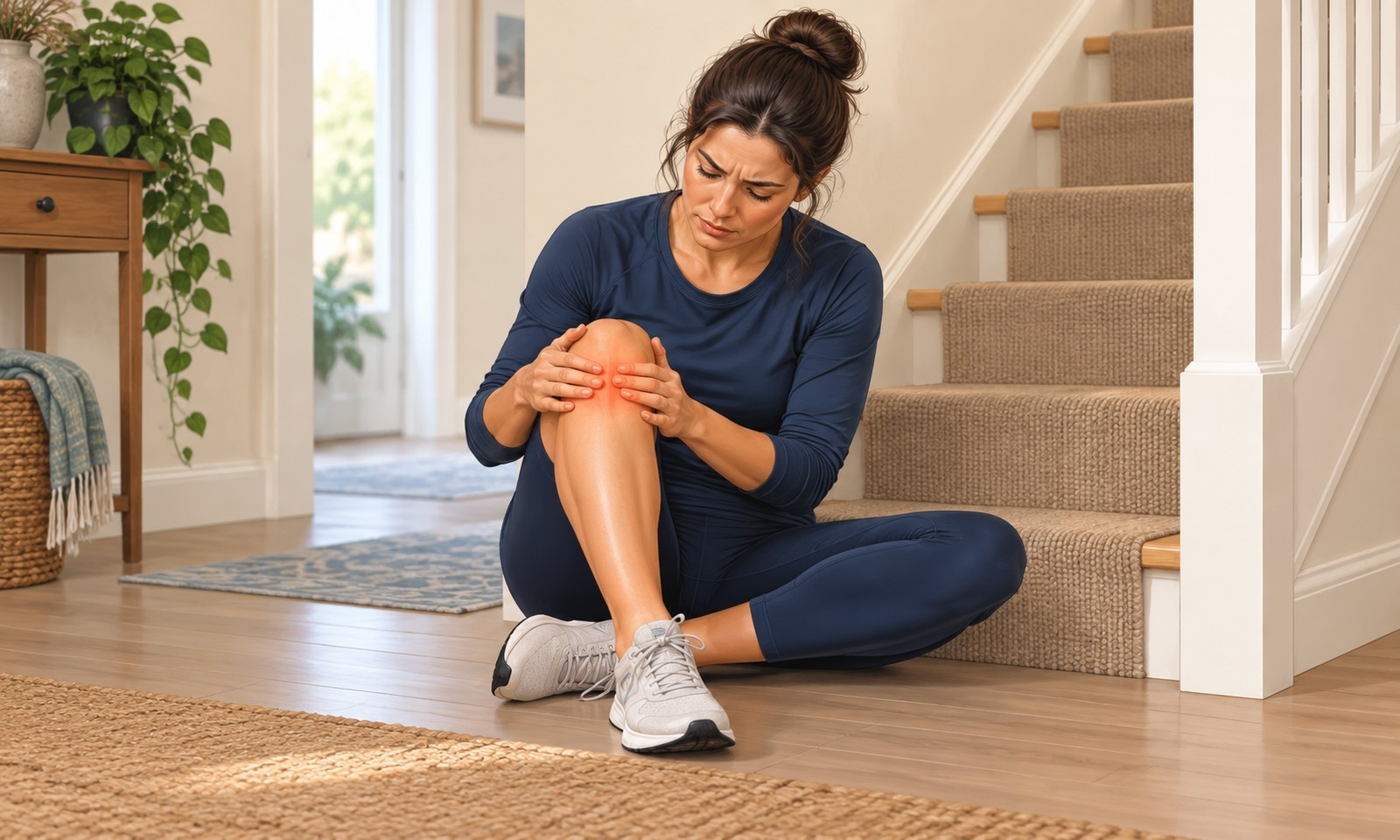
Physiotherapist assessing a patient’s kneecap for chondromalacia patella at a New Malden clinic

Chondromalacia Patella

300+ Reviews 5.0

Open 7 Days

10+ Years' Experience

HCPC Physio On Team

Insurance Accepted

85% Return Rate

PHYSIOTHERAPY & THERAPEUTIC MASSAGE IN NEW MALDEN

Quick Summary

Chondromalacia patella is a softening and breakdown of the cartilage on the underside of your kneecap, causing a grinding sensation and pain at the front of your knee that is often worse on stairs, when squatting, or after long periods of sitting. It is one of the most common causes of anterior knee pain in active adults, runners, cyclists, and adolescents, and it affects women more often than men. Research shows that most people improve with a structured, progressive physiotherapy programme built around quadriceps and hip strengthening, activity modification, and hands-on treatment. Most patients see meaningful improvement within 6–12 sessions, with your programme tailored to the severity of your symptoms and your goals.

What Is Chondromalacia Patella?

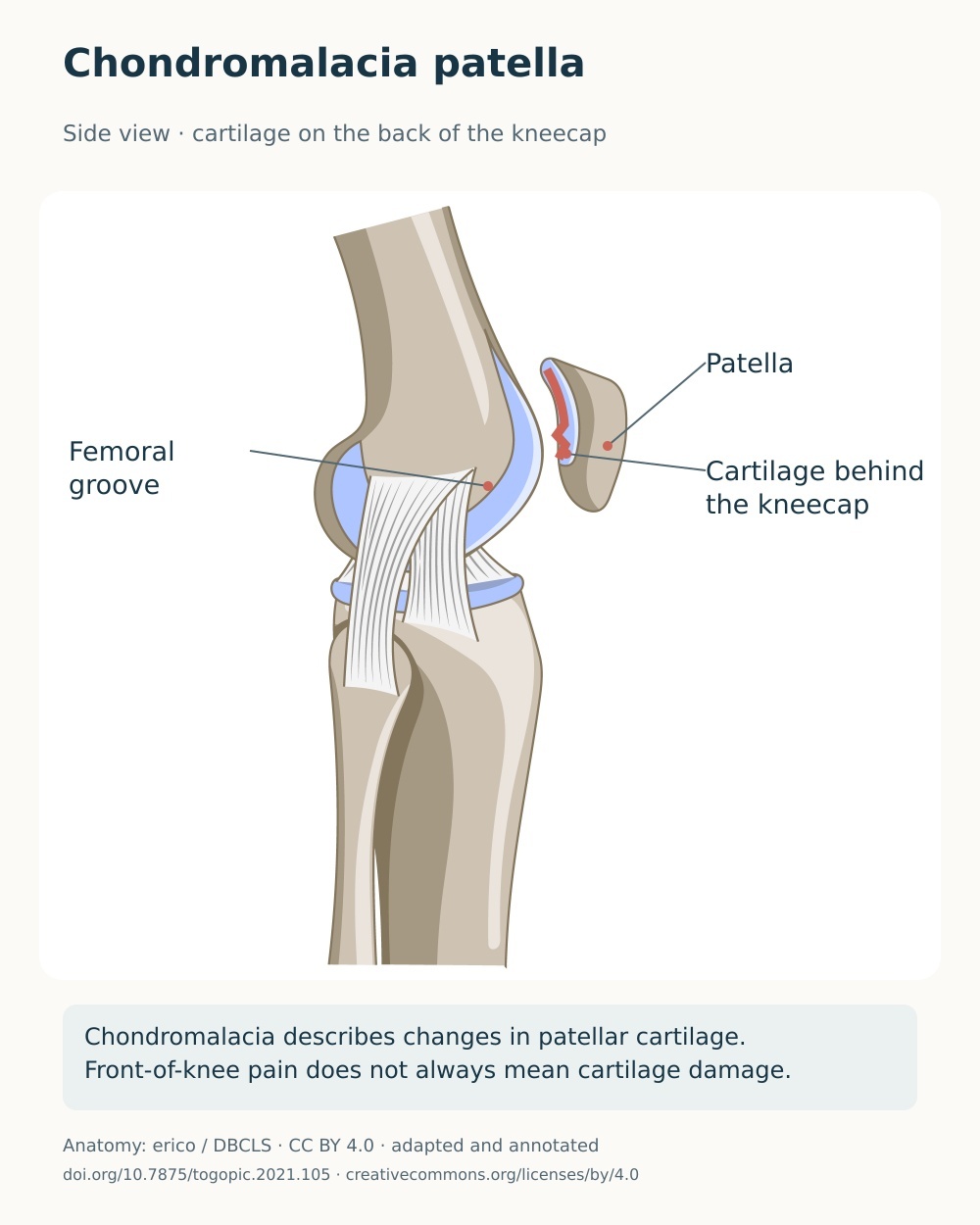
Diagram of the knee showing softened cartilage on the underside of the kneecap

Chondromalacia patella describes softening, swelling, fissuring, and gradual degeneration of the smooth articular cartilage on the back surface of your kneecap (patella). Healthy cartilage allows your kneecap to glide almost frictionlessly in the groove at the end of your thigh bone. When that surface roughens, the joint no longer moves smoothly — which is why grinding, grating, or clicking is such a characteristic symptom.


How severity is graded

Clinicians commonly use the Outerbridge classification, originally described by Outerbridge in 1961 and later adapted for MRI. Grade I is cartilage softening and swelling with the surface still intact; Grade II is superficial fibrillation and fissuring; Grade III is deeper fissuring and fragmentation; and Grade IV is full-thickness cartilage loss with the underlying bone exposed. Importantly, the grade seen on a scan does not always match how much pain you feel — many people with early changes have significant symptoms, and some with visible changes have very few.


How it relates to patellofemoral pain

Chondromalacia patella and patellofemoral pain syndrome overlap substantially and are often used interchangeably, but they are not identical. Chondromalacia refers to cartilage change that can be seen on imaging or at arthroscopy, whereas patellofemoral pain describes anterior knee pain that may occur with no visible cartilage damage at all. Reassuringly, the rehabilitation approach for both is largely the same.


Why it develops

The underlying problem is usually how load is distributed across the joint rather than the cartilage itself being inherently faulty. Contributing factors include patellar maltracking, altered timing and strength of the quadriceps (particularly the vastus medialis obliquus), weakness of the hip abductors and external rotators that allows the thigh to rotate inward and the knee to fall inward during weight-bearing, an increased Q-angle, and excessive foot pronation. Clinical guidelines confirm that both local factors at the knee and factors further away at the hip and foot contribute to increased patellofemoral joint stress (Willy et al., JOSPT, 2019).


How common is it?

Patellofemoral pain, the broader presentation that includes chondromalacia, is very common. A systematic review reported an annual prevalence of around 22.7% in the general adult population and 28.9% in adolescents, with women affected roughly twice as often as men (Smith et al., PLOS ONE, 2018). It is particularly common in runners, cyclists, and active teenagers.


What to expect

In younger, active people early-grade changes often settle well with conservative care. More advanced cartilage loss may not fully reverse, but evidence shows that pain and function usually improve substantially with targeted rehabilitation even when the cartilage itself does not fully regenerate. Addressing the biomechanical drivers early is worthwhile, because research suggests persistent anterior knee pain in younger adults may be a precursor to patellofemoral osteoarthritis in later life for some people (Thomas et al., BMC Musculoskeletal Disorders, 2010).

Do You Experience These Symptoms?

✓  A dull, aching pain at the front of your knee, felt around or behind the kneecap rather than in one sharp spot

✓  A grinding, grating, or clicking sensation (crepitus) when you bend or straighten your knee

✓  Pain that worsens going up or down stairs, squatting, kneeling, running, or cycling

✓  Aching after sitting for long periods with your knee bent — often called the cinema or theatre sign

✓  Tenderness when the kneecap is pressed or its edges are touched

✓  A feeling of stiffness, or mild puffiness and swelling, around the kneecap

✓  A sense that your knee might give way, particularly on stairs or slopes

These symptoms can be treated.
The sooner you begin, the better your chances of a smoother recovery.

What Causes Chondromalacia Patella?

•  Patellar maltracking and quadriceps imbalance

When your kneecap does not glide smoothly through the groove at the end of your thigh bone, contact pressure concentrates on one part of the cartilage instead of being spread evenly.

Imbalance between the inner and outer quadriceps muscles, or delayed activation of the vastus medialis obliquus, is a frequent contributor.


•  Hip and gluteal weakness

Weakness of the hip abductors and external rotators allows your thigh to rotate inward and your knee to fall into a knock-knee position during walking, running, or stair climbing.

This increases the pressure passing through the patellofemoral joint and alters how load reaches the cartilage.


•  Overuse and training errors

Rapid increases in running mileage, hill and stair work, jumping, or cycling load the patellofemoral joint repeatedly and give the cartilage little time to adapt.

Patellofemoral pain is consistently reported as one of the most common running-related knee problems.


•  Biomechanical and anatomical factors

An increased Q-angle, excessive foot pronation, tight structures on the outside of the knee, and reduced flexibility of the quadriceps, hamstrings, or calf can all shift load onto the back of the kneecap.

Most of these factors are modifiable with targeted rehabilitation and, where appropriate, footwear or orthotic advice.


•  Previous injury or direct trauma

A direct blow to the kneecap, a patellar dislocation, or a fall onto a bent knee can damage the cartilage surface directly.

Such an event may start or accelerate cartilage softening in a knee that was previously symptom-free.


Not sure which condition applies to you?

How We Treat Chondromalacia Patella at J&J Therapy

Hands-On Manual Therapy

Hands-on patellar mobilisation, soft-tissue release of the quadriceps, iliotibial band and tight lateral structures, and mobilisation of the surrounding joints to improve how your kneecap tracks and to reduce pain — making your loaded exercises more comfortable to progress.

Shockwave Therapy*

Swiss Storz Medical MASTERPULS
may complement your manual therapy and exercise programme when your physiotherapist identifies specific indications during your assessment.
Direct evidence for cartilage conditions is limited, so it is never used as a first-line or stand-alone treatment — where it is appropriate, it is applied to the surrounding muscles and soft tissues rather than to the joint surface itself.
Non-invasive, evidence-based.

Targeted Exercise Programme

A progressive programme combining quadriceps and hip strengthening — shown to be more effective together than knee work alone — with exercises selected in pain-free ranges, graded load management, and a staged return to running, cycling, or sport.

When to Seek Urgent Medical Help

While most symptoms are not serious, urgent medical attention is required if you experience any of the following:

  • Your knee locks, gives way repeatedly, or you cannot straighten it or bear weight on it

  • Significant, rapid swelling of the knee, particularly after an injury

  • A hot, red, swollen knee with fever or feeling generally unwell — seek same-day medical assessment

  • Severe pain after a direct blow, fall, or dislocation, especially if your kneecap looks out of place

FAQs About Chondromalacia Patella

  • Is chondromalacia patella the same as patellofemoral pain syndrome?

They are closely related and often used interchangeably, but they are not identical. Chondromalacia refers to confirmed softening or damage of the cartilage behind your kneecap, seen on imaging or at arthroscopy. Patellofemoral pain syndrome describes anterior knee pain that may occur without any visible cartilage damage. Encouragingly, the rehabilitation approach is very similar for both, so a scan is not always necessary before starting effective treatment.


  • Will my cartilage heal completely?

In many younger, active people, early-grade changes settle and symptoms resolve well with conservative care. More advanced cartilage loss may not fully reverse, but research shows that pain and function usually improve substantially with a targeted programme even when the cartilage itself does not fully regenerate. Our focus is on reducing your pain and restoring what you can do, rather than on the appearance of a scan.


  • How long does recovery take?

Many people notice meaningful improvement within about six weeks of consistent rehabilitation, though returning fully to demanding activities such as running or sport can take longer. Recovery depends on the grade of cartilage change, how long your symptoms have been present, and how consistently you complete your programme between sessions.


  • Should I stop running and exercising completely?

Usually not. Complete rest tends to weaken the very muscles that protect your knee, and symptoms often return when you restart. We generally recommend modifying your activity — reducing volume and temporarily avoiding the most painful movements such as deep squats or hill running — while we build your strength, then reintroducing your chosen activities step by step.


  • Can shockwave therapy treat my chondromalacia patella?

It may play a supporting role for some people, but it is not a first-line treatment for chondromalacia patella. The direct research evidence is currently limited, so we never rely on it alone. If your physiotherapist identifies a specific indication during your assessment — such as associated tendon or muscle involvement — our Swiss Storz Medical MASTERPULS (radial ESWT) may be used on the surrounding soft tissues to complement your manual therapy and exercise programme. It is non-invasive and evidence-based, and your core recovery will always be built on progressive strengthening and load management.

Not sure this condition matches your symtoms?
Find your condition and explore related pain areas.

Logo_Navy.png

Ready to start your recovery?
Book your Initial Assessment today.

This page is for general information only and does not replace professional medical advice.

Reviewed by Lavya Arigalayan, MSc, HCPC Registered Physiotherapist.

Last reviewed

2026년 8월 20일

bottom of page